By: Joseph James Udoh | Columnist | WBN NEWS Africa / Nashville | May 25, 2026
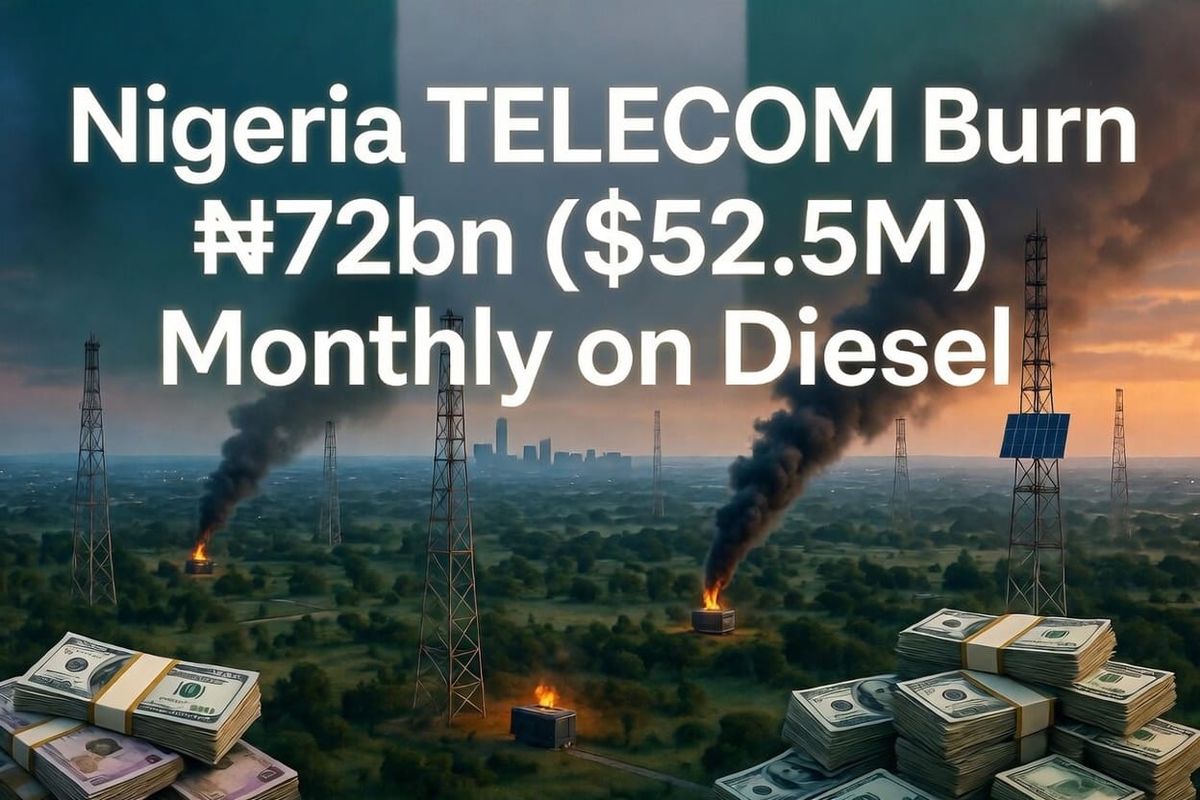
Nigeria’s telecom industry is spending an estimated $52.5M every month on diesel to keep mobile networks and internet services operational across the country, highlighting the enormous hidden cost behind the nation’s digital economy.
Behind every phone call, online transaction, WhatsApp message, or video stream lies a vast infrastructure system heavily dependent on fuel-powered generators because of Nigeria’s unreliable public electricity supply.
According to the Nigerian Communications Commission, telecom operators consume about 40 million litres of diesel monthly to power network infrastructure nationwide. The figure reflects the growing burden faced by operators trying to maintain stable communication services in a challenging energy environment.
While many Nigerians experience network challenges through dropped calls, unstable internet, or slow connectivity, telecom companies are confronting a deeper operational crisis powering the network itself.
Frequent grid collapses, inconsistent electricity supply, and poor energy infrastructure have forced operators to rely heavily on diesel generators to keep thousands of base stations active across urban and rural communities.
The impact goes beyond operational expenses. Rising energy costs are limiting the ability of telecom firms to invest aggressively in network expansion, fibre infrastructure, and broader 4G and 5G deployment across the country.
“In simple terms, the power problem is now directly tied to the connectivity problem.”
Industry players are increasingly exploring alternatives such as solar-powered systems, gas-powered energy solutions, inverter technologies, and shared infrastructure models aimed at reducing diesel dependence and improving efficiency.
MTN Nigeria has indicated that its transition toward gas-powered electricity and inverter systems helped reduce operational costs significantly in 2025, showing how energy innovation could shape the future of telecommunications in Nigeria.
“That reality says a lot about the hidden cost of Nigeria’s digital economy.”
Beyond telecoms, the situation reflects Nigeria’s broader electricity challenge. As businesses, banking, education, healthcare, and communication continue shifting online, stable power has become essential to national development and digital inclusion.
Despite the difficulties, ongoing investments in cleaner energy alternatives and smarter infrastructure solutions offer hope that Nigeria’s telecom industry can continue expanding connectivity while building a more sustainable future for millions of users nationwide.
TAG: #Nigeria #Telecoms #Diesel #Electricity #MTN #Connectivity #Digital Economy #WBN #Africa Edition #WBN News #WBN News Africa #Joseph James Udoh
Joseph James Udoh is the Editor in Chief for WBN News Africa.
He covers local stories, business insights, and inspiring human-interest topics.
With a background in Computer Science, Theology/Intercultural Studies, and a Honorarium in Human Resource Management, he is passionate about digital empowerment and helping people thrive.
CONNECT:
🔗 LinkedIn: Joseph James Udoh
📧 Email:
kingjworld@gmail.com
▶️ YouTube Channel: