By: Joseph James Udoh | Columnist | WBN NEWS Africa / Nashville | May 11, 2026

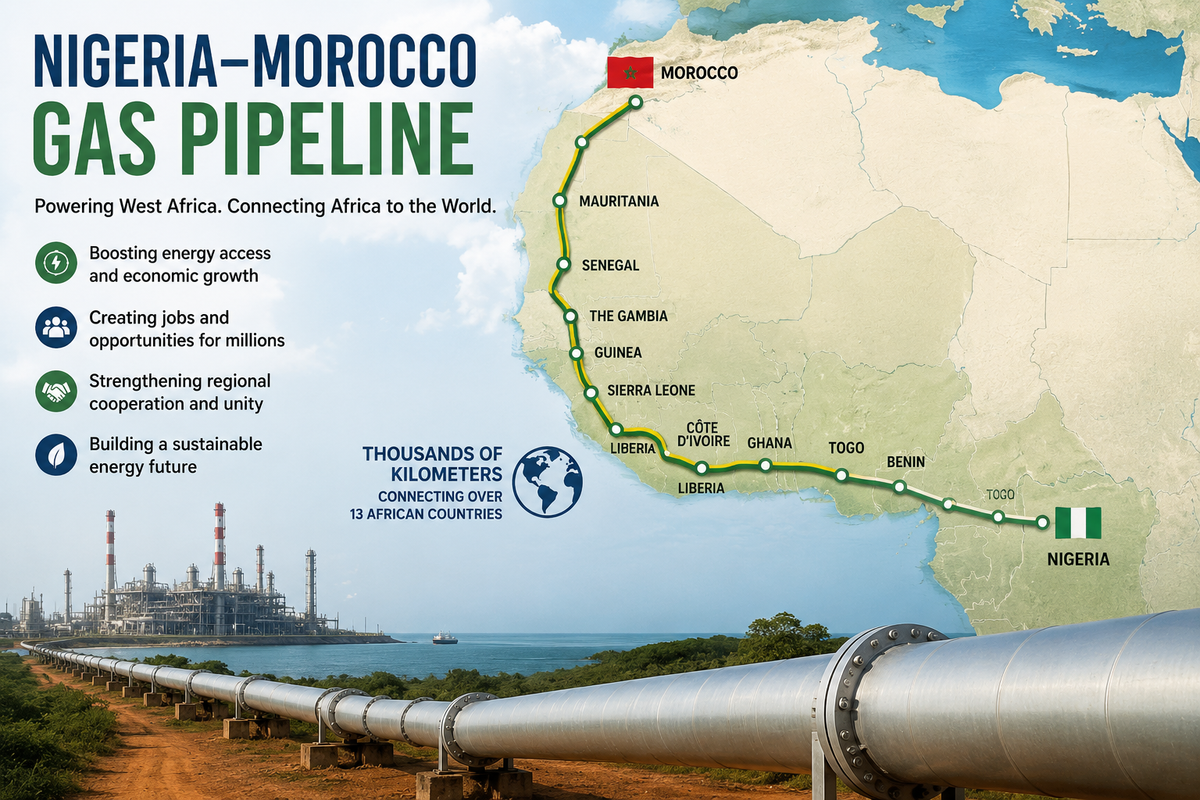
The proposed Nigeria–Morocco Gas Pipeline is being described as one of Africa’s most ambitious energy infrastructure projects in modern history. Designed to stretch thousands of kilometers along the West African coast, the pipeline is expected to connect Nigeria’s vast natural gas reserves to Morocco while crossing more than a dozen African countries before potentially linking to Europe.

First announced in 2016 through a partnership between the governments of Nigeria and Morocco, the project aims to strengthen regional cooperation, improve energy access, and create long-term economic opportunities for millions of people across West Africa. According to reports from regional stakeholders and energy agencies, the pipeline could impact over 13 African nations, including Benin, Togo, Ghana, Côte d’Ivoire, Senegal, and Mauritania.

Supporters of the initiative believe the project could become a major driver of industrial growth by helping countries secure more reliable energy supplies. Access to natural gas is expected to support electricity generation, manufacturing, and local businesses while encouraging investment in infrastructure and employment opportunities.

“The project aims to promote regional economic integration and accelerate development across West Africa.”

Beyond economics, the pipeline is also viewed as a symbol of African collaboration. Leaders behind the initiative have consistently emphasized the importance of unity, shared prosperity, and long-term sustainability. Analysts say the project could strengthen trade ties between African nations while positioning the continent more strongly within the global energy market.

“The pipeline represents a strategic partnership focused on energy security and regional cooperation.”

The development comes at a time when many African countries are seeking solutions to growing energy demands and rising population needs. If completed successfully, the Nigeria–Morocco Gas Pipeline could help improve electricity access for communities, support businesses, and open new opportunities for future generations.

While the project still faces technical, financial, and logistical challenges, optimism continues to grow around its potential impact. For many across the continent, the pipeline represents more than an energy project, it is a vision of connectivity, progress, and a future powered by African partnership and shared ambition.

TAG: #Africa #Nigeria #Morocco #Gas Pipeline #West Africa #Energy #Economy #Infrastructure #Joseph James Udoh


Joseph James Udoh is the Editor in Chief for WBN News Africa.
He covers local stories, business insights, and inspiring human-interest topics.

With a background in Computer Science, Theology/Intercultural Studies, and a Honorarium in Human Resource Management, he is passionate about digital empowerment and helping people thrive.

CONNECT:
🔗 LinkedIn: Joseph James Udoh

📧 Email:
kingjworld@gmail.com

▶️ YouTube Channel:

Joseph James Udoh
•Actor 🎬 •Columnist for World Business Network (WBN) NEWS (Africa, and Nashville edition)
Share this article
The link has been copied!