Great leadership isn’t about control—it’s about service. When leaders prioritize trust, empowerment, and authenticity, teams shift from compliance to commitment.
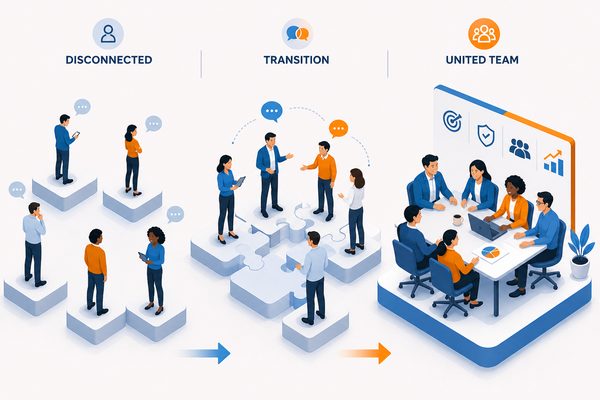
Team performance often reflects culture more than strategy. Understanding the stages of culture helps leaders guide teams from disengagement to collaboration and ultimately toward shared purpose and impact.
Promoting someone does not make them capable of managing people. Most companies skip the part where they teach it, then wonder why the team goes quiet. The cost lands on the payroll rather than the training budget, and it is usually the largest unbudgeted expense of the year.
Promoting someone does not make them capable of managing people. Most companies skip the part where they teach it, then wonder why the team goes quiet. The cost lands on the payroll rather than the training budget, and it is usually the largest unbudgeted expense of the year.
Great leadership isn’t about control—it’s about service. When leaders prioritize trust, empowerment, and authenticity, teams shift from compliance to commitment.
Team performance often reflects culture more than strategy. Understanding the stages of culture helps leaders guide teams from disengagement to collaboration and ultimately toward shared purpose and impact.
Trust is no longer assumed in business—it must be built. Leaders who prioritize ethics, communication, and accountability create stronger teams, better performance, and lasting competitive advantage.
A growing number of workers are redefining success through meaning, autonomy, and purpose—not promotions. Companies that treat fulfillment as a strategic asset, not a perk, will lead the future of work.
From his early career in retail and automotive sales, Ryan Chute saw how broken systems, unclear communication, and misaligned leadership created unnecessary barriers. Today, through Wizard of Ads, he helps companies identify those friction points and transform them into opportunities for growth.
Companies seeking to elevate leadership performance and team dynamics should consider adopting 360-degree feedback. Unlike traditional top-down reviews, this method gathers insights from peers, direct reports, managers, and even clients—offering a full-circle view of an individual’s impact.