
The Lies We're Sold





By Les Mottosky
Wise leaders understand something the world will never tell you:
Beliefs are decisions.
(Those three words could be the most important in the english language).
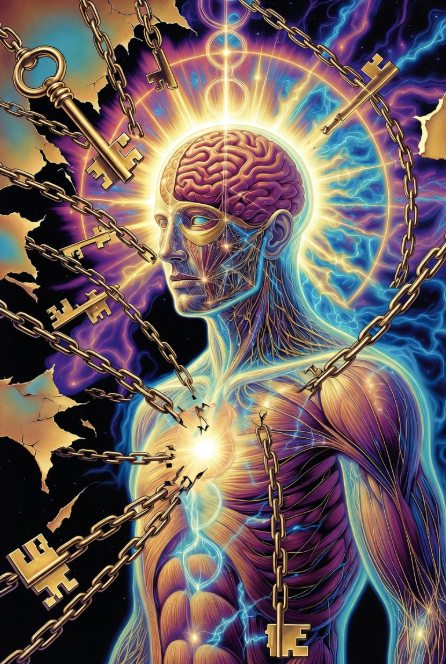
For people who understand the tyrannical force that is the human belief system, this insight is like being handed the key to a cage we've been locked-in for most of our life.
That's not hyperbole. Beliefs are tyrants. And here's why...
Our belief system is a layer of information that exists between ourselves and everything we see, hear and even touch. Because of that, it's rare that we experience reality. Instead, we obey the boundaries of our beliefs.
Take the example of The Rubber Hand Variant Experiment. This is where a subject places one hand behind a barrier (out of sight but they can see a fake hand), then the experimenter pokes or threatens the fake hand, and the person feels pain or sensation in their real hand hidden behind the barrier.
The experiment demonstrates how our beliefs and perceptions are highly malleable. The brain integrates sensory and visual input to form body ownership and pain responses, even when they contradict reality.
Beliefs are so powerful they can override or reshape physical sensation.
See? Tyrannical.
And like a dictator, a belief's reign won't be forever. Or it doesn't have to be.
Beliefs have an undeserved reputation for being permanent. We perceive them as though they arrive fully formed from evidence or experience, when in reality most begin with a decision.
Sometimes that decision is conscious. We decide that hard work pays off, that people are fundamentally good, or that we won't trust anyone again.
Usually, however, the decision happens so quickly we mistake it for objective truth. A betrayal becomes "People can't be trusted." A failure becomes "I'm not good enough." A political disagreement becomes "They're evil." In a flash – a literal fraction of a second – an experience hardens into a belief.
Once installed, the belief quietly begins to edit reality. Our attention is drawn toward evidence that confirms it and away from the evidence contradicting it. The decision disappears from view, leaving only the illusion that we've discovered how the world works.
There's a powerful sense of security in this illusion.
And does that ever feel good.
It's as if we know a life secret. One that'll allow us to live longer and – more influentially – better than the people "below us" who are ignorant of it.
This is why changing beliefs is so difficult. We're not merely updating information; we're reversing a life-improving, status-enhancing decision that has become invisible. The ego resists because admitting a belief was chosen means accepting it can also be unchosen. It means the ego was wrong.
And the ego's only job is to be right.
Now for the encouraging part: if beliefs are decisions, they aren't life sentences. Every meaningful shift in perspective begins with another decision—a willingness to question what once seemed unquestionable.
The most impactful leaders understand that we don't abandon reality when we change our beliefs. We move closer to it.
Leaders are responsible for navigating the crew through the monsoons of change, so they act swiftly. And the best ones act from a sliver of wisdom that fortifies their guidance:
The greatest act of adaptation isn't learning something new.
It's recognizing where a decision has covertly masqueraded as the truth.
TAGS: #The Lies We're Sold
Les Mottosky
Adaptation Strategist // I help organizations turn creativity into their competitive advantage by aligning leadership, culture and strategy to unlock adaptive innovations.
Ask about the Clarity Engine Process.
Members Discussion