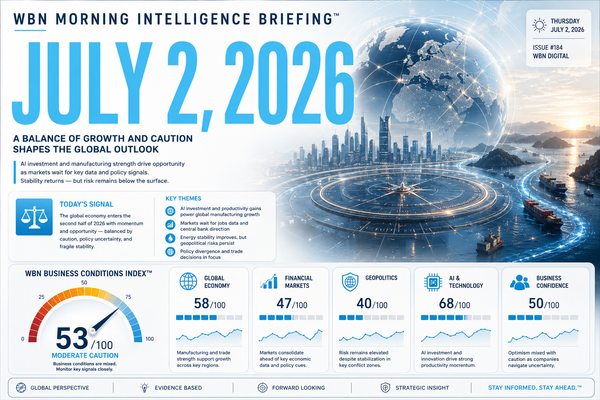
A U.S. Senate vote regarding Iran, the release of Federal Reserve bank stress tests, continued weakness in technology shares, and growing questions surrounding artificial intelligence investment are creating a more complex environment for businesses and investors worldwide.
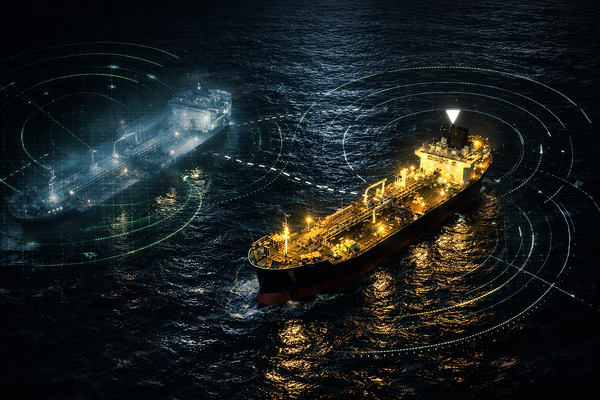
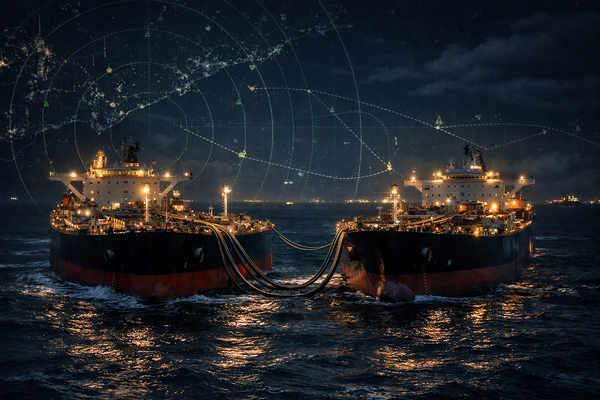
Ship-to-ship transfers, AIS blackouts, and tanker identity swaps allow sanctioned oil to disappear at sea and reappear in global markets with a new origin.
Three of the world's economic architectures hit decision points within 72 hours: central bankers publicly diverged at Sintra, Washington declined to extend the USMCA, and a July 4 EU tariff deadline looms — while Japan's business sentiment hit an eight-year high and US labor data cracked.
Three of the world's economic architectures hit decision points within 72 hours: central bankers publicly diverged at Sintra, Washington declined to extend the USMCA, and a July 4 EU tariff deadline looms — while Japan's business sentiment hit an eight-year high and US labor data cracked.
A U.S. Senate vote regarding Iran, the release of Federal Reserve bank stress tests, continued weakness in technology shares, and growing questions surrounding artificial intelligence investment are creating a more complex environment for businesses and investors worldwide.
Ship-to-ship transfers, AIS blackouts, and tanker identity swaps allow sanctioned oil to disappear at sea and reappear in global markets with a new origin.
Hundreds of aging tankers quietly move sanctioned oil from Russia, Iran, and Venezuela outside Western regulation. If the U.S. shuts down the shadow fleet, global energy markets could face a major shock