
The Lies We're Sold




By Les Mottosky
With thanks to The Office's Micheal Scott for the creative language, this time in history doesn't require us to be superstitious, but being a little stitious helps.
I recently eavesdropped on the conversation of two very well-read, and almost counter-culture guys. One of them was definitely counter-culture.
Plenty of what they said was pretty out there by mainstream standards. (If that even exists any more.) I couldn't agree with a lot of the exchange, but one of them dropped an idea that's worth consideration – if not adoption.
It isn't for everybody and many will have to travel a long way mentally to get there, but it feels like a helpful concept.
Particularly, given a precedent set by thinkers and philosophers of the past.
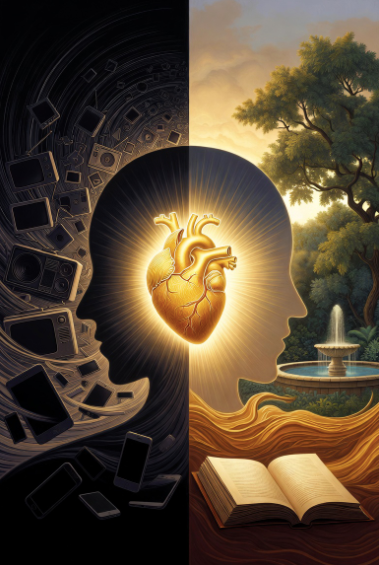
The dude's perspective was that everything is a lie. He'd arrived at the conclusion that modern life wants us to ignore our inner world and distrust the wisdom of nature. To justify his opinion, he pointed to the oppressive march of media in the past century. From families huddling around the radio for war reports, to the dominance of the television in homes – then it's ubiquity in public spaces – and now the internet in everybody's hand, all the time.
To his point, much more than a distraction from our immediate environment, media has become a programmer of our consciousness. By ancient wisdom standards, this is something that has always been the responsibility of the individual – and our greatest responsibility to the rest of the world.
Modernity teaches us that our richest intelligence resides in our brain. But the Masters didn't just believe – they knew – the true goldmine of brilliance comes from our heart.
Here is some 'old thinking' to help add context, meaning and direction so we can retain some value for our own experience of the idea behind this article.
Marcus Aurelius advised: '"Look within. Within is the fountain of good, and it will ever bubble up if thou wilt ever dig."
Henry David Thoreau, observed: "Men have become the tools of their tools."
Chuang Tzu taught: "The fish trap exists because of the fish. Once you've gotten the fish, you can forget the trap. Words exist because of meaning. Once you've gotten the meaning, you can forget the words."
And lastly, Krishnamurti dropped this provocative doozy: "It is no measure of health to be well-adjusted to a profoundly sick society."
All of this requires the humility to admit – to an extent – we've been programmed.
The lesson from the eavesdropping session doesn't require we trust the source it came from. If we ignore the wrapping paper of the message, the moral becomes clearer.
The greatest deception isn't that the world lies to us. It's that we become so busy listening to the world that we stop hearing nature—and ourselves.
Culture might tell us who to become.
But wisdom never stops asking us to remember who we already are.
TAGS: #The Lies We're Sold
Les Mottosky
Writes to expand the capacity of the human behind the career.
Adaptation Strategist // I help organizations turn creativity into their competitive advantage by aligning leadership, culture and strategy to unlock adaptive innovations.
Ask about the Clarity Engine Process.
Members Discussion