
FIFA 2026 in Canada: Comparing Toronto and Vancouver's World Cup Preparations
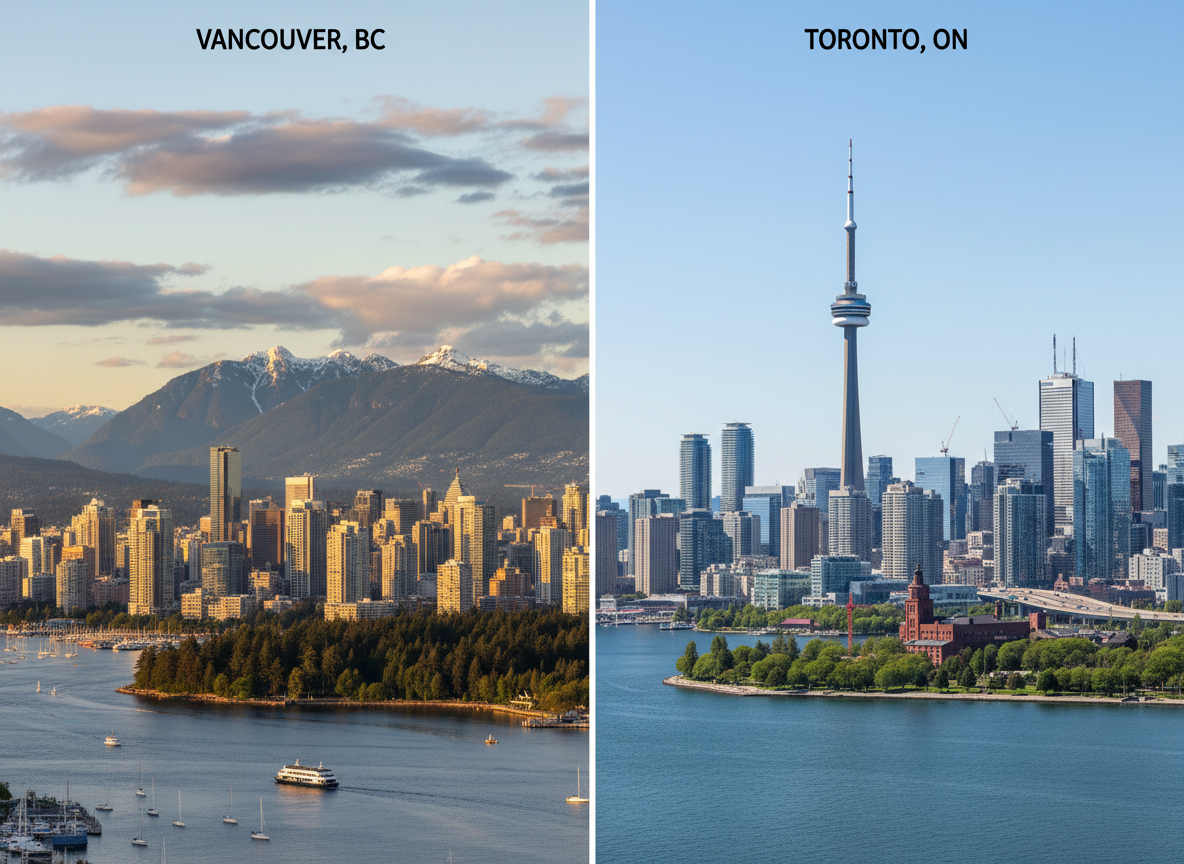
Toronto invests $380M while Vancouver is publicly quieter. Compare Canada's two FIFA 2026 host cities' preparations, infrastructure, and soccer culture.



Toronto invests $380M while Vancouver is publicly quieter. Compare Canada's two FIFA 2026 host cities' preparations, infrastructure, and soccer culture.
By Elke Porter | WBN News World Sports | January 8, 2026
Subscription to WBN and being a Writer is FREE!
Part 1 of a Three Part Series - Canada, USA and Mexico
Canada is making history as a FIFA World Cup co-host for the first time, welcoming the world's most prestigious soccer tournament to two of its most iconic cities. For a nation better known for hockey dominance, hosting 13 World Cup matches represents a transformative moment in Canadian sports culture. Toronto and Vancouver will showcase Canada's multicultural identity, world-class infrastructure, and natural beauty to billions of viewers worldwide.
However, the two cities approach this historic opportunity from dramatically different positions—Toronto embracing its role with substantial investment and coordination, while Vancouver's preparations reveal a stark disconnect between the magnitude of the event and local public awareness. As the tournament approaches in June 2026, these two cities offer a fascinating study in contrasts: one actively preparing to welcome the world, the other quietly fulfilling an obligation behind the scenes while its residents remain largely oblivious to the approaching spectacle.
As one local writer reports hearing at least 100 times from fellow Vancouverites: "No, I had no idea that the World Cup is coming to Vancouver." Even more telling are responses like "Don't care. Don't like soccer. Don't want to hear about it" and the particularly dismissive "Can you stop talking about it now?" These aren't isolated reactions—they represent the prevailing attitude among Vancouver residents living their daily lives with little acknowledgment that FIFA is coming.
Stadium: BMO Field (capacity being expanded from 30,000 to 45,000)
Matches Hosted: 6 group-stage matches
Transportation Updates: Toronto is coordinating with its existing transit system to handle the influx of visitors. The city benefits from well-established public transportation including the TTC subway system and GO Transit regional rail. Toronto Pearson International Airport is undergoing service expansions to accommodate international visitors. The provincial government has committed significant funding, with Mayor Olivia Chow announcing up to $380 million from state coffers to properly host the tournament. Teams will use training facilities across the Greater Toronto Area, with hotels spread throughout the region and into nearby areas.
Accommodations: Toronto has a robust hotel infrastructure with properties ranging from downtown luxury towers to suburban options. The city is leveraging its existing hospitality sector, which regularly hosts major international events. Short-term rental options are being coordinated to supplement hotel capacity during the tournament period.
Entertainment & Events: While specific performer announcements have not been made public yet, Toronto is planning fan festivals and viewing areas. The city's multicultural identity will be showcased through various cultural programming during the tournament.
City Safety Measures: Toronto maintains strong public safety protocols and is coordinating with federal and provincial authorities on security planning for the World Cup.
Tourism Offerings: Toronto offers world-class attractions including the CN Tower, Royal Ontario Museum, Ripley's Aquarium, diverse neighborhoods like Kensington Market and the Distillery District, and proximity to Niagara Falls. The city's reputation as one of the world's most multicultural cities will enhance the international visitor experience.
Soccer Connection: Toronto has a strong soccer culture with Toronto FC in MLS, and Canada is experiencing its "golden generation" with stars like Alphonso Davies and Jonathan David. As co-hosts, Canada has automatically qualified for the World Cup, adding hometown excitement.
Stadium: BC Place (capacity 54,000)
Matches Hosted: 7 matches
Transportation Updates: Vancouver is preparing enhanced transit services through TransLink, with special shuttle bus services planned along Renfrew Street to bring fans to the FIFA Fan Festival at Hastings Park. BC Place benefits from downtown location with direct connections to the existing SkyTrain system via Stadium-Chinatown Station.
However, the $2.95 billion Broadway Subway Project—a 5.7km extension of the Millennium Line designed to improve accessibility for carless locals or tourists travelling along the Broadway corridor—won't be completed until 2027, missing the World Cup by a full year. Construction began in 2020 so the timeline means ongoing construction disruptions will impact visitors during the tournament.
The Broadway Corridor in Vancouver is home to one of North America's busiest bus routes (the 99 B-Line) and serves as a major arterial connecting downtown to key neighbourhoods such as Mount Pleasant, Fairview, and Kitsilano. Ongoing construction for the Broadway Subway Project (Millennium Line extension) is causing barriers, lane reductions, detours, and temporary accessibility challenges, including a full four-month vehicle closure of the block between Main and Quebec streets starting in January 2026.
These disruptions may affect some international visitors to Vancouver during the FIFA Congress in April or the Web Summit in May, particularly those staying or travelling in areas west of downtown or if construction is delayed. However, the tournament's venue, BC Place Stadium, is in downtown Vancouver with direct access via existing SkyTrain lines (Expo Line and Canada Line), and match-day transit plans emphasize enhanced public transit, walking, and cycling, with road closures prioritizing pedestrians around the stadium.
Accommodations: Vancouver has sufficient hotel capacity with properties across downtown, along with preparations for short-term rentals. Although we heard second-hand that all the hotel rooms in Vancouver are booked, there might be some places that are still available. The city is leveraging its experience hosting major events like the 2010 Winter Olympics and 2015 FIFA Women's World Cup Final.
Entertainment & Events: The official FIFA Fan Festival will be held at the newly renovated PNE Amphitheatre (Freedom Mobile Arch) with a $20 million operating budget, welcoming 25,000+ fans daily throughout the 39-day tournament. The amphitheatre's stunning backdrop of Burrard Inlet and North Shore Mountains will provide an iconic setting. However, no major entertainers or concerts have been publicly announced yet. Non-soccer fans, who might be motivated by the thought of their favourite performer coming to Vancouver, have nothing to look forward to.
City Safety Measures: Vancouver has implemented temporary bylaw adjustments from May 13 to July 20, 2026, covering event structures, noise allowances, and public space management. The city is coordinating comprehensive security measures, including preparing for outright terrorist attacks.
Tourism Offerings: Vancouver offers spectacular natural beauty including Stanley Park, Granville Island, Capilano Suspension Bridge, and proximity to Whistler. The city combines urban sophistication with outdoor adventure opportunities including hiking, kayaking, and whale watching.
Soccer Connection: Here's the reality: Vancouver's soccer culture is minimal compared to its hockey obsession. The city is dominated by the NHL's Vancouver Canucks, and despite having the Vancouver Whitecaps in MLS, (and Thomas Müller!!!) soccer awareness is low. Most residents are living their daily lives with little acknowledgment that FIFA is coming. Public awareness campaigns have been limited, and unlike cities with deep soccer traditions, Vancouver seems to be approaching 2026 more as a civic duty than a passionate celebration of the sport. The disconnect between the city's hockey-first mentality and the incoming soccer spectacle represents one of the tournament's most interesting cultural contrasts.
Toronto approaches FIFA 2026 with the seriousness of a city that regularly hosts major international events. The $380 million commitment from provincial coffers demonstrates governmental recognition of the tournament's significance. BMO Field's expansion from 30,000 to 45,000 capacity shows infrastructure investment matching ambition. Toronto's existing strengths—Pearson Airport's international connectivity, TTC and GO Transit networks, substantial hotel inventory, and experience with events like the Toronto International Film Festival and NBA Finals—position the city well for hosting six group-stage matches.
However, Toronto's preparations also reveal areas of concern. Six months from the tournament, specific entertainment programming remains unannounced. While fan festivals and cultural activations are promised, the lack of concrete details about performers, venues, and schedules suggests planning is still in progress. Toronto's multicultural identity represents a natural advantage for welcoming international visitors, but the city has been relatively quiet about leveraging this strength in its World Cup messaging.
Toronto's soccer connection provides authentic enthusiasm. Toronto FC has cultivated a dedicated following in MLS, and Canada's automatic qualification featuring stars like Alphonso Davies and Jonathan David creates genuine national excitement. For once, Canadian soccer fans can celebrate their team on home soil, transforming the tournament from a spectator event into a participatory celebration.
And they are lucky that Team Germany will be playing at least one game there!
Vancouver presents the tournament's most perplexing contradiction: excellent existing infrastructure combined with minimal public engagement and poorly-timed construction disruptions. The city possesses much of what's needed to host successfully—BC Place's downtown location with existing SkyTrain access, Vancouver International Airport's global connections, a $20 million Fan Festival venue with spectacular natural backdrop, hotel capacity, and proven experience from the 2010 Winter Olympics and 2015 FIFA Women's World Cup Final. On paper, Vancouver should excel.
However, the reality includes a major infrastructure disappointment: the $2.95 billion Broadway Subway Project won't be completed until 2027, meaning construction will still be underway during the tournament. This 5.7km extension of the Millennium Line was supposed to enhance transit accessibility for carless tourists along one of North America's busiest corridors, connecting downtown to key neighborhoods, BC's second-largest employment district, and major tourist areas.
Instead, visitors will encounter construction barriers, detours, and reduced accessibility precisely when the city needs seamless transit most. The project began in 2020, and while it will eventually add tremendous value to Vancouver's transit network, the timing represents a significant planning failure—missing the World Cup opportunity by a full year. Here is more information: https://www.broadwaysubway.ca/
The reality reveals something entirely different. Vancouver's hockey-dominated culture has left little room for soccer enthusiasm. The Vancouver Whitecaps exist in MLS but operate in the long shadow of the Canucks. Most Vancouver residents continue their daily routines with minimal awareness that seven World Cup matches will occur in their city. Public awareness campaigns have been limited or ineffective. The disconnect is stark: while other host cities buzz with anticipation, Vancouver hasn't made a move yet. It is almost like they don't want to talk about it.
At least one highlight to look forward to in Vancouver: Host City Dressing Program: The dressing program, or official tournament look, will bring the vibrant tournament atmosphere to Vancouver’s streets, bridges, transit stations, and public spaces, creating a consistent visual identity. Design work is underway, with select installations starting in Q1 2026. This would help somewhat at least for current soccer fans. But how to get non-fans or those suffering from spherophobia to get drawn in, is something to think about.
This presents both a challenge and an opportunity. The challenge is obvious—how do you create festival atmosphere in a city where residents don't particularly care and major transit construction is underway? The opportunity is more subtle: Vancouver could surprise everyone. Once the tournament begins, once international visitors fill the streets despite construction inconveniences, once matches at BC Place create electric atmospheres, Vancouver residents might discover soccer's appeal. The PNE Amphitheatre's 25,000 daily capacity and stunning Burrard Inlet backdrop could become the tournament's most photogenic fan festival. The question is whether residents of Vancouver will embrace the moment or simply endure it—construction and all.
Both cities benefit from Canada's automatic qualification and the emotional resonance of hosting the nation's first-ever World Cup matches on home soil. The "golden generation" of Canadian soccer—led by Bayern Munich's Alphonso Davies and Lille's Jonathan David—transforms Canada from perpetual underdogs into legitimate competitors. Canadian fans will experience something unprecedented: cheering for their national team in a World Cup tournament they're actually participating in.
This national storyline could elevate both Toronto and Vancouver beyond their individual preparations. Even in hockey-obsessed Vancouver, national pride might override local apathy once Canada takes the field. Toronto, already more internationally minded, will embrace its role as Canada's soccer showcase. The proximity to Niagara Falls (Toronto) and the Rocky Mountains (Vancouver) provides international visitors with quintessentially Canadian experiences beyond the matches themselves.
Most Engaged: Toronto wins by default. While neither city has announced major entertainment programming, Toronto's $380 million investment and BMO Field expansion demonstrate tangible commitment. Vancouver's public disengagement is concerning.
Most Prepared: Toronto edges Vancouver based on financial commitment and infrastructure development. Vancouver's existing infrastructure is excellent, but the lack of visible preparation updates suggests reliance on what already exists rather than tournament-specific enhancements.
Most Set Up: Toronto. The combination of investment, transit connectivity, hotel infrastructure, Toronto FC's established fanbase, and Canada's golden generation creates a more complete package. Vancouver's infrastructure is arguably superior (downtown stadium vs. Toronto's waterfront location), but preparation requires more than buildings—it requires enthusiasm.
Biggest Concern: Vancouver's public awareness gap compounded by construction disruptions. A city hosting seven matches where most residents don't know it's happening AND where the $2.95 billion Broadway Subway Project construction will create navigation challenges for unfamiliar tourists represents both a communications failure and a planning disappointment. This could result in a "surprise party" atmosphere where locals are unprepared for the international influx navigating construction barriers, or it could mean disappointed visitors arriving in a city that hasn't embraced the festival spirit while also dealing with detours and reduced accessibility along major transit corridors.
Biggest Strength: Canada's automatic qualification. Both cities benefit enormously from national team participation. The emotional resonance of watching Canada compete on home soil will elevate the experience beyond what pure infrastructure could achieve.
Canada's FIFA 2026 hosting represents a watershed moment for soccer in a hockey nation. Toronto and Vancouver will welcome 13 World Cup matches, but they approach this historic opportunity from fundamentally different positions. Toronto has invested significantly, coordinated comprehensively, and positioned itself as ready to welcome the world—even if specific entertainment details remain pending. Vancouver possesses excellent infrastructure and a spectacular setting but struggles with the more intangible element: making its residents, especially those who are hockey fans, American football fans or even baseball fans, care.
The fascinating question is whether these differences will matter once the tournament begins. Will Vancouver's apathy transform into enthusiasm when international visitors fill its streets despite navigating construction zones? Will Toronto's methodical preparation translate into memorable fan experiences, or will the lack of announced entertainment programming leave visitors wanting? Can Canada's golden generation of soccer talent—Davies, David, and others—inspire a nation to embrace the beautiful game alongside its beloved hockey? And will Vancouver's ongoing Broadway Subway construction create frustrating navigation challenges that overshadow the city's natural beauty and venue quality?
What's certain is that both cities have fundamental ingredients for success: world-class venues, generally reliable infrastructure, appealing tourism offerings, and the benefit of Canada's automatic qualification creating genuine national stakes. Toronto's $380 million investment and Vancouver's $20 million Fan Festival demonstrate financial commitment. Both cities have hosted major international events successfully. The foundation is solid—though Vancouver's foundation includes construction equipment along Broadway.
The difference lies in engagement, enthusiasm, and timing. Toronto approaches FIFA 2026 as an opportunity to showcase Canada's multicultural identity on the world's biggest sporting stage. Vancouver approaches it as a civic duty, a responsibility to fulfill regardless of local interest—and does so while managing major transit construction that won't be completed until after the tournament ends. In six months, we'll discover which approach proves more successful—or whether Vancouver's residents, once confronted with the reality of the World Cup arriving on their doorstep alongside construction barriers, finally wake up to embrace the tournament they've been ignoring.
On the surface, the FIFA WC 2026 Fact Sheet from Vancouver says, "The City of Vancouver is working closely with businesses and community groups to help them
prepare and get involved. The Community Activation Playbook, launched in the fall, offers tips on celebrating, permitting, public viewing, and activation ideas to help businesses and communities bring the FIFA World Cup 2026™ atmosphere to life across the province." https://vancouverfwc26.ca/community-hub/community-activation
This has us looking at the Greater Vancouver Board of Trade, who hosted a "One-Year Countdown" luncheon event in June 2025 featuring FIFA Vice President Victor Montagliani, discussing economic impacts and legacy for Vancouver. for example, or the Downtown Vancouver Business Improvement, who is providing comprehensive support to help local businesses capitalize on the World Cup opportunity. Beginning early 2026, downtown businesses will have the opportunity to apply for the Activation Fund and Beautification Fund to enhance their storefronts and create World Cup-themed experiences. The BC Tourism FC Playbook offers guidance to tourism partners on effectively engaging with the FIFA World Cup 2026™ opportunity, while the BC Business Guide focuses on practical steps including taking action, getting started, learning event details, and finding answers to common questions.
The Community Engagement Playbook clarifies what businesses can and cannot do when activating during FIFA, helping entrepreneurs navigate complex branding and trademark restrictions. Additionally, a Comprehensive Checklist helps businesses prepare systematically for the tournament. These resources demonstrate that while public awareness remains low, Vancouver's business community is at least attempting to prepare for the economic opportunities—even if the general population remains largely disinterested or at least uninformed.
The key question is which other businesses and community groups are prepared and involved? While some, like these organizations, have publicly announced their connections to FIFA World Cup 2026 through events, websites, and social media, it does not seem to be visible yet in every community I belong to. Maybe there's even more happening behind the scenes that isn't being fully shared, communicated, or promoted to the public.
For Canadian soccer fans, regardless of city-level preparations, the tournament represents something invaluable: the chance to watch their national team compete in a World Cup on home soil. That emotional resonance—the pride of seeing the maple leaf on jerseys in packed stadiums from Toronto to Vancouver—may ultimately matter more than any infrastructure investment or entertainment announcement. Canada is hosting the World Cup. After decades of dreaming, that reality alone makes 2026 historic.
Note:
I got a lot of information from the Breaker - https://thebreaker.news/news/city-hall-on-location/ You can find out a lot of information thanks to hard-hitting journalist Bob Mackin. You can also find basic information on the city created website: https://www.vancouverfwc26.ca/media-hub/news. Finally, you can look up tourist friendly websites like Destination BC - https://www.destinationbc.ca/news/city-of-vancouver-news-release-fifa-world-cup-26-vancouver-official-host-city-brand-launched/ or The Downtown Vancouver Business Improvement Association: https://www.dtvan.ca/fifa-2026/.
Elke Porter at:
Westcoast German Media
LinkedIn: Elke Porter or
WhatsApp: +1 604 828 8788.
Public Relations. Communications. Education
Let’s bring your story to life — contact me for books, articles, blogs, and bold public relations ideas that make an impact.
TAGS: #FIFA 2026 #World Cup Canada #Toronto FC #Vancouver Whitecaps #Canada Soccer #World Cup 2026 #Toronto World Cup #Vancouver FIFA #WBN News World Sports Edition #Elke Porter