Nicholas Jeffery | WBN News – Global | July 22, 2026 Editor: Karalee Greer | Subscribe to WBN News
The Diplomat’s Notebook. Ambassador, Dr Nicholas Jeffery http://linkedin.com/in/nicholas-jeffery
Some come to Hungary to study it; I married into it, which in this part of Europe tends to produce more durable conclusions. As a family, we moved back to our hometown of Budapest from Vancouver just before the COVID-19 pandemic. Now I am a resident here, pay my taxes here, own a business, and service clients from here.
As the citizens of Budapest decamp for the barmy heat of the summer months, children in tow and car boots improbably full, those fortunate enough to possess family houses on one of Europe's great lakes retreat to Balaton. The rest make for the Adriatic, where the food is better, the hotels often cheaper, and the season somehow always seems a little longer. It is an annual migration as predictable as the swallows, and one that reveals more about Hungary's economic geography than most government ever reports.
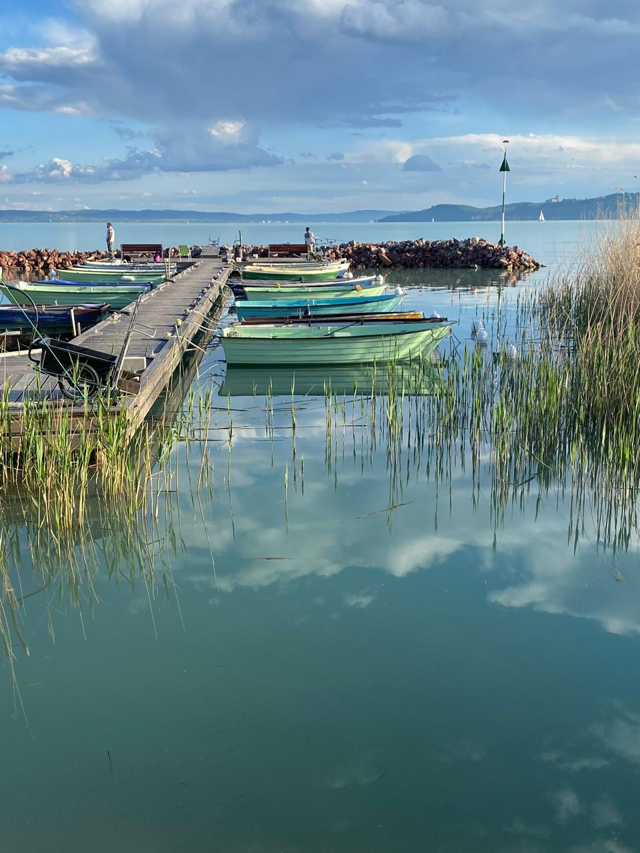
For our family, the journey is shorter. Fifteen years ago we built a home on Balaton's northern shore, a decision that has afforded us a front-row seat to the changing fortunes of the lake. It is a place where history, politics, economics and ecology converge with unusual intensity, and where the country's relationship with one of its greatest natural endowments can be observed in miniature.
The previous Dispatch asked The Balaton Question: why Central Europe's largest lake may be one of Hungary's most undervalued economic assets, and what is going wrong. In this dispatch the question broadens. Balaton is merely the most visible expression of a far larger story. Hungary is, in many respects, a water nation masquerading as a landlocked one.
That observation has always seemed paradoxical. Hungary possesses neither mountains rich in minerals nor a coastline capable of sustaining maritime trade, yet it sits at the centre of one of Europe's largest river basins. Around ninety-five per cent of the country's surface water arrives from beyond its borders before slowly draining south towards the Black Sea. Geography has made Hungary simultaneously blessed with abundance and vulnerable through dependence. Water is everywhere, but control over its supply is not.
For centuries that abundance defined the country's prosperity. Medieval Hungary was known as much for its fisheries and wetlands as its grain. The great rivers overflowed into vast floodplains that sustained agriculture, livestock and biodiversity in equal measure.
The nineteenth century Vasarhelyi Pal transformed the country through one of Europe's largest engineering projects. Rivers were straightened, marshes drained and floodplains reclaimed for agriculture and navigation. It created productive farmland and safer settlements, but it also taught Hungary to export the one commodity it should have been storing: water.
A civilisation built upon retaining water gradually evolved into one designed to expel it.
That decision appeared rational in an era when floods represented the principal danger.
It appears less so today. Climate change has altered the equation with uncomfortable speed. Hungary is warming faster than the global average, precipitation is becoming more erratic, and prolonged droughts now alternate with increasingly violent storms. Hungary is not becoming dry because it receives less rain. It is becoming dry because it has become extraordinarily efficient at getting rid of it.
This is the paradox that increasingly defines Hungarian water policy. Enormous sums are invested in flood protection while comparatively little attention is devoted to water retention. The engineering philosophy of the twentieth century remains dominant even as the climate demands something altogether different. Water is still treated primarily as a threat to be channelled away rather than as capital to be stored, managed and invested.
Balaton reflects this contradiction perfectly. It is simultaneously a national icon, an engine of tourism, a reservoir of biodiversity and a sensitive hydrological system whose level is increasingly dependent upon climatic extremes. Every summer the debate returns with familiar regularity.
Every summer the same arguments resurface: the water is too low, the reeds too thick, the marinas too few and, somehow, there is always room for one more hotel. Each question is treated in isolation, when in reality they are symptoms of a much larger failure to recognise that natural assets possess economic value long before they are monetised through construction.
The economics are surprisingly straightforward. Water is becoming one of the defining strategic resources of the twenty-first century. Countries capable of storing, managing and allocating freshwater efficiently will enjoy competitive advantages that extend well beyond agriculture. Industry, energy, tourism and even urban liveability increasingly depend upon secure water supplies. Urban liveability depends upon it. Even property values increasingly reflect environmental resilience rather than simple location.
Hungary therefore occupies an unusually favourable position. Few European countries possess such extensive groundwater reserves, thermal waters, rivers and freshwater lakes within such a compact territory. Yet public debate continues to treat these assets primarily as environmental concerns rather than as productive infrastructure. Roads depreciate. Factories become obsolete. Water systems, if managed intelligently, appreciate over generations.
The political economy surrounding water is, however, considerably more complicated than the engineering. Development generates visible returns. Hotels produce ribbon cuttings. Wetlands rarely do. The incentives therefore favour concrete over conservation, even when conservation delivers the greater long-term return.
Balaton illustrates the consequences. Shoreline development has accelerated dramatically over the past decade, while concerns regarding ecological resilience have become increasingly difficult to dismiss. None of this suggests development should cease. Quite the opposite. Successful lakes across Europe demonstrate that prosperity and conservation are not competing objectives but mutually reinforcing ones when planning institutions possess both independence and patience. The question is not whether Balaton should be developed, but whether it should be governed as a strategic national asset rather than as a collection of local planning permissions.
Lake Geneva proves that environmental stewardship and commercial success are complementary, supporting premium tourism and property without sacrificing water quality.
Lake Constance (known as Bodensee in German) is located in Central Europe, directly at the northern foot of the Alps. It sits at the intersection where Germany, Switzerland, and Austria meet, treats water as shared economic infrastructure. While Lake Garda has built an international visitor economy around planning rather than speculation. Across Europe the lesson is consistent: ecological capital comes before economic capital.
Climate change only increases the urgency. The coming decades are likely to make freshwater one of Europe's most valuable forms of natural capital. Southern Europe faces intensifying water stress, agricultural production is shifting northwards, and demand for resilient locations in which to live and invest will continue to rise. Hungary could emerge as one of the continent's unexpected beneficiaries, but only if it abandons the assumption that water is an unlimited resource whose principal purpose is to be consumed before it disappears downstream.
That requires a different philosophy of statecraft. The objective should no longer be simply preventing floods or attracting lakeside investment. It should be maximising the long-term economic productivity of water itself through retention, restoration, pricing, planning and institutional stewardship.
Water policy should be treated with the same seriousness as energy policy or fiscal policy because, increasingly, it is both.
The water used by Artificial Inteligenceis expected to equal the needs of 1.3 billion people by 2030.
Yet the responsibility cannot rest with governments alone. Water is ultimately governed as much by the habits of citizens as by the policies of the state. Political statecraft can establish planning rules, regulate extraction and invest in infrastructure, but it cannot manufacture a culture of stewardship. That depends upon millions of individual decisions: whether shorelines are respected or privatised, whether wetlands are valued or dismissed as wasteland, whether short-term convenience outweighs long-term resilience. The countries that have succeeded in protecting their great lakes have done so not simply because their governments planned well, but because their citizens came to regard these landscapes as a shared inheritance rather than a commodity to be consumed. A mature republic is defined not only by the competence of its institutions, but by the willingness of its people to preserve assets whose greatest value will be enjoyed by generations they will never meet.
The Water Question is therefore not simply about Balaton, nor even about climate. It is about whether Hungary is prepared to treat water as strategic capital rather than an environmental afterthought. In an age increasingly defined by scarcity, nations that preserve freshwater will command an advantage every bit as valuable as those that once possessed oil, coal or deep-water ports. Those that squander it will discover, too late, that no amount of economic policy can recreate a depleted natural asset.
This demands more than better environmental regulation; it requires a fundamental shift in national thinking. Every planning decision, every infrastructure project and every hectare of shoreline should begin with a single question: does this leave Hungary richer in fifty years than it is today? If the answer is no, it is not development but liquidation.
For a country that spends so much time worrying about capital flight, Hungary has become remarkably relaxed about watching its water leave the country for free.
Hungary inherited one of Europe's greatest freshwater endowments through geography. Whether it becomes one of Europe's most resilient economies will depend on whether it has the foresight to protect it.
Thank you, Nicholas
About the Author
Ambassador, Dr Nicholas Jeffery
http://linkedin.com/in/nicholas-jeffery
After more than four decades in international banking and technology, spanning London, Central Europe and global markets, I have advised governments, Royal houses, corporations, investors and institutions navigating both in equal measure commercial opportunity and geopolitical uncertainty.
Hungary increasingly sits at the crossroads of European capital, innovation and regional influence. Whether establishing new ventures, accelerating growth or quietly facilitating strategic transactions, success here, like the Danube itself, often depends upon understanding both banks.
Read the Full Article and the Previous Here:
Editor: Karalee Greer | Subscription and being a Contributor is Free
Tags: #Danube Dispatches #Hungary #Water Security #Climate Change #Economic Development #Environmental Stewardship #WBN News - Global #Nicholas Jeffery