By Karalee Greer | WBN News - Vancouver | June 28, 2026
Subscription to WBN and being a Contributor is Free
If it feels like Vancouver has become one giant construction zone, you're not imagining it. Behind the orange cones and traffic delays is one of the largest infrastructure renewal programs in the city's history. Much of the work isn't about the roads themselves—it's about replacing the aging systems hidden beneath them before they fail.
What Happened?
From Granville Bridge and Broadway to neighbourhood streets across the city, road construction has become a familiar sight. The City of Vancouver currently manages dozens of transportation and infrastructure projects, including bridge rehabilitation, water main replacements, sewer upgrades, cycling infrastructure, intersection improvements, and public space enhancements.
Many of these projects are coordinated to minimize future disruptions by replacing underground infrastructure before roads are resurfaced.
Why So Much Work Happens At Once
Construction is highly seasonal.
Asphalt paving, concrete work, and underground utility installation require warmer, drier weather for the best results. For that reason, municipalities throughout Metro Vancouver complete much of their annual roadwork between late spring and early fall.
The result is that many projects appear to happen simultaneously.
It's Usually Not About The Road
When a street is closed, the road surface is often the last thing being repaired.
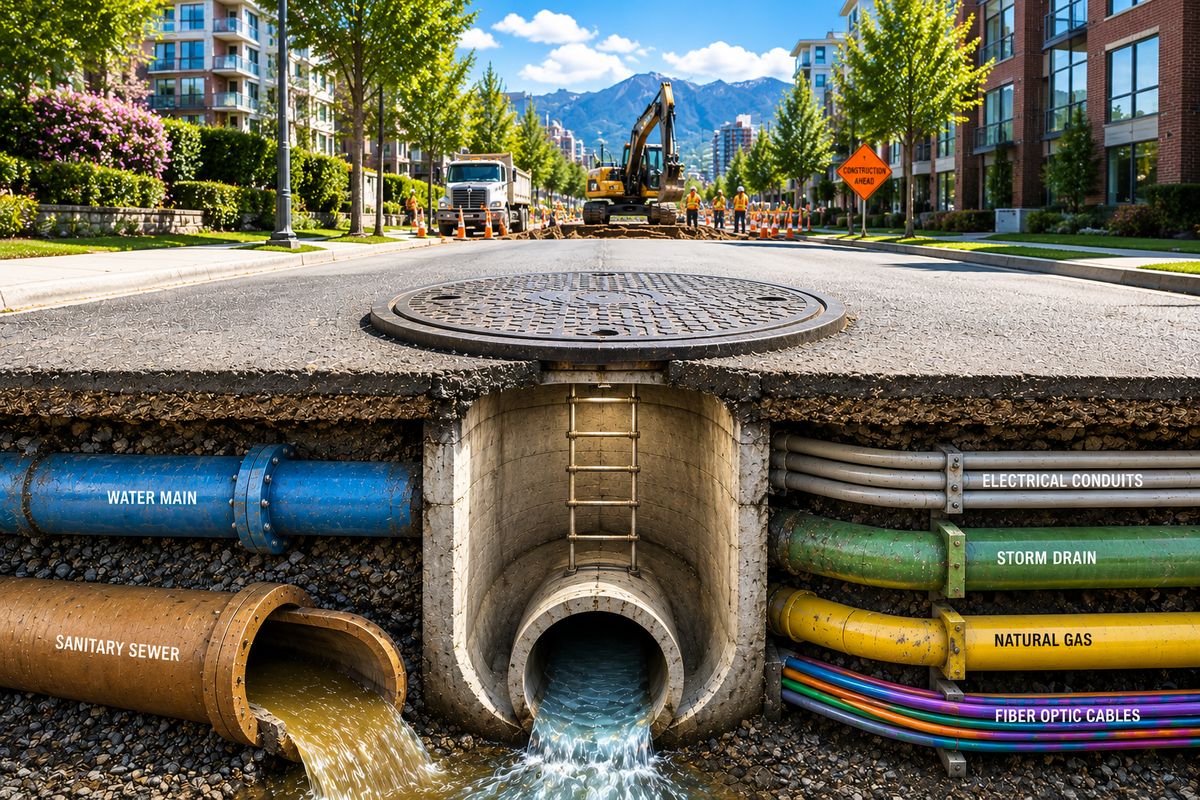
Beneath Vancouver's streets lies a vast underground network that includes:
- Water mains
- Sanitary sewers
- Storm drainage systems
- BC Hydro electrical infrastructure
- FortisBC natural gas lines
- Telecommunications networks
Before new asphalt is laid, much of this underground infrastructure may need to be repaired, upgraded, or replaced.
Vancouver's Infrastructure Is Aging
Many of Vancouver's underground utilities were installed decades ago, with some sewer pipes dating back to the late 1800s. While much of this infrastructure continues to perform reliably, age, population growth, and climate change are driving one of the city's largest long-term capital renewal programs.
The road you drive on is often only the final layer. Beneath it lies critical infrastructure that delivers drinking water, removes wastewater, manages stormwater, supplies electricity, delivers natural gas, and supports communications across the city.
Replacing Aging Water Mains
Every day, Vancouver delivers millions of litres of clean drinking water through hundreds of kilometres of underground water mains.
Like all infrastructure, these pipes have a finite lifespan. Older cast-iron water mains become more susceptible to corrosion, leaks, and occasional breaks as they age. Rather than waiting for failures, the City follows a long-term asset management program that replaces sections of aging water mains before reliability becomes an issue.
This proactive approach helps reduce emergency repairs while maintaining a dependable water supply for residents and businesses.
Why Sewer Separation Matters
One of Vancouver's largest infrastructure projects is something most residents never see.
Many older neighbourhoods were originally built with combined sewer systems, where household sewage and rainwater flowed through the same pipe. During periods of heavy rainfall, these systems could exceed capacity, causing combined sewer overflows (CSOs) that discharged diluted wastewater into waterways such as False Creek, English Bay, Burrard Inlet, and the Fraser River.
To address this, Vancouver has been gradually replacing combined sewer systems with separated sewer systems consisting of two independent pipe networks:
- One pipe carries sanitary sewage to treatment facilities.
- A second pipe carries stormwater directly to receiving waterways.
Separating these systems improves water quality, reduces combined sewer overflows, increases system capacity, and helps the city adapt to more frequent heavy rainfall associated with climate change.
Between 2009 and 2018, Vancouver replaced approximately 83 kilometres of combined sewers with 166 kilometres of separated sewer mains, together with thousands of service connections and several pump stations. The City's long-term objective is to eliminate combined sewer overflows by 2050.
It's About Renewal, Not Failure
Residents sometimes assume widespread road construction means Vancouver's infrastructure is failing.
In reality, much of today's work is planned renewal rather than emergency repair.
The City schedules projects years in advance to replace aging infrastructure before failures become common. While emergency water main breaks and sewer repairs do occasionally occur, most construction reflects long-term investment designed to improve reliability, support housing growth, accommodate population increases, and strengthen climate resilience.
Why Roads Get Dug Up Again
One of the biggest frustrations for drivers is seeing a newly paved road excavated only months later.
Although the City works to coordinate projects between departments and utility providers, perfect coordination is not always possible.
Emergency utility failures, BC Hydro work, FortisBC projects, telecommunications upgrades, private development, or unforeseen underground conditions can all require excavation after paving has already been completed.
From a driver's perspective it may appear inefficient. From an engineering perspective, protecting essential infrastructure sometimes must take priority over preserving new pavement.
By The Numbers
- Vancouver maintains dozens of active transportation and infrastructure projects throughout the year.
- Some sewer infrastructure dates back more than 100 years.
- Approximately 166 kilometres of separated sewer mains were installed between 2009 and 2018.
- Vancouver's goal is to eliminate combined sewer overflows by 2050.
- Much of the city's annual paving program takes place during the warmer construction season.
Business Impact
Road construction creates both challenges and opportunities.
Temporary lane closures, reduced parking, changing pedestrian access, and traffic congestion can affect local businesses during construction.
At the same time, infrastructure investment improves transportation, reduces utility failures, supports new housing, strengthens environmental performance, and increases the reliability of essential public services that businesses depend on every day.
Looking Ahead
Construction is unlikely to slow anytime soon.
As Vancouver continues to grow, investments in water systems, sewer infrastructure, bridges, transportation networks, climate resilience, and new housing will remain essential.
The challenge for governments will be balancing necessary infrastructure renewal while minimizing disruption for residents, commuters, and businesses.
Why It Matters
Road construction is often viewed as an inconvenience.
In reality, it represents one of the largest long-term investments a city makes.
Every street that is opened is usually protecting infrastructure that most residents never see—but rely on every single day. Clean drinking water, wastewater treatment, flood protection, reliable utilities, and transportation all depend on underground systems that must be maintained before they fail.
While construction may test everyone's patience today, much of it is helping ensure Vancouver continues to function reliably for decades to come.
About The Author
Karalee Greer | WBN News - Vancouver
Helping entrepreneurs and organizations better understand the trends shaping business, infrastructure, technology, communities, and the economy. Through WBN News and its growing network of local and global editions, Karalee connects readers with practical insight that explains not only what is happening, but why it matters.
LinkedIn: https://www.linkedin.com/in/karalee/ Subscription to WBN and being a Contributor is Free
Tags: #Vancouver Infrastructure #Road Construction #Water Mains #Sewer Systems #Urban Planning #Karalee Greer #WBN News Vancouver