
Ten Things You Need to Know Before Driving the Coquihalla for the First Time
Driving the Coquihalla for the first time? Discover 10 essential tips for surviving BC's most dramatic — and dangerous — mountain highway. Drive smart, arrive safe.


Driving the Coquihalla for the first time? Discover 10 essential tips for surviving BC's most dramatic — and dangerous — mountain highway. Drive smart, arrive safe.
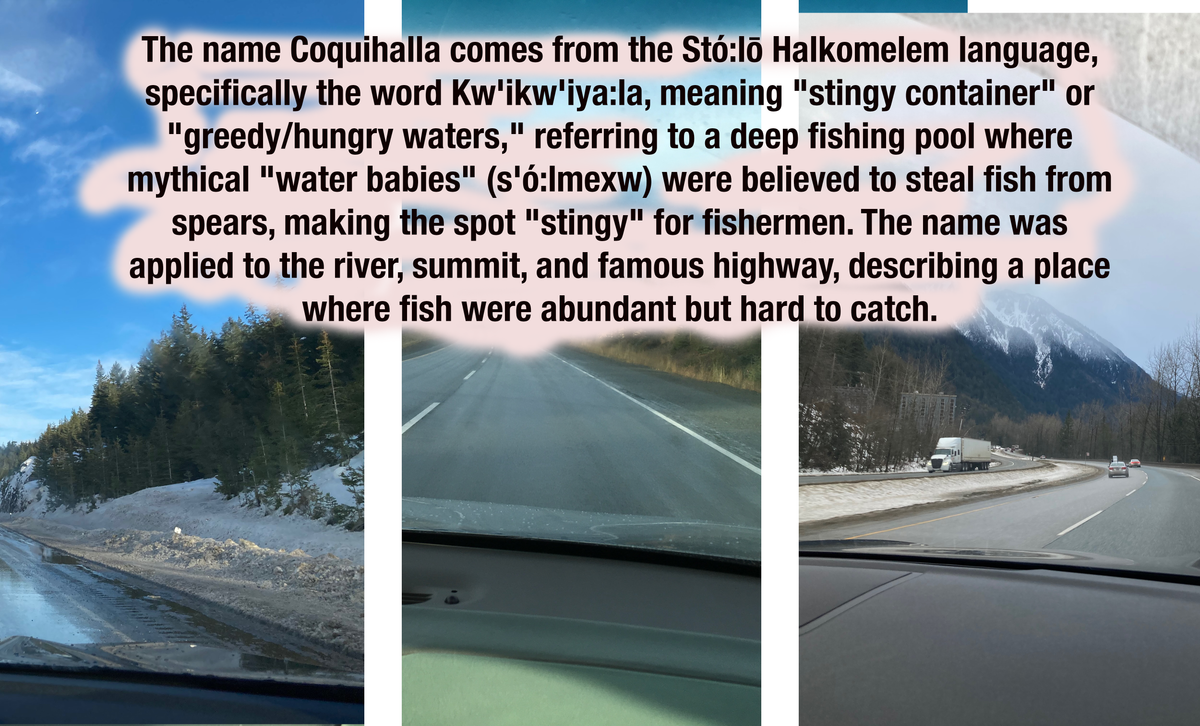
By Elke Porter | WBN News Vancouver | March 8, 2026
Subscription to WBN and being a Writer is FREE!
A Survival Guide (Mostly)
So, you’ve decided to drive the Coquihalla Highway. Congratulations, you brave soul. Stretching the 303 kilometres through the heart of British Columbia’s rugged Interior, the Coquihalla — affectionately known as “the Coq” (the "coke") to locals who have survived it — is one of the most statistically dangerous highways on the planet.
It climbs to 1,244 metres above sea level, cuts through mountain passes that have their own dramatic mood swings, and hosts a parade of trucks, motorhomes, and lead-footed speed demons that could feature in their own action movie franchise. Whether you’re a first-timer nervously clutching your steering wheel or an overconfident road tripper who thinks Google Maps has prepared you for everything, this guide is your co-pilot. Read it, laugh at it, and then actually follow its advice — because the Coquihalla has no sense of humour whatsoever.
On the Coquihalla, Mother Nature treats forecasts as suggestions. You can leave Merritt under brilliant sunshine, hit the summit in a full-on blizzard, descend through hail that sounds like someone throwing gravel at your car, pass through a rain shower, and pull into Hope under partly cloudy skies — all in the same afternoon. Dress in layers, pack an emergency kit, and never, ever trust the weather app on your phone. The Coquihalla laughs at apps.
From October 1st to April 30th, BC law requires winter tires on the Coquihalla — and not the kind you bought in 2009 that you’ve been meaning to replace. We’re talking proper M+S or snowflake-rated rubber. The highway sees serious snowfall, black ice, and freezing fog, and your all-season tires’ opinion of that is entirely irrelevant. Get winter tires. Check them before you go. Your wheels will thank you, and so will every other driver around you.
The Coquihalla is now managed by a private company, and the road surface has the craters to prove it. Some of these potholes have earned names from regular commuters. Drive like you’re navigating a slalom course — slow down, keep your eyes on the pavement, and resist the urge to drift into the next lane to dodge one, because there’s probably a semi-truck there. Check your tire pressure before and after, and if you feel a sudden shimmy, pull over and investigate before a flat tire turns into a very cold roadside adventure.
Here is a quote from a CBC article written on January 17 by Jason Peters, "Two of the potholes are the size of a "small bathtub" says Dave Duncan, the manager of Yellowhead Road and Bridge."
The Coquihalla is a major commercial corridor, which means you’ll share the road with enormous 18-wheelers hauling everything from lumber to frozen fish. Occasionally — and brace yourself for this — two of them will attempt to pass each other on an uphill stretch. It’s like watching two turtles having a very slow, very tense drag race while you wait behind them for what feels like a geological epoch. Be patient. Give them enormous amounts of space. A truck going 90 km/h weighs about 40 tonnes and takes the length of a football field to stop.
Runaway lanes (often called "brakes fail" lanes) on the Coquihalla Highway (Highway 5) in British Columbia are used by 18-wheelers on an as-needed basis rather than a daily or weekly schedule, typically when a driver loses control of their braking system on steep descents. The most dangerous section is the steep descent south of the Zopkios Brake Check (often referred to as "The Smasher" or the "18km hill"), where multiple runaway lanes are installed.
The speed limit on the Coquihalla is 120 km/h, which is already among the highest in Canada. And yet, some drivers treat it as a starting suggestion. BC’s traffic enforcement takes a dim view of this, with speed cameras and patrol vehicles stationed along the highway at regular intervals. A ticket on the Coquihalla isn’t cheap, and “I was keeping up with traffic” is not a legal defence. Set your cruise control, enjoy the mountain views, and arrive with your wallet intact.
Variable speed limit (VSL) signs on the Coquihalla Highway (Highway 5) areactive between the Portia Interchange and the former28 Toll Plaza to enhance safety by reducing speeds during adverse weather. These 13 electronic signs, installed in 2016, adjust limits in real-time based on traffic and pavement data, and are fully enforceable by police. The signs are part of a larger, $25-million per-year Roadside Safety Program that also covers the Sea-to-Sky Highway and the Trans-Canada Highway near Revelstoke.
At some point on your journey, a vehicle will materialize two feet from your rear bumper, apparently convinced that you and your car are personally responsible for all traffic delays since 1986. Do not brake-check them. Do not make eye contact in the mirror. If there’s a safe opportunity, move right and let them pass — and then watch them disappear into the horizon, likely into a speed camera or a pothole. Either way, karma is alive and well on the Coquihalla.
Speed Traps along Highway 5 west, between Kamloops and Merritt, BC:
The long downgrade (6-9%) entering Merritt often has a cruiser (marked or unmarked) or the Camaro RS interceptor checking vehicles with radar. The car will stopped just after the first over pass encountered since Logan Lake. A favorite spot because of the pull out about half a km (1/3rd of a mile for our US friends) after the pass.
Speed Traps along the Coquihalla Highway #8, Merritt-Hope
16 kms south of Merritt on Hwy 5, laser site for traffic heading northbound towards Merritt. Daily. 110 km/h zone. 47 kms south of Merritt on Hwy 5 just over the Juliet Creek Bridge. Laser site in the centre median. 2nd laser site often set up 3 kms north of 1st site.
The Coquihalla passes through some of BC’s most gloriously remote terrain, and your phone will reflect that by going completely dark for stretches at a time. No Instagram. No texts. No checking your email at 110 km/h. Download your maps offline before you leave, let people know your travel plans, and consider this your court-mandated digital detox. The mountains have been there for millions of years without Wi-Fi and they’re doing great. You’ll survive a few hours too.
A ticket for distracted driving in British Columbia, including on the Coquihalla Highway, results in a total fine of $368.
Key Considerations for the Coquihalla:
When there’s an accident on the Coquihalla — and statistically, there will be one somewhere on the highway during your drive — the whole highway can shut down. We’re not talking a 20-minute delay. People have been parked on the Coquihalla for upwards of ten hours waiting for a serious incident to be cleared. Pack snacks, water, a good playlist, and maybe a book. Bring a phone charger. Tell your destination you might be late. Treat it as an involuntary scenic parking experience.
A Yahoo News article written in 2017 said this, "The Coquihalla (Highway 5) has reopened after a 20-hour closure that left hundreds of people trapped in their cars overnight." You don't want to be one of those!
Come July and August, the Coquihalla becomes a parade of recreational vehicles the size of small apartment buildings, piloted by retirees seeing Canada at a leisurely 80 km/h. They are living their best life. You are trying to get somewhere. These goals are in conflict. Use the passing lanes wisely, signal clearly, and remember that the person behind the wheel of that 40-foot Class A motorhome probably worked 35 years to afford that trip. They’ve earned their right to the left lane. Briefly.
Between the potholes, the road debris from trucks, and the sheer number of kilometres you’re covering, a flat tire on the Coquihalla is not an if, it’s a when. Make sure your spare is in good shape before you leave, know where your jack is, and have BC roadside assistance or CAA saved in your phone’s contacts — for when you have cell service again. If you get a flat, pull as far off the road as possible, turn on your hazard lights, and stay behind the guardrail. The shoulder of the Coquihalla is not a great place to linger.
Here’s the thing about the Coquihalla: for all its quirks, drama, and occasional road-rage cameos, it is a genuinely spectacular drive. The mountains are jaw-dropping. The valleys are vast and green. The summit in winter looks like something out of a Narnia sequel. Thousands of people drive it every single day and arrive safely, on time, and wondering what all the fuss was about.
The difference between them and the people who don’t have a great time is almost always preparation. Check the road conditions before you leave at DriveBC.ca, top up your gas in Merritt or Hope, pack an emergency kit, drive to the conditions, and give yourself more time than you think you need. Do all of that, and the Coquihalla will deliver you through some of the most breathtaking scenery in Canada. Ignore it, and the Coquihalla will have stories to tell about you. Drive safe out there.
Elke Porter at:
Westcoast German Media
LinkedIn: Elke Porter or
WhatsApp: +1 604 828 8788.
Public Relations. Communications. Education
Let’s bring your story to life — contact me for books, articles, blogs, and bold public relations ideas that make an impact.
TAGS: #CoquihallaHighway #DriveBC #BCRoadTrip #HighwayLife #BCTravel #RoadTripCanada #WBN News Vancouver #Elke Porter