Privacy is no longer a subset of cybersecurity but a governance discipline shaping how organizations manage data, accountability, and decision-making. As GDPR expectations expand globally, companies must shift from protecting systems to understanding and governing the full data lifecycle.
GDPR is not limited by geography but by data use. U.S. and Canadian companies face rising exposure based on tracking, AI, and internal data practices. Industries handling large-scale data and weak governance face the greatest regulatory risk.
Companies worldwide are misreading GDPR as a regional legal burden rather than a global governance framework. As AI expands data use, misunderstandings of privacy laws expose businesses to hidden risks, regulatory action, and operational blind spots that can no longer be ignored.
Companies worldwide are misreading GDPR as a regional legal burden rather than a global governance framework. As AI expands data use, misunderstandings of privacy laws expose businesses to hidden risks, regulatory action, and operational blind spots that can no longer be ignored.
Privacy is no longer a subset of cybersecurity but a governance discipline shaping how organizations manage data, accountability, and decision-making. As GDPR expectations expand globally, companies must shift from protecting systems to understanding and governing the full data lifecycle.
GDPR is not limited by geography but by data use. U.S. and Canadian companies face rising exposure based on tracking, AI, and internal data practices. Industries handling large-scale data and weak governance face the greatest regulatory risk.
The €525,000 GDPR fine against Locatefamily.com shows that non-EU companies are not outside Europe’s privacy laws. Any business processing EU residents’ personal data must appoint an EU legal representative. Ignoring governance requirements can trigger penalties, regardless of company size.
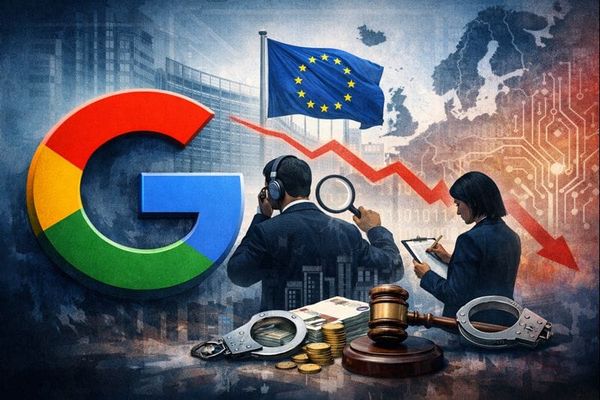
The EU's Google investigation unites competition law and GDPR, challenging whether dominant platforms can use creator data to fuel AI without real consent or economic fairness.
Data protection is more than compliance—it's a reflection of leadership, accountability, and organizational culture. As digital risks grow, overlooking data responsibility is no longer an option. Here's why even non-European firms must act.
Most business mistakes stem from internal data mismanagement, not external forces. GDPR isn’t just a regulation—it’s a strategic playbook for digital trust, clarity, and growth.
AI developers often treat data as clay—but every data point is a person. Misusing it invites lawsuits, regulations, and backlash. GDPR and the EU AI Act now reach beyond borders, protecting individuals and penalizing exploitative companies, even those outside Europe.