By: Joseph James Udoh | Columnist | WBN NEWS Africa / Nashville | June 9, 2026

A groundbreaking vaccine technology developed with the support of artificial intelligence is offering new hope in the global fight against infectious diseases, with researchers aiming to prevent future pandemics before they begin.

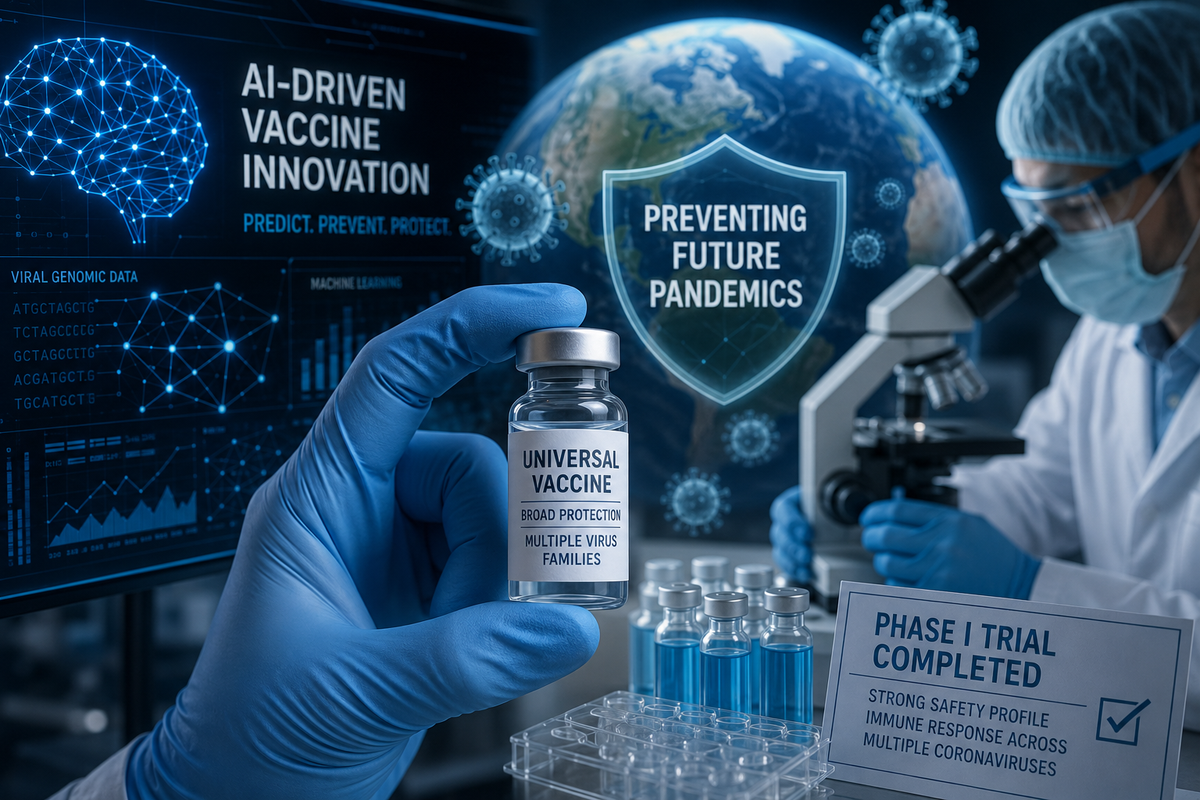
Scientists at the University of Cambridge and biotechnology company DIOSynVax have successfully completed the first human safety trial of an innovative vaccine platform designed to protect against entire families of viruses rather than targeting a single strain. The achievement marks a significant step forward in vaccine science and highlights the growing role of AI in advancing healthcare.

Unlike traditional vaccines, which are often modified in response to new viral variants, the new platform uses machine learning to analyse extensive databases of viral genetic sequences collected through international surveillance efforts. By identifying the essential biological features viruses rely on for survival, the AI helps researchers create what they describe as a “super-antigen” capable of training the immune system to recognize common traits shared across a virus family.

Professor Jonathan Heeney of the University of Cambridge’s Department of Veterinary Medicine described the approach as a major evolution in vaccine design.

“What the COVID pandemic taught us is how fast we can make vaccines, but we’re still using the old paradigm. This is about making one vaccine that will get them all based on their relationships,”

he said.

The Phase I clinical trial involved 49 healthy volunteers between the ages of 18 and 50 in Cambridge and Southampton. Researchers reported a strong safety profile and encouraging immune responses against multiple coronaviruses, including SARS-CoV-2, the original SARS virus, and related bat coronaviruses that could potentially cross into human populations in the future.

The vaccine is delivered through a needle-free microfluidic jet system that uses a high-pressure stream of liquid to introduce genetic instructions into skin cells. Researchers believe this method could improve vaccine accessibility and acceptance among people who are hesitant about injections.

Following the successful trial, preparations are underway for a larger Phase II study involving more than 200 participants. Researchers are also exploring applications of the AI-powered platform for other infectious threats, including Ebola and avian influenza.

“We believe this can be a game-changer. It has the potential to make vaccines far better, broader, and capable of providing more robust protection against future threats,”

Heeney said.

While further testing and regulatory review remain essential, the early results underscore the transformative potential of AI-driven healthcare innovation. As scientists continue to push the boundaries of disease prevention, this breakthrough offers a promising vision of a future where humanity is better equipped to stop outbreaks before they become global crises.

TAG: #AI #Vaccines #Health Care #Pandemics #Innovation #Bio Tech #Research #WBN #Africa Edition #WBN News #WBN News Africa #Joseph James Udoh


Joseph James Udoh is the Editor in Chief for WBN News Africa.
He covers local stories, business insights, and inspiring human-interest topics.

With a background in Computer Science, Theology/Intercultural Studies, and a Honorarium in Human Resource Management, he is passionate about digital empowerment and helping people thrive.

CONNECT:
🔗 LinkedIn: Joseph James Udoh

📧 Email:
kingjworld@gmail.com

▶️ YouTube Channel:

Joseph James Udoh
•Actor 🎬 •Columnist for World Business Network (WBN) NEWS (Africa, and Nashville edition)
Share this article
The link has been copied!