By Elke Porter | WBN News Canada | March 9, 2026
Subscription to WBN and being a Writer is FREE!
On February 20th, 2026, the Musqueam Indian Band and the Government of Canada quietly signed three agreements — a Rights Recognition Agreement, a Stewardship and Marine Management Agreement, and a Fisheries Agreement. Most British Columbians found out about them after the ink was dry.
That's the first problem.
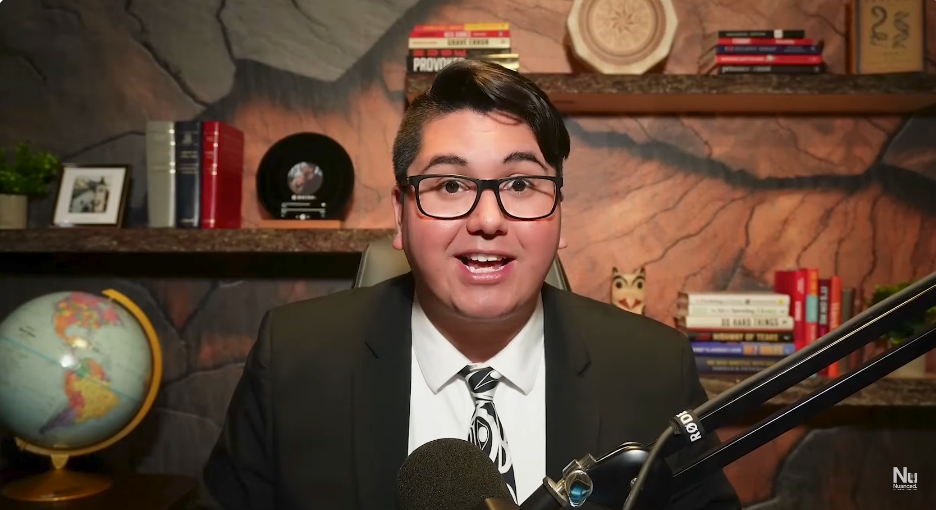
In this episode of the podcast Nuanced, Aaron Pete walks through the actual text of the Rights Recognition Agreement — what it defines, what it commits to, and what it deliberately leaves open for future negotiation. The agreement asserts unextinguished Aboriginal title and self-government rights across a defined territory, establishes a framework for incremental implementation, and maps out a process for future measures that is explicitly designed to be conducted on a confidential, without-prejudice basis.
Which raises the questions that won't go away:
Why was this rolled out so quietly? An agreement touching land, jurisdiction, title, and future governance in one of Canada's most densely populated and expensive regions was announced without public press conferences, plain-language explainers, or accessible maps. No public Q&A. No media availability. Markets price uncertainty — and this kind of ambiguity has real economic consequences for ordinary homeowners, developers, and investors, regardless of what the agreement does or doesn't say about private property.
Why did Premier Eby contradict himself? Reporter Rob Shaw documented that Premier David Eby initially said BC hadn't been briefed and didn't know what was in the agreement — then his own office acknowledged he had attended the signing in person. That contradiction didn't go unnoticed. It made the provincial government look either uninformed, excluded, or less than candid with the public — none of which inspires confidence in a process this consequential.
Where exactly does the public fit in? Part 7 of the agreement makes clear that future scoping discussions — which will shape what comes next — happen confidentially, and that adding any third party (including the province, municipalities, or the public) requires mutual consent from both Canada and Musqueam. That's not a conspiracy. It's in the text. And it's a legitimate reason for citizens to ask: when do we find out what's being planned — before or after it's decided?
Pete isn't arguing the agreement is bad. He's arguing that the way you do reconciliation matters as much as the fact that you do it. If the framework is as sound as federal officials and Musqueam leadership say it is, it should survive sunlight. Publish the full package. Release plain-language summaries. Hold real press conferences. Answer the hard questions about fee simple land, governance scope, and what stays the same for non-Musqueam residents in the Lower Mainland.
Because when governments communicate like they're hiding the ball, people don't default to charity. They default to suspicion — and that suspicion is doing real damage to the prospects of durable reconciliation.
The question isn't whether Musqueam has rights and title. The courts and the Constitution already addressed that. The question is: why is a process this large being governed like an internal memo?
Show us the implications. Do the press conferences. Take the hard questions.
Because reconciliation can't be built on vibes, secrecy, and people screaming at each other online. If you want to listen to the full podcast yourself, find it here:
https://youtu.be/5F32VEcvYwM?si=Cv1IxfvqFfJXGJGE
Elke Porter at:
Westcoast German Media
LinkedIn: Elke Porter or
WhatsApp: +1 604 828 8788.
Public Relations. Communications. Education
Let’s bring your story to life — contact me for books, articles, blogs, and bold public relations ideas that make an impact.
TAGS: #Musqueam #Reconciliation #BCPolitics #IndigenousRights #Transparency #TruthAndReconciliation