
Peachy Magistrado





By Peachy Magistrado | WBN News | October 14, 2026 Editor: Karalee Greer
Subscription to WBN and being a Contributor is Free
For someone living with a disability, independence doesn't always mean doing everything alone.
It can mean choosing when to get up, what to eat, where to go and how to spend the day.
Sometimes, having the right support makes those everyday choices possible.
People living with physical, cognitive or other disabilities may benefit from assistance at home. But their needs, abilities and personal goals can be very different.
That's why good home care should begin with the person, not simply a list of tasks.
One Person's Needs Are Not Another's
Two people living with similar disabilities may require very different kinds of assistance.
One person may use a wheelchair and need help with transfers or preparing meals. Another may walk independently but need support organizing daily activities or getting to appointments.
Some individuals require regular assistance throughout the day. Others need help only with certain activities.
Personalized care recognizes these differences.
Rather than assuming what someone cannot do, caregivers can work with individuals and families to understand what assistance is wanted and where independence can be maintained.
Everyday Support Can Make a Big Difference
Home caregivers may assist with activities such as:
- Bathing, dressing and personal hygiene
- Meal preparation and household tasks
- Mobility and safe transfers
- Transportation and community outings
- Medication reminders, where appropriate
- Companionship and daily routines
These activities may seem ordinary, but they can make a meaningful difference to someone's ability to remain comfortable and active at home.
Medical tasks require appropriately qualified professionals and should not be confused with non-medical home care.
Independence Is About Having Choices
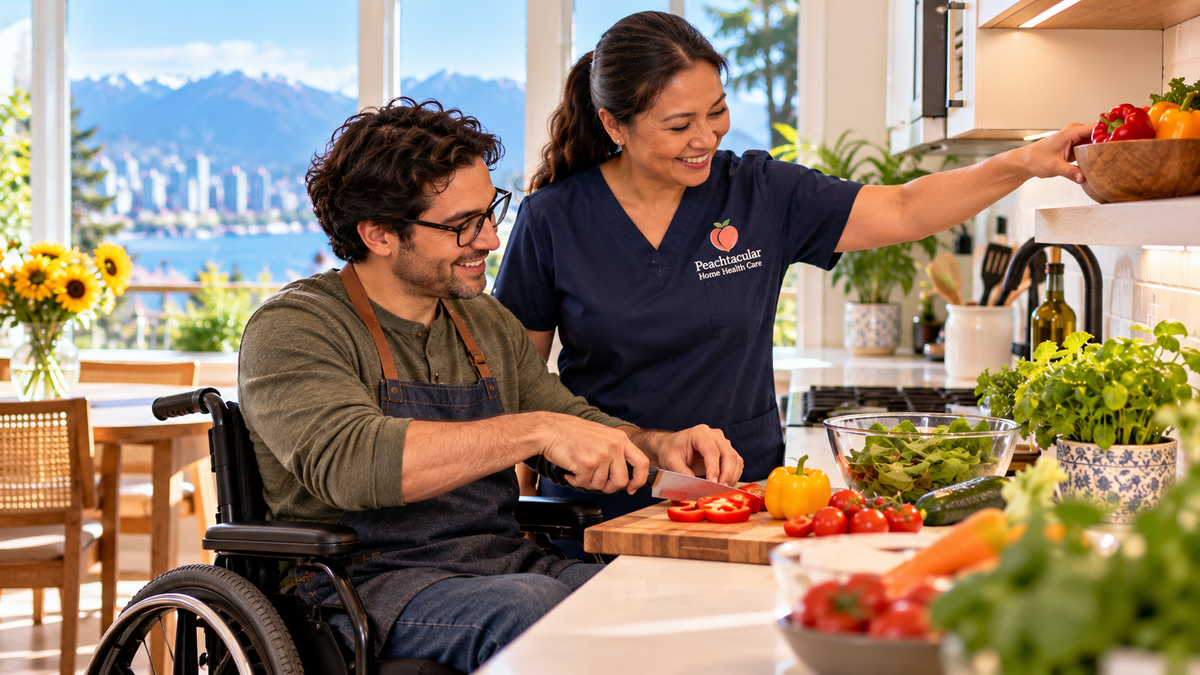
Imagine an adult who uses a wheelchair and enjoys cooking.
They may not need someone to prepare every meal. Instead, they might benefit from assistance reaching ingredients, setting up the kitchen or cleaning afterward.
With the right support, they can continue participating in an activity they enjoy.
The same principle applies to shopping, hobbies, visiting friends and other everyday activities.
The goal is not to do everything for someone. It's to help them continue doing what matters to them.
Care should respect the individual's preferences, abilities, privacy and right to make decisions.
Emotional Well-Being Matters Too
Living with a disability can sometimes create barriers to social activities, transportation or community participation.
Reliable support may help individuals stay connected with friends, family and activities they enjoy.
A caregiver can also provide companionship and consistency in daily routines.
However, companionship should complement—not replace—the person's own relationships and community connections.
Feeling respected, listened to and included in decisions is an important part of quality care.
Finding the Right Level of Support
Home care is not necessarily an all-or-nothing decision.
Some people benefit from a few hours of assistance each week. Others need daily or more extensive support.
Needs may also change over time.
Individuals and families should discuss what services are available, caregiver qualifications, scheduling, privacy and how care plans can be adjusted.
Most importantly, the person receiving care should have a meaningful voice in those decisions whenever possible.
Why It Matters
Disability does not eliminate a person's desire for independence, privacy or control over everyday life.
Personalized home care can help remove practical barriers while respecting individual abilities and preferences.
For some, that means assistance getting dressed. For others, it means preparing a favourite meal, visiting friends or continuing a valued hobby.
The right support doesn't take independence away. It helps make independence possible.
About The Author
By Peachy Magistrado | WBN News Founder | Peachtacular Home Health Care Website: https://peachtacularhhc.com/
I believe every senior deserves compassionate, respectful care that promotes dignity, independence, and quality of life. My goal is to help families find personalized home care solutions that allow their loved ones to remain safe, comfortable, and supported in the place they call home.
Peachy Magistrado is the founder of Peachtacular Home Health Care, where she works with seniors and their families to provide personalized home-care support focused on dignity, independence, safety and quality of life.
Editor: Karalee Greer
Subscription to WBN and being a Contributor is Free
Disclaimer: This article provides general information and is not medical advice. Home care services and caregiver qualifications vary. Individuals requiring medical or clinical care should consult an appropriate regulated healthcare professional.
Tags: #WBN News #Peachy Magistrado #Disability Support #Home Care #Independent Living #Accessible Living #Personalized Care #Caregivers #Vancouver
Sources
- Peachtacular Home Health Care — Experience the Difference of Tailored Care Support
Members Discussion