By Elke Porter | WBN News Vancouver | February 13, 2026
Subscription to WBN and being a Writer is FREE!

You are holding what may be the most important briefing you read this year — not because we enjoy alarming you, but because the digital world has become a battlefield, and far too many good, trusting, hardworking people are losing everything on it. We are talking about real money. Real heartbreak. Real lives upended in a matter of hours by faceless criminals operating from the other side of the world — and sometimes from just down the street.

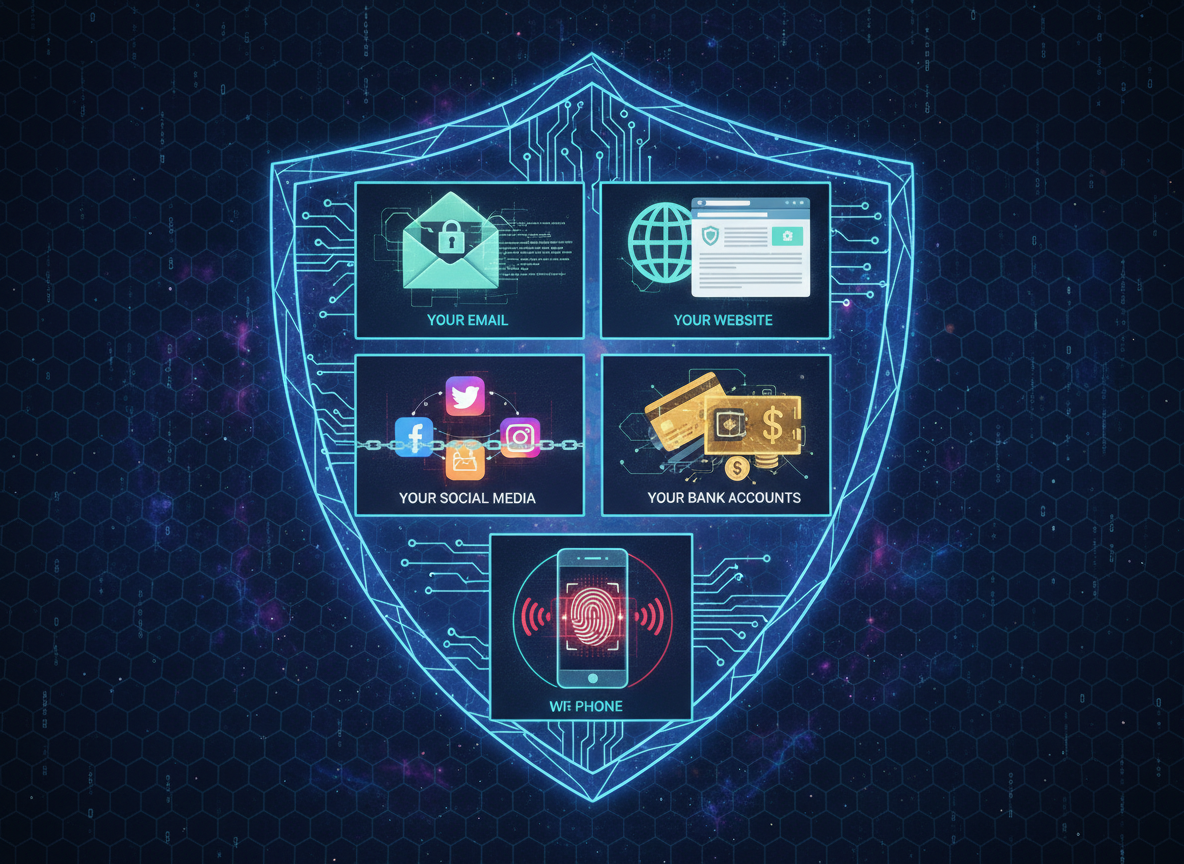
In this special investigative edition of the Cyber Shield Report, we cover the five pillars of your digital life that cybercriminals are actively exploiting right now: your email, your website, your social media, your bank accounts, and your phone. We will give you the knowledge — the actionable, no-nonsense strategies — that security professionals use to protect their most sensitive information. This is not a guide written for tech experts. It is written for every person who has ever clicked a link, posted a photo, sent a text, or swiped right.

We will also shine a spotlight on one of the cruellest forms of online crime in operation today: the romance scam. These sophisticated predators harvest hope, loneliness, and trust from vulnerable people — using dating apps, travel meetups, and elaborate online personas to drain bank accounts and shatter lives. The stories in this edition are real. The names have been changed. The pain has not. 

Read this. Share it with someone you love. Because the best firewall in the world is an informed human being. Let's start with one of the most important in terms of cybersecurity: Your email.

SECTION 1: YOUR EMAIL — The Keys to Your Kingdom

 Most people treat their email inbox like a mailbox at the end of a driveway — visible, accessible, and largely unguarded. That is a catastrophic mistake. Your email address is the skeleton key to your entire digital life. It is used to reset passwords for your bank, your investment accounts, your social media profiles, your healthcare portal, and nearly every subscription you have ever signed up for.

A cybercriminal who gains access to your email does not just read your messages — they own you. Within minutes, they can reset every critical password you have, lock you out of your own accounts, and begin draining your finances. Phishing attacks, which are fraudulent emails designed to look legitimate, are now so convincingly crafted that even IT professionals have been fooled. These emails may impersonate your bank, the IRS, Amazon, FedEx, Microsoft, or even a trusted colleague. The moment you click a malicious link or download an infected attachment, the damage begins.

Protecting your email requires a layered approach, not a single action. First and most critically, you must enable two-factor authentication, or 2FA, on your email account immediately. This means that even if a criminal obtains your password, they still cannot log in without a secondary code sent to your phone or generated by an authenticator app. Second, never use your primary email address for casual signups, loyalty programs, or any service you do not fully trust — create a secondary "throwaway" address for these purposes to keep your primary inbox clean and off target lists. Third, learn to inspect email sender addresses closely: scammers routinely use addresses like "support@amazon-help-center.com" rather than "@amazon.com" to fool the eye. Fourth, never click a link in an email to log into a financial service — always open a new browser tab and navigate directly to the site yourself. Fifth, consider using an encrypted email provider such as ProtonMail for your most sensitive communications. Discipline with email is not paranoia — it is the single most powerful step you can take to prevent a digital catastrophe.

REAL TALK: In 2024, the FBI's Internet Crime Complaint Center reported that Business Email Compromise (BEC) scams alone caused more than $3 billion in losses in a single year — making it the most financially devastating form of cybercrime recorded.

Email Safety Checklist

✔  Enable two-factor authentication (2FA) on your primary email account today

✔  Use a unique, strong password for your email that you use nowhere else

✔  Create a secondary email for non-essential signups and newsletters

✔  Hover over links before clicking — verify the true destination URL

✔  Never download unexpected attachments, even from known senders

✔  Consider encrypted email (ProtonMail, Tutanota) for sensitive communications

Elke Porter at:
Westcoast German Media
LinkedIn: Elke Porter or
WhatsApp:  +1 604 828 8788.
Public Relations. Communications. Education

Let’s bring your story to life — contact me for books, articles, blogs, and bold public relations ideas that make an impact.

TAGS: #Email Security #Phishing Alert #Cyber Safety #Protect Your Inbox #TwoFactor Auth #Stop Email Scams WBN News Vancouver #Elke Porter

Share this article
The link has been copied!