
Beyond Thought








By Les Mottosky
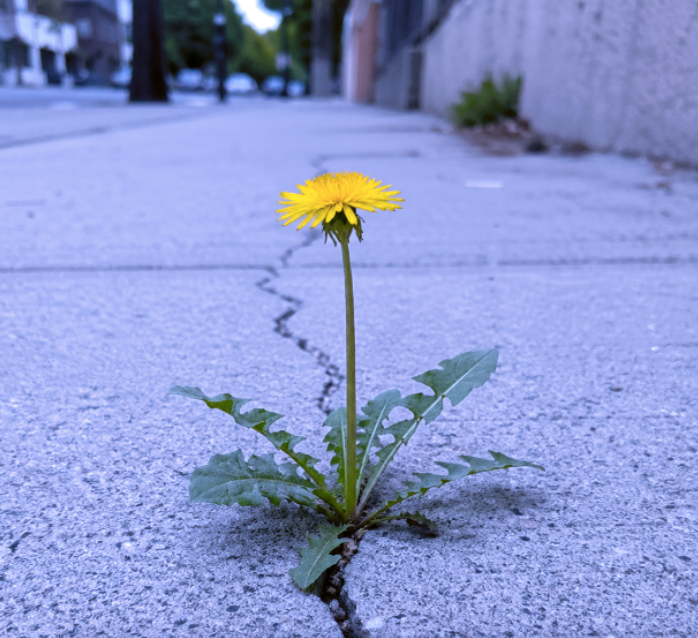
One of the more baffling and absurd details of suburban North American life is homeowners – and municipalities – spraying cancerous chemicals on a plant medicine with anticancer properties (dandelion).
Glyphosate – the active ingredient in the "weed" killer Round-up – in all likelihood causes cancer in humans with concentrated and consistent exposure. The powerful chem lobbies slithering around national capitals will prevent the release of any clinical evidence they might possess, but the legal precedent is damning.
As of May 2026, Bayer has paid out nearly $11 billion in Roundup lawsuit settlements to approximately 170,000 people who developed cancer from glyphosate exposure. Additionally, there have been 8 successful Roundup verdicts against Bayer totalling over $6 billion since October 2023.
If industrial regulation was enacted via legal settlements, glyphosate would be verboten.
If it was influenced by nature, we'd all be drinking dandelion smoothies.
Before we get into the benefits of dandelion roots and greens, this would be an incomplete exploration if the agricultural and forest management applications of glyphosate were omitted.
Wheat farmers use it as a desiccant to dry out the crop so molds don't accumulate during harvest. It's speculated by those-in-the-know that many diagnosed cases of celiac disease and gluten intolerance are more accurately a form of glyphosate poisoning. (That's why many "gluten victims" can eat all the pasta, bread and tiramisu they want in Italy without consequence; glyphosate as a pre-harvest desiccant is prohibited there. Viva Italia!)
In addition to 'Big Ag' drenching our food in this carcinogen, many states and provinces spray their forests with glyphosate. The main claimed benefit is that it helps control unwanted vegetation (e.g. broadleaf plants, shrubs, hardwoods) that compete with desired coniferous trees for resources like sunlight, water and nutrients. Their intention is to promote the growth of commercial timber species like pine and spruce by reducing competition from other plants. Some governments also claim it helps reduce wildfire risk by removing “fuel” vegetation.
But if glyphosate is also a desiccant, couldn't it potentially create more extremely dry fuel for fires?
And might this help explain why forest fire scale and severity has increased substantially since they started spraying forests?
Are these questions worthy of consideration?
Pre-millennium, these infernos were more commonly called forest fires and they weren't as devastating or big. Nowadays, the media refers to it as 'wildfire season' - a fifth annual inevitability once winter snow melts and the rain of spring stops.
So...about those dandelions.
These guys are nutritionally dense. They contain compounds many of us buy pills to fill holes in our diets; including magnesium, calcium and antioxidants. They're particularly high in one of the most difficult vitamins to get through our diets: vitamin K.
Dandelions also offer digestive support, gut healthy pre-biotics, liver support as well as blood sugar regulation and metabolism. They're even a diuretic.
D'lions can be consumed in many ways. The young greens are great in salads or sauteed like spinach. They can also be mixed into pestos, soups, stews, salsas or green smoothies. In addition, many people use the roasted root version as a coffee replacement. And if their bitter-ish flavour profile isn't your thing, dandelions can be taken in capsules or tinctures. (A quick aside: traditional Chinese medicine promotes that most bitter foods are often the sign of an excellent liver tonic.)
And about that medicine: dandelion contains biologically active compounds with potential anticancer properties. Test-tube and animal studies on breast, prostate, liver and colon cancer as well as melanoma and leukemia have all been diminished in the presence of dandelion.
This early research is promising enough to justify continued study. Dandelion has been proven to trigger apoptosis (programmed death) in some cancer cells. It also reduces pre-cursors to cancer like oxidative stress and inflammation. Further to that, it's now known to slow tumour-cell growth in lab settings.
Back to glypho-satan (typo intended):
Dr Zach Bush is a man who left academia to pursue nutrition almost 20 years ago. He's since become a megaphone for the dangers of glyphosate, having spent the past 12 years studying it's impacts. From his learnings comes a grim warning: if this chemical was banned today, it would likely take 50 years for glyphosate levels in our soil, water and air to start coming down! Yes, it's even in the air. Vehicles that burn ethanol – a corn based fuel – will have glyphosate in it's fumes and vapours. This toxin is highly water soluble, meaning it contaminates, disperses – and accumulates – in the bodies of water it enters. (Timely reminder: you are 60% water.)
Unfortunately, there is no cheerful way to wrap up this weed rant.
But there is an invitation.
Maybe, as you peruse your lawn this spring and notice a flush of dandelions, rather than running to the garage for a spray bottle, pick them for your salad.
It's more than a small rebellion against the machine.
It's wisdom.
TAGS: #Beyond Thought
Les Mottosky
Adaptation Strategist // I help organizations turn creativity into their competitive advantage by aligning leadership, culture and strategy to unlock adaptive innovations.
Ask about the Clarity Engine Process.
Members Discussion