By Elke Porter | WBN News Vancouver | March 18, 2026
Subscription to WBN and being a Writer is FREE!

There is a certain poetic irony unfolding in the world right now. While geopolitical chaos rattles commodity markets and oil edges toward the unthinkable territory of $200 a barrel, something genuinely surprising may be happening: humanity is being nudged — rather forcefully — toward the greener future it spent decades promising but never quite delivering.

To put that number in perspective: the highest oil price ever recorded in nominal terms was around $147 a barrel in July 2008 — a spike that triggered recession fears, grounded airlines, and briefly made the Prius the most coveted car on the road. We recovered, forgot the lesson, and went back to idling our SUVs in school pickup lines. $200 would be a different conversation entirely.

💡
$147/bblThe previous all-time high — reached in July 2008 — caused global economic shockwaves. A $200 barrel would dwarf it, and dwarf our assumptions about everyday life along with it.

Sri Lanka, never shy about signalling what the rest of us are quietly dreading, has already taken the bold step of cancelling Wednesdays entirely. Schools closed. Government offices dark. Universities on pause. Not because of a radical four-day work week policy, but because running the country for five days had simply become unaffordable. It sounds like satire. It is not.

Closer to home, in places like Vancouver — a city that prides itself on its sea-to-sky scenery and its very expensive coffee — life is quietly starting to rearrange itself.

Some actions taken by airlines in response to the 2026 crisis:

  • Fare Hikes: Airlines are increasing ticket prices and introducing fuel surcharges to pass on high operational costs to passengers.
  • Rising Costs at YVR: Jet fuel prices at Vancouver International Airport (YVR) have jumped significantly, often surpassing $1.30 per litre, well above the 90-cent average anticipated by carriers.
  • Operational Adjustments: Major carriers (Air Canada, WestJet) are using fuel hedging to mitigate costs, while also evaluating route capacity and potential cuts to less profitable routes if prices remain elevated.
  • Suspensions: Due to severe oil shortages and fuel availability issues in specific regions, such as Cuba, WestJet and Air Canada have suspended flights until at least late April/June 2026.

Then come the cabs. The BC Taxi Association has appealed to the Passenger Transportation Board for permission to raise fares or implement temporary fuel surcharges to combat these increased operating costs.Then the personal cars. The once-sacred ritual of the solo commute — one person, one two-tonne vehicle, crawling along the Ironworkers Memorial Bridge — is becoming a luxury nobody can justify. In its place? Electric bikes are flying off shelves. Car-pools feel newly respectable.

And here is where Vancouver's story gets genuinely interesting. Pedicabs — bicycle rickshaws — already ply the streets of Gastown, Yaletown, and Chinatown, operated by companies like Tikki Tikki Pedicabs and regulated by the City. The Vancouver Cycling Without Age Society even runs trishaw rides for seniors. What was once a charming curiosity for tourists may quietly become essential infrastructure.

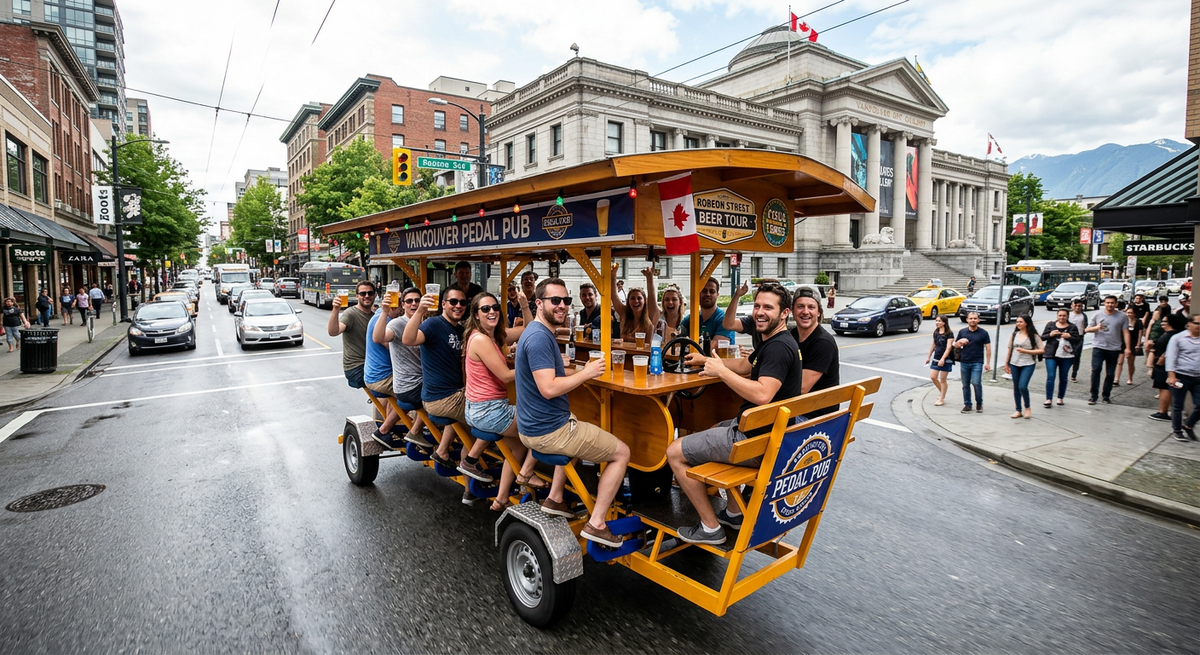
Meanwhile, the city's pedal pubs — those gloriously absurd multi-passenger party bikes beloved by bachelor parties and corporate team-building days — may find themselves rebranded from novelty to necessity. Brewery hopping by pedal power: suddenly, the most sensible commute in town.

Which brings us to the joke that isn't really a joke: that one man's chaotic trade and energy policies may have done more for the green movement than thirty years of international climate agreements. The irony is almost too rich to fully digest — like discovering that the person who knocked over the chess board has somehow accidentally set up the perfect game.

But here is the thing about forced resets: they work. When petrol becomes a genuine luxury, people walk more. Neighbourhoods become neighbourhoods again — local shops, local parks, local faces. Remote work, long resisted by managers who confused presence with productivity, becomes the obvious and obvious-only option. Air quality in cities improves within weeks when traffic thins. People rediscover that their legs are, in fact, functional.

Some Key Transportation Alternatives in Downtown Vancouver:

  • Bike Rentals & E-Bikes: Several shops in the downtown area offer daily rentals, including city bikes, E-bikes for easier commuting, and kids' trailers. Top spots include SPOKES, YES Cycle, and Cycle City.
  • Mobi Public Bike Share: Vancouver’s bike-share system provides a flexible, affordable way to get around with docking stations located throughout the downtown core.
  • Active Transportation Goal: The City of Vancouver aims for two-thirds of all daily trips to be made by walking, cycling, or transit, reducing reliance on personal motor vehicles.
  • "Car Light" Lifestyle: The increase in oil prices makes alternative options like biking and walking more attractive alternatives to driving in high-traffic, low-parking areas like downtown. 

History has a habit of delivering the right outcome through entirely the wrong door. Perhaps $200 oil is simply that door — ugly, expensive, and, against all odds, leading somewhere worth going.

Elke Porter at:
Westcoast German Media
LinkedIn: Elke Porter or
WhatsApp:  +1 604 828 8788.
Public Relations. Communications. Education

Let’s bring your story to life — contact me for books, articles, blogs, and bold public relations ideas that make an impact.

TAGS: #Oil At 200 #Green Reset #Pedal Not Petrol #Sustainable Vancouver #Climate Wins #Accidental Eco Warrior #WBN News Vancouver #Elke Porter

Share this article
The link has been copied!