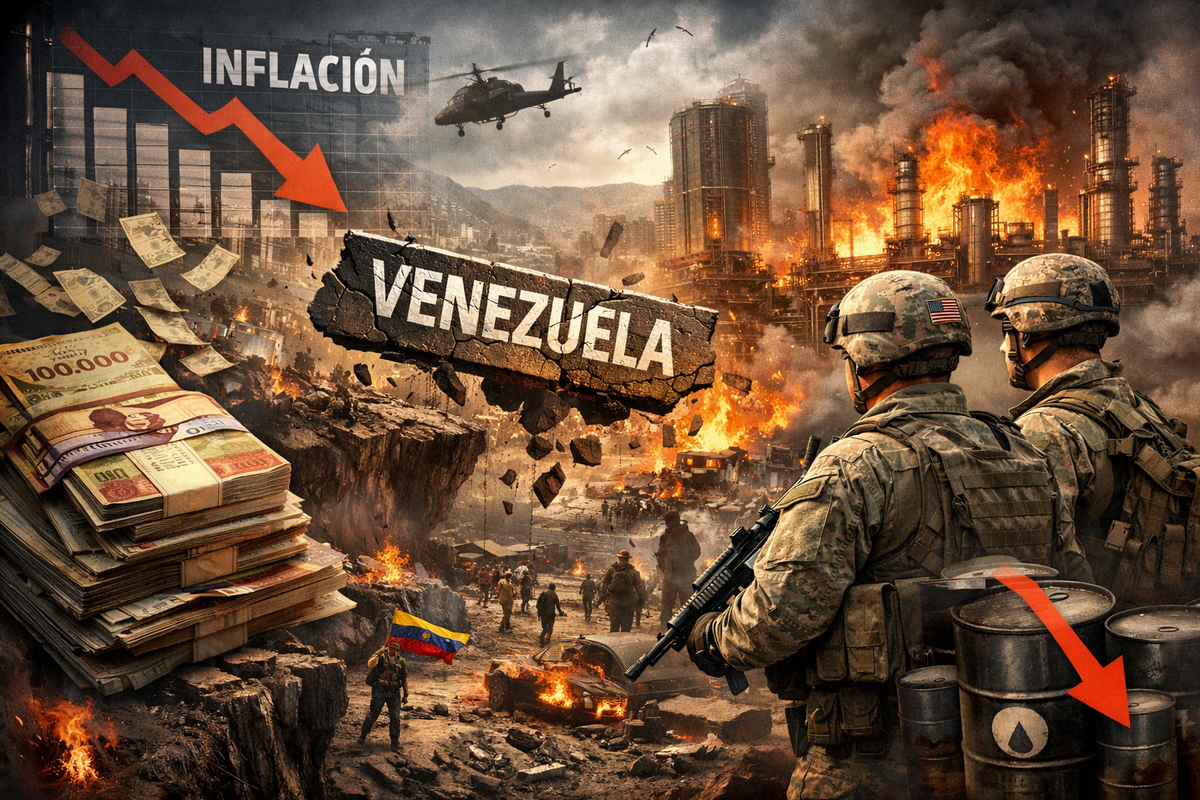
PART 1: The Crisis That Led to U.S. Intervention
By Elke Porter | WBN News Global | January 3, 2026
Subscription to WBN and being a Writer is FREE!
In the months leading up to January 2026, Venezuela stood at a critical crossroads, caught between a troubled past and an increasingly volatile future. Once celebrated as South America's wealthiest nation, buoyed by the world's largest proven oil reserves, the country had experienced one of the most dramatic economic collapses in modern history.
Stories of families choosing between safety abroad and their sense of duty at home captured the human cost of Venezuela's crisis—a crisis rooted in political upheaval, economic mismanagement, and escalating international tensions. As the Trump administration intensified pressure through naval blockades, vessel seizures, and strikes on suspected drug-trafficking operations, the situation deteriorated rapidly.
Understanding how Venezuela arrived at this explosive moment, and what factors drove the United States to launch military strikes on January 3, 2026, requires examining both the nation's historical trajectory and the complex forces that transformed a regional dispute into direct military intervention. This is the story of what led to the attack—the decades of decisions, missed opportunities, and mounting pressures that brought two nations to the brink of war.
From Colonial Wealth to Oil Prosperity
Venezuela's economic story begins with its liberation from Spanish colonial rule in 1821, when Simón Bolívar led the country to independence. For much of the 19th century, Venezuela remained primarily agricultural, exporting coffee and cacao. The discovery of massive oil reserves in the early 20th century transformed everything. By the 1970s, Venezuela had become Latin America's richest country per capita, with oil revenues funding ambitious social programs, infrastructure development, and a growing middle class. The government nationalized the oil industry in 1976, creating Petróleos de Venezuela (PDVSA), which became the cornerstone of national wealth and international influence.
The Chávez Era and Economic Restructuring
Hugo Chávez's election in 1998 marked a fundamental shift in Venezuela's economic direction. His "Bolivarian Revolution" promised to redistribute oil wealth to the poor through expansive social programs called "missions." While these initiatives initially reduced poverty and inequality, they also sowed seeds of future collapse. Chávez's government increasingly controlled private industry, imposed price controls, seized foreign assets, and relied heavily on oil revenues to fund spending. When oil prices were high, the model appeared sustainable. However, structural problems—including declining oil production, lack of economic diversification, and growing corruption—created vulnerabilities that would later prove catastrophic.
Collapse and Crisis Under Maduro
Nicolás Maduro inherited power in 2013, just as oil prices began their steep decline. The economy, already weakened by mismanagement and over-reliance on petroleum exports, entered freefall. Hyperinflation reached rates exceeding one million percent by 2018, destroying savings and making basic goods unaffordable. GDP contracted by more than 75 percent between 2013 and 2020—a decline comparable to war-torn economies. Over seven million Venezuelans fled the country, creating one of the world's largest refugee crises. Those who remained faced widespread shortages of food, medicine, and essential services. Corruption and fear became defining features of daily life, as regime loyalists controlled access to scarce resources and opposition members faced persecution.
International Sanctions and Geopolitical Tensions
Venezuela's relationship with the United States has significantly impacted its economic trajectory. The U.S. imposed increasingly severe sanctions beginning in 2017, targeting individuals, entities, and eventually Venezuela's crucial oil sector. These measures aimed to pressure Maduro's government but also deepened the humanitarian crisis by restricting Venezuela's ability to export oil and access international financial systems. The sanctions debate remains contentious: supporters argue they're necessary to confront authoritarianism, while critics contend they primarily harm ordinary Venezuelans. Meanwhile, Venezuela has strengthened ties with Russia, China, and Iran, seeking alternative markets and political support while becoming further isolated from Western economies.
Pathways to Economic Recovery
Venezuela's recovery will require addressing interconnected political, institutional, and economic challenges. First, restoring oil production capacity is essential but insufficient alone. PDVSA has deteriorated dramatically, with production falling from 3.5 million barrels daily in 1998 to under 700,000 by 2020. Revitalizing the sector requires massive investment, technical expertise, and transparent governance—difficult without political stability and international confidence. Second, economic diversification must finally become reality rather than rhetoric. Venezuela possesses agricultural potential, mineral wealth, and human capital, but developing these sectors requires consistent policies, property rights protection, and reduced corruption. Third, rebuilding institutions that ensure rule of law, combat corruption, and protect economic freedoms is fundamental to attracting investment and restoring public trust.
The Human Element: Why People Return
The decision facing Venezuelan citizens—staying safely abroad versus returning home—reflects Venezuela's greatest asset and challenge: its people. Despite everything, many Venezuelans maintain deep connections to their homeland and feel responsibility for its future. This commitment could drive recovery if channelled effectively.
However, successful reconstruction requires creating conditions where families don't face the impossible choice between their children's safety and their national duty. This means not just economic reforms but addressing the security concerns, educational quality, and corruption that make daily life difficult. Brain drain remains one of Venezuela's most serious problems, as educated professionals who could lead recovery continue leaving for opportunities elsewhere.
Venezuela's path from prosperity to crisis demonstrates how quickly economic collapse can occur when governance fails, institutions weaken, and policy mistakes compound. The country that once seemed invincible, protected by vast oil wealth, proved vulnerable to the same forces that destabilize less resource-rich nations—corruption, authoritarianism, and economic mismanagement.
Yet Venezuela's recovery, while challenging, remains possible. The country still possesses natural resources, strategic location, and a diaspora of talented citizens who might return under better conditions. What's required is leadership committed to transparency, economic freedom, and rebuilding democratic institutions—precisely what has been absent for decades.
Families who sacrifice safety for principle, represent Venezuela's hope. Their country can bounce back, but only through fundamental changes that transform daily life from one of barbed wire and fear into one where children can walk freely and opportunities exist for those who work honestly. That transformation won't happen overnight, but recognizing what must change is the necessary first step toward a better future.
Elke Porter at:
Westcoast German Media
LinkedIn: Elke Porter or
WhatsApp: +1 604 828 8788.
Public Relations. Communications. Education
Let’s bring your story to life — contact me for books, articles, blogs, and bold public relations ideas that make an impact.
TAGS: #Venezuela Economy #Latin America Crisis #Economic Recovery #Venezuelan Diaspora #Oil Economics #Political Change #WBN News Global #Elke Porter