By Troy Tyrell | WBN News Vancouver | March 02, 2026
📢 Subscription to WBN and being a Contributor is FREE.
👉 Click here to begin reading or writing with us!
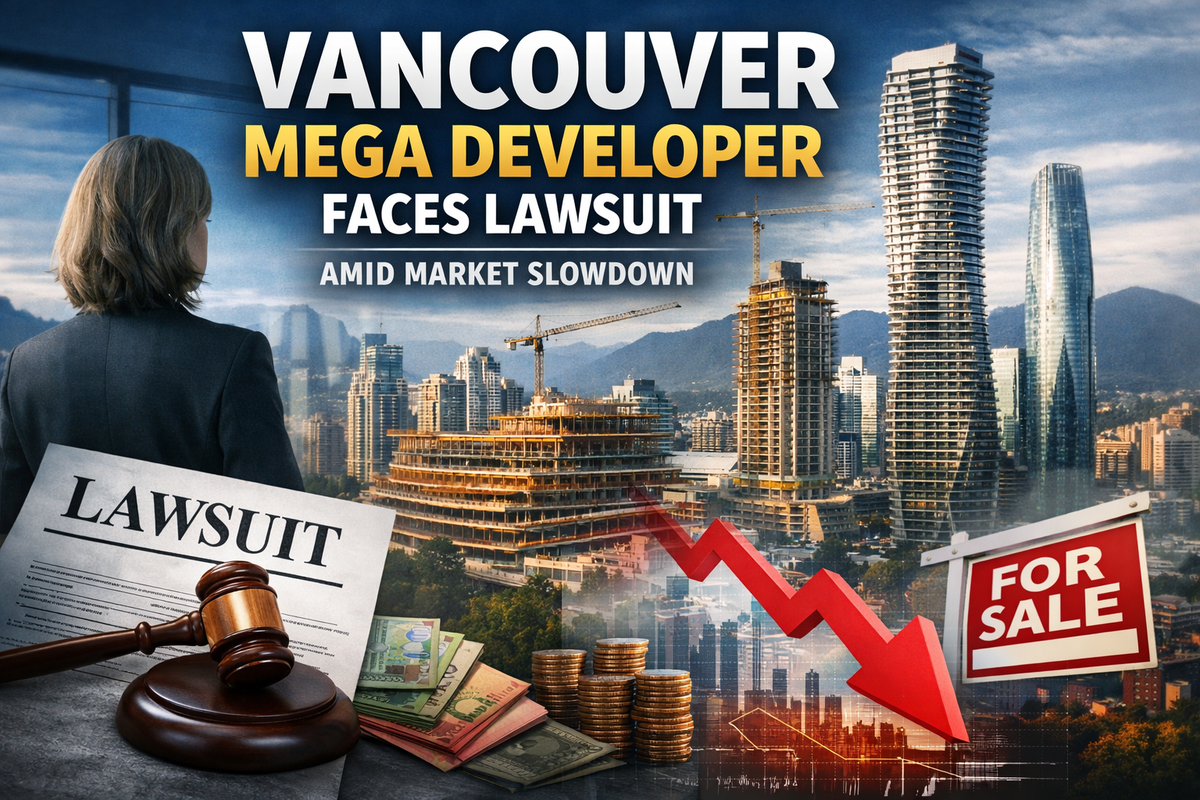
Vancouver’s high profile real estate market is under renewed scrutiny following a civil lawsuit involving a former executive at Westbank, one of British Columbia’s most recognizable development firms.
The lawsuit, filed by a former vice president of development, alleges the company owes approximately $1.2 million in compensation tied to project performance. Westbank disputes the claim, arguing that the compensation was dependent on profitability thresholds that were not met.
While the case is a contractual dispute on paper, the implications extend further into Vancouver’s development landscape.
The Projects at the Center
Westbank is behind several landmark developments that have helped reshape Vancouver’s skyline, including:
- Oakridge Park
- Sen̓áḵw
- The Butterfly
These projects represent billions of dollars in investment and years of planning. However, like many large scale developments launched during peak market cycles, they are now navigating higher interest rates, construction cost inflation, and more cautious buyers.
A Market in Transition
Vancouver’s pre sale condo market has cooled compared to the aggressive pace seen between 2016 and 2021. Rising borrowing costs and global economic uncertainty have shifted buyer behavior. Investors are more selective. End users are more price sensitive. Financing structures are tighter.
In this context, profit participation structures tied to projected returns can become contentious when timelines stretch or margins compress.
This lawsuit does not automatically signal financial instability. What it does signal is pressure. Pressure reveals the reality behind projections made during boom cycles.
What This Means for Vancouver
Vancouver remains one of North America’s most supply constrained urban housing markets. Demand fundamentals still exist. Immigration, geographic land limitations, and strong global interest continue to support long term outlooks.
But the era of automatic absorption of luxury inventory appears to be paused.
For business owners, investors, and professionals watching the market, this situation reinforces three lessons:
- Timing matters in development cycles.
- Compensation structures tied to projected profits carry risk.
- Market corrections test even the most established brands.
The Broader Conversation
The lawsuit also highlights a larger issue facing Canada’s urban centres. How do we balance ambitious architectural projects with economic sustainability?
Major developments bring jobs, tax revenue, and infrastructure upgrades. Yet they also rely on a fragile balance of financing, buyer confidence, and long construction timelines.
Vancouver is not collapsing. It is recalibrating.
Recalibration periods are where resilience, transparency, and smart leadership matter most.
As this legal matter proceeds through the courts, the outcome will be watched closely. Not just by developers, but by investors, city planners, and everyday Vancouver residents who understand that what happens at the top of the skyline often signals what is happening beneath it.
By Troy Tyrell, Founder of Tsquared Personal Training
WBN Contributor | Community Builder | Mountain Biker | Advocate for Local Business & Fitness
📍 Google Business Profile – Tsquared Personal Training,
🔗 Connect on LinkedIn
📘 Follow on Facebook
Tags:
#TroyTyrell #WBNNewsVancouver #VancouverRealEstate #BCBusiness #UrbanDevelopment