By Troy Tyrell | WBN News Vancouver | March 05, 2026
📢 Subscription to WBN and being a Contributor is FREE.
👉 Click here to begin reading or writing with us!
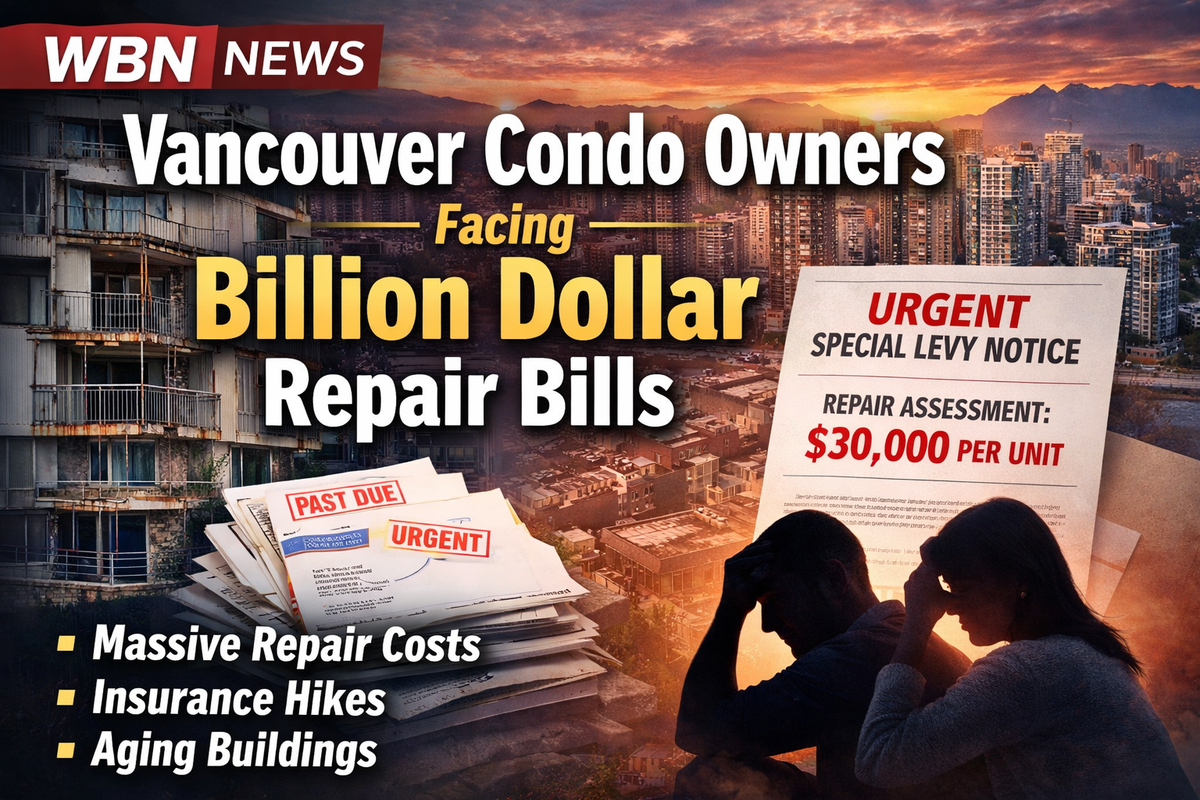
Across Metro Vancouver, a quiet financial storm may be brewing inside condominium buildings. Industry analysts estimate that more than 130,000 condo owners could face special levies totaling nearly $1 billion in the coming years as aging infrastructure, rising insurance costs, and underfunded reserve funds collide.
For many homeowners, the issue is not a monthly mortgage payment or rising interest rates. The real shock may arrive as a sudden bill from their strata council.
The Growing Risk of Special Levies
In British Columbia, condominium buildings operate under strata corporations that collect monthly fees to cover maintenance and long term repairs. These funds are supposed to build a contingency reserve that prepares the building for large projects such as roof replacements, plumbing upgrades, building envelope repairs, elevator modernization, and parkade waterproofing.
However, many buildings across Vancouver historically kept strata fees low to remain attractive to buyers. The result is that reserve funds in many buildings are not large enough to cover major repairs when they arrive.
When that happens, strata councils issue what is known as a special levy. This is essentially an unexpected bill sent to every owner in the building.
These levies can range widely depending on the scope of work. Some owners may face charges of five thousand dollars, while others have reported repair bills exceeding fifty thousand dollars per unit.
Insurance Costs Adding Pressure
Another major factor contributing to the problem is the dramatic increase in strata insurance costs over the past several years. Many buildings have seen premiums double or triple, while deductibles for water damage and other claims have skyrocketed.
Some buildings now carry insurance deductibles between $250,000 and $500,000 for certain claims. When insurance costs increase at this scale, the expense is passed directly to owners through higher strata fees or additional levies.
This financial pressure is forcing many strata corporations to reassess how they plan for the future.
Aging Condo Buildings
Much of Vancouver’s condominium boom occurred during the late 1990s and early 2000s. Those buildings are now reaching the age where major components begin to fail.
Building envelopes, balconies, elevators, plumbing systems, and parkade membranes typically require extensive maintenance after two decades. These repairs are often complex and expensive, sometimes costing millions of dollars per building.
Without properly funded reserve accounts, those costs fall directly on the shoulders of the owners.
The Culture of Low Strata Fees
Compared to some other Canadian provinces, British Columbia has historically maintained lower monthly strata fees. While this may appear attractive for buyers at first glance, it can create problems later.
Buildings that contribute too little to their contingency funds often postpone necessary maintenance or rely on future levies to pay for repairs. In contrast, many condominium corporations in Ontario require significantly larger monthly contributions to reserve funds, which helps smooth out the financial impact of major projects.
In other words, lower fees today can translate into larger bills tomorrow.
What This Means for Vancouver’s Housing Market
For many condo owners, special levies can be financially stressful. Unexpected bills can force some homeowners to take out loans, refinance their property, or even sell their units.
At the same time, buyers are becoming more cautious when evaluating older strata buildings. Real estate professionals increasingly recommend that buyers carefully review depreciation reports, contingency reserve funds, and past maintenance history before purchasing a condo.
Well managed buildings with strong financial reserves may actually become more attractive as buyers look for stability and long term planning.
Planning Ahead
While the numbers being discussed are significant, experts emphasize that not every building will face major levies. Buildings with proactive strata councils, properly funded reserve accounts, and regular maintenance programs are far less likely to encounter sudden financial shocks.
For condo owners across Metro Vancouver, the situation highlights an important lesson in property ownership. Maintaining a building is not optional. It is simply part of the long term cost of owning real estate.
As Vancouver continues to grow and its buildings age, proper planning, realistic budgeting, and transparent management will determine which communities remain financially healthy and which ones face difficult repairs ahead.
By Troy Tyrell, ttyrell@wbnn.news, Founder of Tsquared Personal Training
WBN Contributor | Community Builder | Mountain Biker | Advocate for Local Business & Fitness
📍 Google Business Profile – Tsquared Personal Training,
🔗 Connect on LinkedIn
📘 Follow on Facebook
Tags
#VancouverRealEstate #TroyTyrell #WBNNewsVancouver #StrataLiving #HousingCosts