The Last of the Hockey Cowboys: Remembering Ernie 'Punch' McLean
Remembering Ernie “Punch” McLean, the legendary junior hockey coach whose New Westminster Bruins dynasty helped define an unforgettable era in Canadian hockey.


Remembering Ernie “Punch” McLean, the legendary junior hockey coach whose New Westminster Bruins dynasty helped define an unforgettable era in Canadian hockey.
By Robert Skinner | Delta City News | May 10, 2026
Subscribe Free To Delta City News: Click Here!
The world of Canadian hockey lost one of its true originals on May 9, 2026, with the passing of legendary junior hockey coach Ernie 'Punch' McLean at the age of 93. Authorities confirmed McLean died following a single-vehicle crash in northern British Columbia near Dease Lake. Police stated that no criminality was suspected.
But for generations of hockey fans — especially in Western Canada — the story of Punch McLean is not about how he died.
It is about how he lived.
And in hockey circles, he lived larger than life.
Born Ernest V. McLean in Estevan, Saskatchewan in 1932, Punch McLean came from a different era of hockey — a rough, blue-collar Canada where the game was played outdoors, tempers were short, and toughness was survival. According to reports on his early life, McLean was born in a coal mine because his family home was too cold during the harsh Saskatchewan winter.
That beginning almost sounds symbolic.
Because McLean became one of the toughest men the game ever produced.
He earned the nickname “Punch” not from marketing hype or television highlights, but from the reality of old-school hockey culture. Stories of bench-clearing brawls, fierce rivalries, and intimidating coaching tactics followed him for decades. In one famous incident, he reportedly received a lengthy suspension after striking a referee during a heated game.
Yet despite the wild stories, players who knew him often spoke about something deeper:
Loyalty.
Commitment.
And an almost unmatched passion for the game.
McLean’s hockey journey eventually led him into coaching, where he would leave an unforgettable mark on Canadian junior hockey history.
He first gained major attention with the Estevan Bruins in Saskatchewan, guiding the club to a Western Hockey League championship in 1968. That success alone would have secured a respected place in junior hockey history.
But Punch McLean was just getting started.
Alongside longtime partner and hockey executive Bill Shinske, McLean helped relocate the Bruins franchise from Saskatchewan to New Westminster, British Columbia. That move would permanently change the hockey landscape in B.C.
The New Westminster Bruins quickly became one of the most feared and talked-about junior hockey teams in Canada.
And Punch McLean became the face of the franchise.
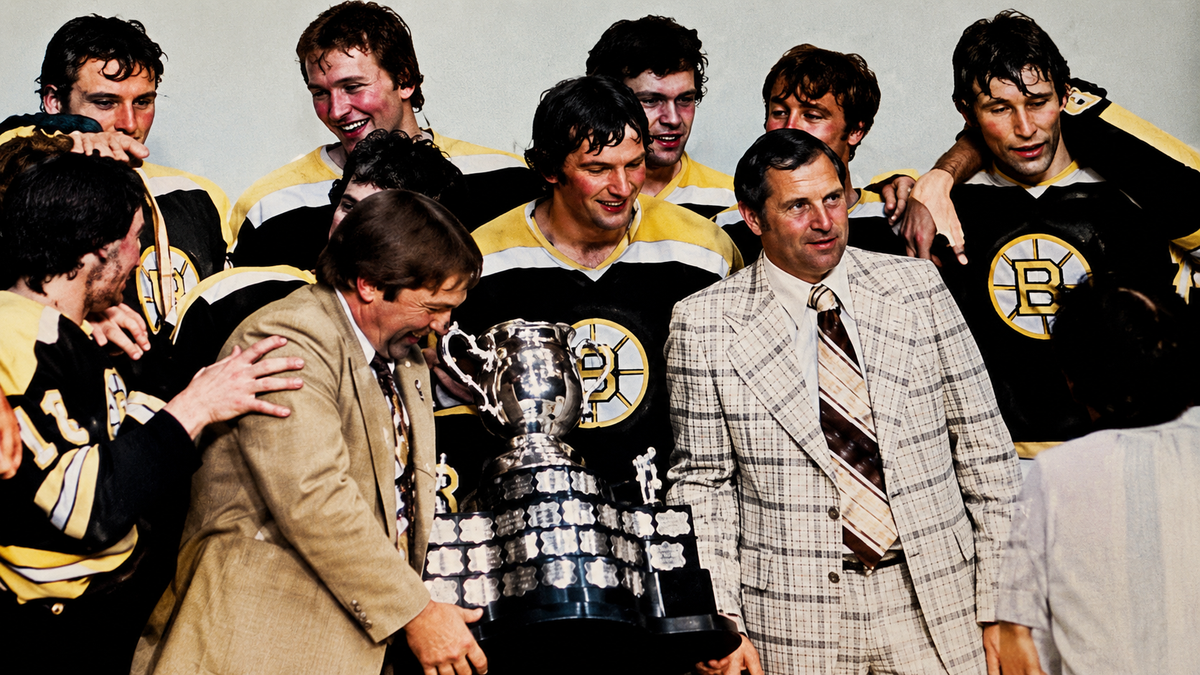
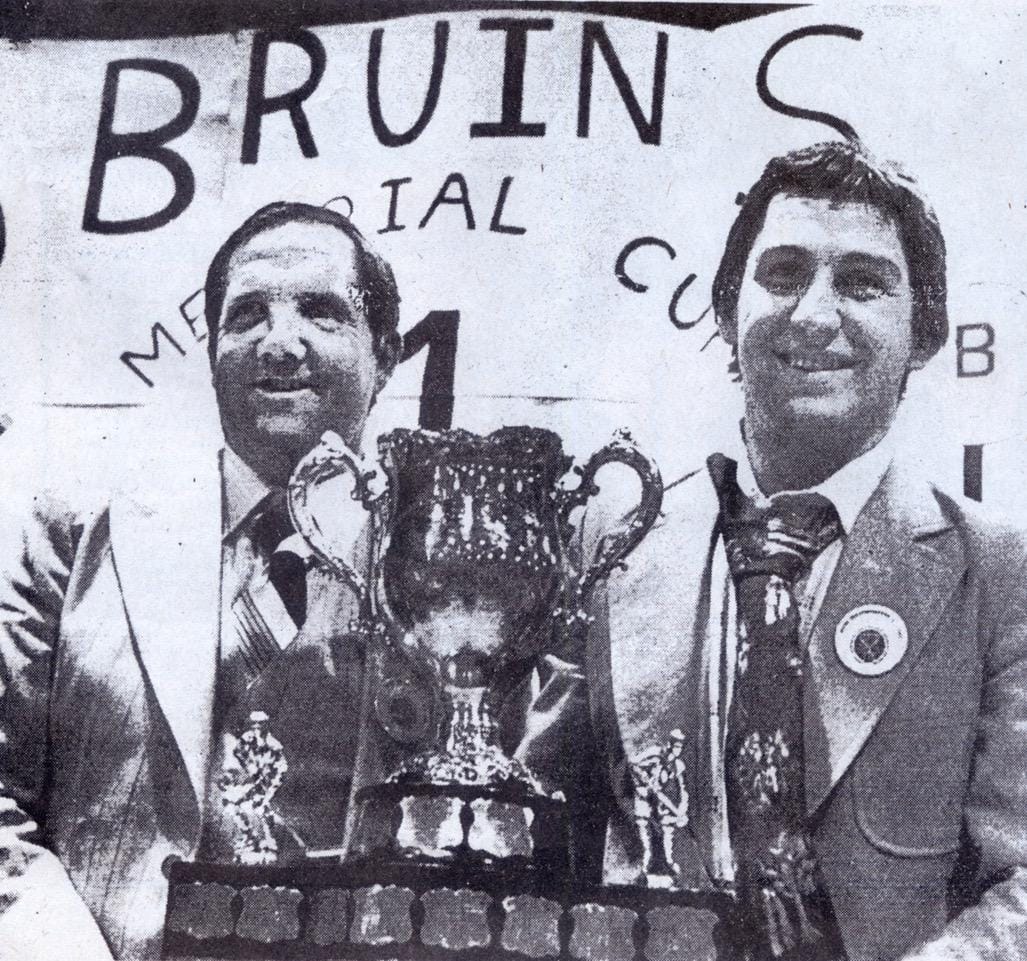
From 1975 through 1978, the Bruins captured four consecutive WHL championships — an extraordinary achievement in junior hockey. Even more impressive, the team won back-to-back Memorial Cups in 1977 and 1978, establishing the Bruins as a national powerhouse.
Queens Park Arena in New Westminster became one of the loudest and toughest buildings in Canadian hockey.
Fans loved it.
Opponents hated it.
And Punch McLean thrived in the chaos.
In today’s modern hockey culture, coaching often revolves around analytics, media management, and public relations.
Punch McLean came from a different world entirely.
He coached with intensity, emotion, and authority. He demanded accountability from players and expected toughness every single night.
But underneath the hard exterior, many former players later described a coach who deeply cared about the young men under his leadership.
Over 100 players coached by McLean eventually reached the NHL.
That statistic alone tells the story.
You do not send that many players to professional hockey by accident.
McLean understood talent.
More importantly, he understood what separated talented players from winners.
Former players frequently described him as demanding but unforgettable — the kind of coach who could terrify a dressing room one moment and fiercely defend his players the next.
That old-school relationship between coach and player defined an entire generation of hockey.
And few represented it better than Punch McLean.
To understand Punch McLean properly, you have to understand the era he coached in.
Junior hockey in the 1960s and 1970s was not sanitized entertainment.
It was war.
Long bus rides.
Cold arenas.
Rough crowds.
Fights every night.
And coaches who ruled teams with iron authority.
The WHL of that era became legendary for its toughness and rivalries. McLean’s Bruins were often right in the middle of it. Stories of bruising games against teams like the Portland Winterhawks and Saskatoon Blades became part of Western Canadian hockey folklore.
McLean himself became almost mythical.
To some, he was controversial.
To others, he was exactly what hockey was supposed to be.
But nobody ignored him.
That is rare.
While most fans remember Punch McLean for his New Westminster dynasty years, his influence stretched far beyond one franchise.
He coached more than 1,000 games in the Western Hockey League, placing him among the winningest and most respected coaches in league history.
He also coached Team Canada at the 1979 World Junior Championship, helping Canada earn a bronze medal.
Even decades after stepping behind the bench, McLean remained deeply connected to hockey in British Columbia. He was a regular presence at Vancouver Giants games, Vancouver Canucks events, and WHL alumni functions.
He belonged to hockey.
And hockey belonged to him.
One reason Punch McLean became almost legendary in Western Canada was because his life seemed to include one unbelievable survival story after another.
In 2009, McLean made headlines after going missing for several days while prospecting for gold in remote northern wilderness territory. Despite harsh conditions and limited supplies, he survived the ordeal.
That story only added to the mythology surrounding him.
Because people already viewed Punch McLean as larger than life.
The rugged outdoorsman image fit perfectly.
He represented an older generation of Canadians — independent, stubborn, resilient, and fearless.
Over time, the hockey world formally recognized what fans already knew.
Punch McLean was one of the most influential junior hockey coaches Canada ever produced.
He was inducted into the BC Hockey Hall of Fame and received major recognition from the WHL for his contributions to the game.
Only days before his passing, a campaign had been launched to build a permanent statue honouring McLean outside Queens Park Arena in New Westminster — the building where he built his legendary Bruins teams. McLean himself reportedly attended the announcement event earlier in the week.
There is something fitting about that timing.
The hockey world had begun ensuring his legacy would never be forgotten.
Then suddenly, he was gone.
Hockey has changed dramatically since Punch McLean first stepped behind a bench.
The sport is faster now.
Cleaner.
More corporate.
More cautious.
Some would say better.
Others would argue something was lost along the way.
Because men like Punch McLean represented an era when hockey felt raw and deeply connected to working-class Canadian identity.
He was not polished.
He was not politically careful.
He was not manufactured for television.
He was real.
And that authenticity made him unforgettable.
For thousands of hockey fans across British Columbia and Western Canada, Punch McLean was more than a coach.
He was part of hockey history itself.
Long after the headlines fade, the legacy of Ernie 'Punch' McLean will remain woven into Canadian hockey culture.
His teams.
His players.
His championships.
His stories.
And his larger-than-life presence.
Younger hockey fans who never saw the New Westminster Bruins at Queens Park Arena may never fully understand what that era felt like.
But older fans remember.
They remember packed arenas.
The noise.
The intimidation.
The rivalries.
And behind the bench, almost always with a fierce glare and unmistakable presence, stood Punch McLean.
One of the last true hockey cowboys.
And one of the game’s most unforgettable characters.
Robert Skinner Publisher -
Robert is a Ladner based business systems developer and the Publisher of Delta City News. Give him a call at +1 604-220-4750 or connect on LinkedIn: https://www.linkedin.com/in/rlskinner/
Note: We are looking for Citizen Journalists to write for this News Platform on a P/T Basis. Chat GPT training is available. To Apply: Click Here.
#Delta City News #Robert Skinner- Publisher #Hockey History #Canadian Hockey #WHL #New Westminster Bruins #Memorial Cup #Punch McLean #Sports History