By Elke Porter | WBN News World Sports | May 3rd, 2026
Subscription to WBN and being a Writer is FREE!

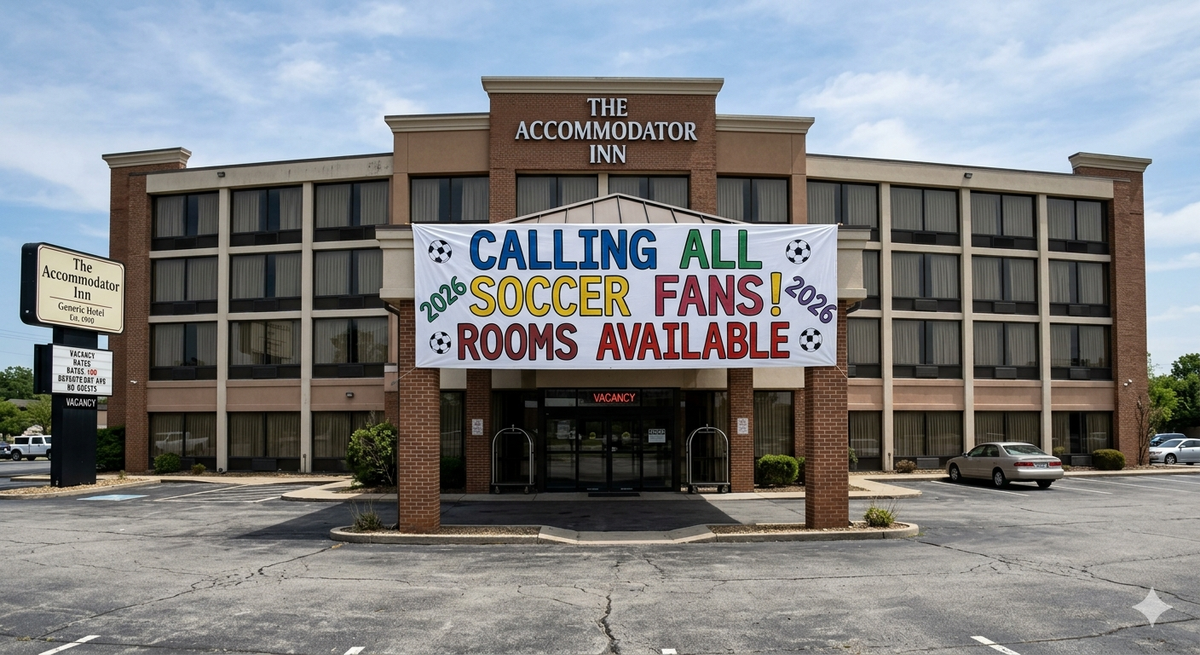
The 2026 FIFA World Cup is reshaping the hospitality landscape of North America long before the first whistle blows. While host nations Canada, Mexico, and the USA originally anticipated a seamless surge in tourism revenue, a massive "room flush" has recently destabilized the market.

FIFA organizers recently released between 70% and 80% of their massive group room blocks back into the open market, catching many hoteliers off guard. This sudden injection of inventory—roughly 15,000 rooms per night in Vancouver alone—is causing a fiscal whiplash: properties that expected guaranteed high-yield payouts from FIFA are now scrambling to fill empty nights at the eleventh hour. Meanwhile, fans face a volatile marketplace where prices remain high despite the sudden availability.

Vancouver’s Math Problem

In Vancouver, the numbers simply do not add up. The city will host seven matches and faces a staggering projected shortfall of 70,000 accommodation nights. With roughly 22,700 hotel rooms in the city and an additional 19,000 across Metro Vancouver, the capacity remains insufficient for the 54,500 fans filling BC Place for each game. Last July, hotel rates hit a record $330 per night—a 189% increase in just five years. For the World Cup, analysts expect premiums to exceed 200%, effectively turning a standard $200 room into a $600 "bargain." The recent release of 15,000 FIFA-held rooms per night provides some relief, but local demand is so high that pricing has yet to soften.

This data regarding Vancouver’s specific logistical imbalance is a critical piece of the puzzle, first detailed by SmarterTravel. It highlights a mathematical reality that the city is currently struggling to solve. On the other hand, if you use common sense math, here are some details that might change the equation entirely:

The Flawed Assumptions in SmarterTravel's Analysis:

1. Locals Don't Need Hotels BC Place seats 54,500 — but Vancouver/Metro Vancouver has ~2.7 million people. A significant portion of any crowd will be locals who simply drive or transit home. If even 30-40% are locals, that's 16,000–22,000 fewer hotel nights needed per game.

2. Family/Group Room Sharing The analysis appears to assume a near 1:1 fan-to-room ratio. In reality, families and travel groups routinely share rooms. If average occupancy is even 2.5 people per room, the room requirement drops dramatically — potentially by more than half for travelling fans.

3. Seats Won't All Be Filled by Out-of-Towners Beyond locals, some seats may go to:

  • Corporate/sponsor blocks (often local companies)
  • No-shows and scalped tickets held by locals
  • Day-trippers from Seattle, Bellingham, or the Fraser Valley who don't need overnight accommodation

Mexico’s Price Surge

Mexico is witnessing the most aggressive price hikes of the three nations. In Guadalajara, rates have skyrocketed by over 330%, while Monterrey has seen increases exceeding 200%. Unlike the steady adjustments seen in some American cities, Mexican host sites face intense upward pressure on rates. Short-term rentals are filling the gap, with over 44,000 visitors in Mexico City alone opting for digital platforms to bypass the high-cost hotel sector. This shift ensures that local hosts, rather than global hotel chains, capture a larger slice of the $620 million in projected revenue for the capital.

The American Adjustment

The United States presents a tale of two markets. While cities like Philadelphia report that FIFA cancelled roughly 2,000 room nights, causing immediate concern for local hospitality associations, other markets like Atlanta and Houston remain remarkably stable. In Philadelphia, some hotels reported cancellation rates exceeding 95% for their FIFA blocks, forcing them to pivot back to traditional summer tourists who were initially scared away by "World Cup pricing." The U.S. market is learning a hard lesson in overestimation; many fans are opting for one-night stays or short-term rentals rather than the extended luxury bookings hotels had banked on.

This unprecedented tournament logistics cycle highlights the precarious nature of "mega-event" economics. While the massive release of room blocks has deflated the guaranteed revenue dreams of some hoteliers, it has opened a narrow window for fans to secure central accommodations. However, as Vancouver’s capacity crisis and Mexico’s triple-digit price jumps demonstrate, the 2026 World Cup remains a high-stakes gamble for everyone involved. Whether the decentralized fan zones and short-term rentals can absorb the overflow will ultimately determine if this event is a financial win for local communities or a cautionary tale of hospitality overreach.

Elke Porter at:
Westcoast German Media
LinkedIn: Elke Porter or
WhatsApp:  +1 604 828 8788.
Public Relations. Communications. Education

Let’s bring your story to life — contact me for books, articles, blogs, and bold public relations ideas that make an impact.

TAGS:

  • #FWC26
  • #WeAreVancouver
  • #WorldCup2026
  • #VancouverTravel
  • #SoccerFans
  • #FIFA2026

Share this article
The link has been copied!