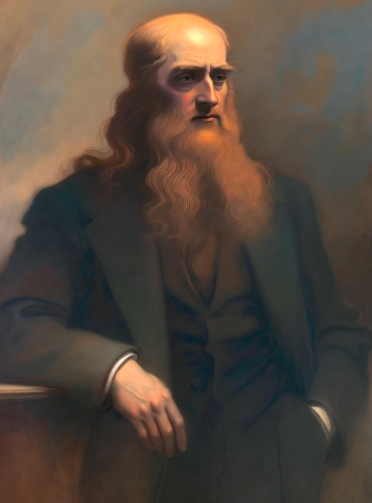
Leonardo Da Vinci, CEO
Da Vinci was unwavering when it came to capturing his thoughts. Because of that, he left a trail of relatable leadership bread crumbs for the rest of us to learn from.


He's better known for capturing the mystifying smirk of Mona Lisa, but Leonardo developed an approach to thinking that was remarkably similar to modern leadership principles.
Da Vinci was insatiably curious, experimented like it was his oxygen, pursued elegant solutions and had an intense bias toward action. These traits map almost perfectly to the methods of celebrated 21st Century leaders like Steve Jobs and Jeff Bezos.
The Florentine Master was unwavering when it came to capturing his thoughts. Because of that, he left a trail of relatable leadership bread crumbs for the rest of us to learn from. And best of all, we don't need to be a CEO to apply this remarkable Renaissance-era wisdom to improve our daily lives.

Let's go back 500 years and take a peak into the mind of a transcendent genius:
On Experimentation & Learning:
"Experience never errs; it is only your judgments that err by promising themselves results which are not caused by your experiments."
The modern translation of this thought is to test ideas against reality. Even the most comprehensive strategy is a best guess. The market exists – in part – to test that guess. But we can all apply this principle to our daily thinking. In fact we should, to keep our critical thinking skills sharp and vital.
On Simplicity:
“Simplicity is the ultimate sophistication.”
The best ideas, strategies and products look obvious in hindsight because the leader removed unnecessary complications. Simplicity smooths everything from thinking to execution. And smoother means focus, quality and efficiency all improve. Simplifying is caring.
On Action Over Theory:
“Knowing is not enough; we must apply. Being willing is not enough; we must do.”
Ideas are cheap and ubiquitous. Execution is the needle-mover. Without the "willing" and "doing" parts, an idea is delusion-worship. One doesn't need to be a CEO to understand, apply and benefit from this insight.
On Observation:
“Learn how to see. Realize that everything connects to everything else.”
This was an insight Leonardo pulled directly from studying nature. While his statement is accurate on the physical plain, physicists of today believe the same is true on the quantum level. Leaders know it too. They see and invest in patterns others miss between markets, technologies, people, and culture.
On Urgency:
“It had long since come to my attention that people of accomplishment rarely sat back and let things happen to them. They went out and happened to things.”
Priorities define our lives and there is typically a sense of urgency attached to them. Leadership takes this insight one step further and focuses on proactivity. Waiting for certainty means losing the moment. And the moment is the only opportunity we have to leverage urgency.
Leonardo was no CEO, but his imagination and strategic capacity would embarrass a lot of modern executives. His genius went beyond what he painted or invented.
It was how he thought.
And that operating system is still available—free of charge—to anyone willing to use it. CEO or not.
TAGS: #Unleash Your Genius #Adaptation As Innovation #Wisdom In Leadership #Observing Cultures #Courage Is Our Nature
Adaptation Strategist // I help organizations turn creativity into their competitive advantage by aligning leadership, culture and strategy to unlock adaptive innovations.
Ask about the Clarity Engine Process.