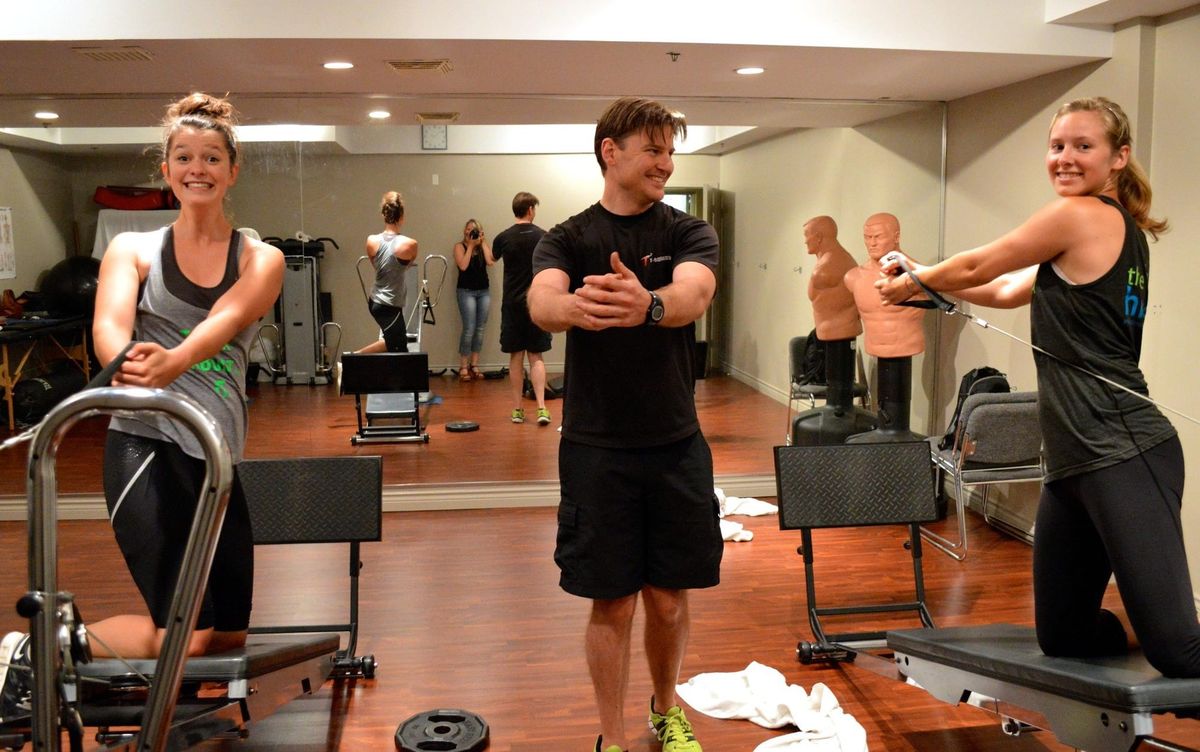
For years, fitness culture often followed a predictable pattern. Bigger weights, harder workouts, and sweat-covered social media photos frequently became the measure of success. While strength training remains a cornerstone of health and performance, there is a noticeable shift occurring in how many people are approaching fitness.
The growing conversation is no longer only about how much someone can lift.
Increasingly, people are asking a different question:
"How well can I move?"
This shift has helped fuel interest in functional training systems, stability exercises, multi-directional movement patterns, and forms of resistance training that challenge the body in ways traditional machine-based workouts sometimes do not.
Why Stability Is Getting Attention
Balance and stability training were once viewed primarily as tools for rehabilitation clinics or elite athletes. Today, they are becoming part of mainstream fitness conversations.
There are practical reasons behind this trend.
Many modern jobs involve prolonged sitting, repetitive movements, and reduced physical activity throughout the day. Hours spent at desks, in vehicles, or looking down at screens can affect posture, mobility, and overall movement quality.
Movement specialists increasingly recognize that strength without coordination may create limitations.
Being able to squat heavy weight matters.
Being able to bend, rotate, climb stairs, maintain balance, and move efficiently throughout life also matters.
The two are not mutually exclusive.
Training for Real Life
Traditional gym movements frequently occur in controlled environments.
Sit.
Push.
Pull.
Repeat.
Daily life rarely works that way.
Real-world movement is often less predictable:
- Carrying groceries up stairs
- Picking up children
- Rotating while lifting objects
- Maintaining balance on uneven surfaces
- Recreational sports and outdoor activities
Because of this, many fitness programs are incorporating multi-plane movement, balance challenges, and exercises that recruit stabilizing muscles throughout the body.
The objective is not to make exercise look more complicated.
The goal is to improve movement efficiency.
Athletes Are Not the Only Audience
Historically, advanced movement systems were commonly associated with athletes.
That perception is changing.
Adults over 40, beginners, office workers, and people returning to exercise after long periods away from training are increasingly exploring methods that emphasize mobility and controlled movement.
Part of the appeal is accessibility.
Many stability-based approaches can be adjusted to different ability levels through body position, resistance changes, and movement progression.
This allows participants to begin at a comfortable level and gradually increase challenge over time.
Fitness Is Becoming Broader
Perhaps the biggest shift is philosophical rather than physical.
For decades, many exercise programs focused primarily on appearance.
Today, conversations increasingly include:
- Longevity
- Mobility
- Functional movement
- Mental wellness
- Quality of life
- Sustainable exercise habits
Visible results still matter to many people, but there appears to be growing recognition that health extends beyond aesthetics.
The strongest body is not necessarily the body that lifts the most weight.
In many cases, it may be the body that continues moving well years later.
As fitness evolves, the future may involve less emphasis on chasing numbers and more emphasis on maintaining the ability to live actively, move comfortably, and continue doing the activities people enjoy.
That may ultimately become the most important performance metric of all.
By Troy Tyrell, Founder of Tsquared Personal Training
WBN Contributor | Community Builder | Mountain Biker | Advocate for Local Business & Fitness
๐ Google Business Profile โ Tsquared Personal Training,
๐ Connect on LinkedIn
๐ Follow on Facebook
๐ข Subscription to WBN and being a Contributor is FREE! Click here to begin reading or writing with us!!!
WBN Digital
Tags:
#Fitness #Functional Training #Mobility #Strength Training #Vancouver #Troy Tyrell #WBN News Vancouver