Information is the new masonry, but wisdom is still the architect."
Nicholas Jeffery | WBN News – Global | March 12, 2026
Editor: Karalee Greer | Subscribe to WBN News
Some people come to Hungary to understand it. Others marry into it. I chose the latter, which, as any student of Central Europe will tell you, is the more durable form of accreditation.
My family and I have now lived here three times. Our latest return came just before the COVID pandemic, when we moved back from Vancouver. Living again in Budapest reveals a strangely modern question: What happens when a city wishes to become technologically sophisticated, attracting start-ups, digital platforms and the restless energy of the Gen-Z innovation economy, while remaining historically frozen in its own grandeur?
Turning such a place into a “smart city” is not simply an engineering exercise of the “Internet of Things” because beneath the urban planning lies a larger question, one that reaches far beyond Budapest: what happens when the state itself begins to operate like a digital system?
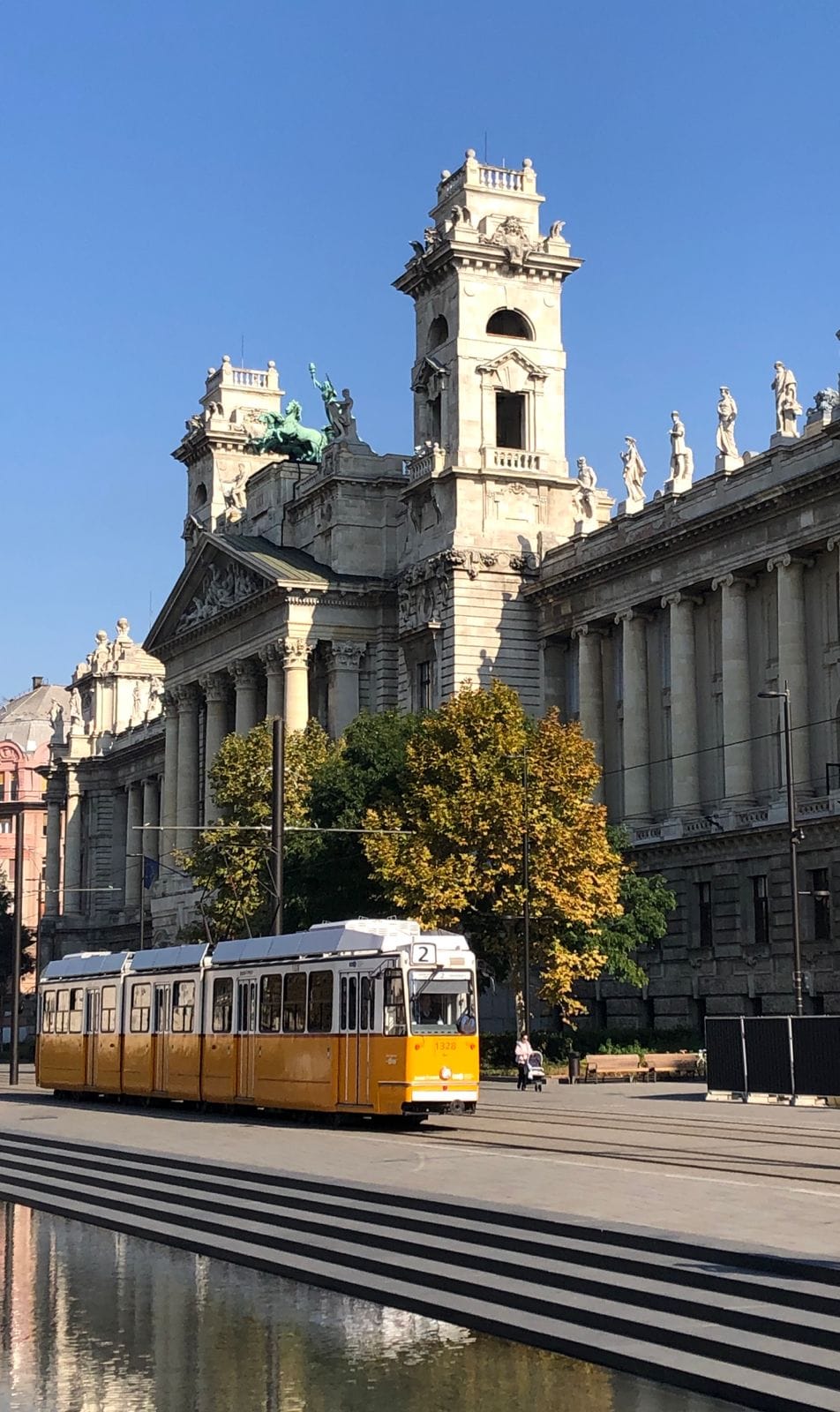
Budapest is not a city that has risen out of the sand. Its riverfront is a protected historical landscape, and the Danube flowing through the centre of the city is older than any infrastructure built upon its banks. Long before sensors and algorithms spoke about efficiency, the river itself was the city’s network: carrying soldiers, merchants and ideas as silently as data packets now move through fibre. Several years ago, I explored the subterranean spaces beneath the Danube where a developer had briefly imagined installing a data centre. To descend into the vast catacombs, sections of the electric tram system above had to be switched off. It was an oddly perfect illustration of the tension between nineteenth-century engineering and twenty-first-century ambition.
Three capitals line this waterway like historical siblings who grew into very different personalities.
Vienna learned political finesse and arranged marriages.
Bratislava learned trade.
Budapest learned drama.
The Danube was never merely scenic. It was logistics wearing the costume of geography. Budapest’s architectural splendour largely dates from the late nineteenth century, when the city expanded as the administrative centre of the eastern half of the Habsburg Empire. Boulevards were cut through older districts with the confidence of an era that believed progress was largely a geometry problem. Bridges were not simply built; they were stitched across the river like permanent negotiations between Buda and Pest.
Even the underground railway beneath Andrássy Avenue, the first on the European continent, continues to operate today, its yellow carriages sliding through tiled stations that feel less like transport and more like a moving exhibition of early modern confidence.
Heritage, however, is not only prestige. It is constraint dressed as honour.
Looking to Reduce Your Credit Card Fees? Click here
One cannot casually thread digital nervous systems through baroque façades. A smart city constructed on empty land is largely a software project. A smart city constructed inside a World Heritage landscape becomes something else entirely: a constitutional debate disguised as urban planning. Budapest has nevertheless modernised with remarkable quietness. After the uneven investments that followed the end of socialism, the city’s infrastructure began a gradual digital conversion. Traffic systems are monitored electronically. Flood protection increasingly relies on predictive modelling. Street lighting has migrated from sodium yellow to efficient LED networks. Planning submissions, zoning maps and environmental assessments now live inside digital platforms rather than municipal archives smelling faintly of damp paper and dust.
In theory, every administrative act now produces memory.
Urban planning itself is becoming computational.
Applications are logged.
Decisions are timestamped.
Deviations leave electronic traces.
Digital governance promises transparency. But transparency is not neutrality. Hungarian administrative law contains a powerful instrument: the declaration that a project is of “national importance”. Once invoked, the ordinary choreography of urban regulation becomes a lot more flexible. Consultation periods are shortened. Height restrictions soften. Local objections acquire less gravitational pull, and Government or Municipal departments are moved out of Historic locations into connected party developments, only to allow the Historic building to be sold on to hotel developers.
Technology can illuminate such mechanisms. It cannot prevent them. And in some cases, it simply makes them more efficient to transact.
This is the paradox of Budapest’s digital transition.
The city is trying to retain its elegant urban canvas and build sophisticated information and transportation systems inside a National political culture that still reserves the right to override them. Operational life becomes increasingly visible; strategic decisions remain partly shaded. The paradox is: Smart infrastructure produces data, Data invites comparison and substantiates value and comparison which invites questions governments rarely enjoy answering.
And here lies the quiet irony of the smart-city revolution: the more data governments collect about how cities function, the more carefully they learn which decisions not to explain.
Along the Danube corridor, such questions travel naturally.
Vienna has invested heavily in participatory digital platforms that invite citizens directly into planning decisions. Bratislava has positioned itself as a cross-border innovation hub linking Slovak and Austrian technology ecosystems.
Budapest stands between them (obviously not geographically), the largest and arguably most dramatic of the three capitals, historically magnificent, technically capable, yet negotiating constraints imposed by history, culture and ultimately more restricting now, policy architecture.
The most profound consequence of smart systems is not efficiency; it is visibility.
Sensors, databases and dashboards gradually create an archive of urban behaviour: how traffic moves, how energy flows and how decisions are made. Over time, this archive becomes civic memory.
Data becomes the new masonry.
Budapest’s future, therefore, rests on a delicate challenge. The city must modernise without pretending that technology alone can transform governance. It must digitise without believing that algorithms can replace judgment. And it must reconcile two competing narratives: the city as monument to memory and the city as laboratory for possibility. The Danube offers the clearest metaphor. For centuries, it has carried commerce, armies and ideas through Europe with remarkable indifference to political change. Empires have risen and fallen along its banks. Borders have shifted. Administrations have come and gone.
The river has continued.
In that sense, the Danube represents a form of intelligence of its own, adaptive, transnational and stubbornly resistant to decree. There has been a string of smart engineering strategies for protecting the city from and harnessing the beauty and power of the Danube, but these have been constantly blocked throughout history because the mayor of the city is invariably in opposition to the state. The most sophisticated city along its course will not be the one with the most sensors, the tallest skyline or the fastest networks. It will be the one that allows information, like water, to move freely enough to influence decisions without pretending that flow alone determines direction.
Budapest clearly has the technical capacity to build such a system.
But the deeper question is not engineering. It is constitutional.
What happens when governance itself begins to operate as a networked information structure? Does transparency strengthen authority, or quietly redistribute it? And when a state becomes digitally legible to itself, does power become more visible… or simply better disguised?
Information is the new masonry, but wisdom is still the architect.
The election will pass; Budapest will remain, but under what pressure, (with an emboldened or new Government – months will tell) interpreted, debated, but ultimately itself.
I welcome your reflections and look forward to the next instalment of Danube Dispatches. No. 5
The next dispatch will explore “The Digital State,” where I will examine what happens when data ceases to be merely a tool of administration and becomes part of the architecture of sovereignty itself. I hope you will join that conversation.
Thank you, Nicholas Jeffery
About Nicholas Jeffery: After forty years in international banking and technology between London and Central Europe, I help companies and investors navigate the commercial currents between the United Kingdom and Hungary, as a regional hub, establishing ventures, accelerating growth, or quietly arranging acquisitions. Like the Danube itself, commerce here flows best when one understands both banks.
By Ambassador Dr. Nicholas Jeffery Nicholas Jeffery LinkedIn: http://linkedin.com/in/nicholas-jeffery
Editor: Karalee Greer | Subscribe to WBN News
Tags: #Danube Dispatches #WBN News Global #WBN News Vancouver #Smart Cities #Urban Infrastructure #Digital Governance #Nicholas Jeffery #Diplomat's Notebook #Budapest