By Elke Porter | WBN News World Sports | May 1st, 2026
Subscription to WBN and being a Writer on this platform is FREE!
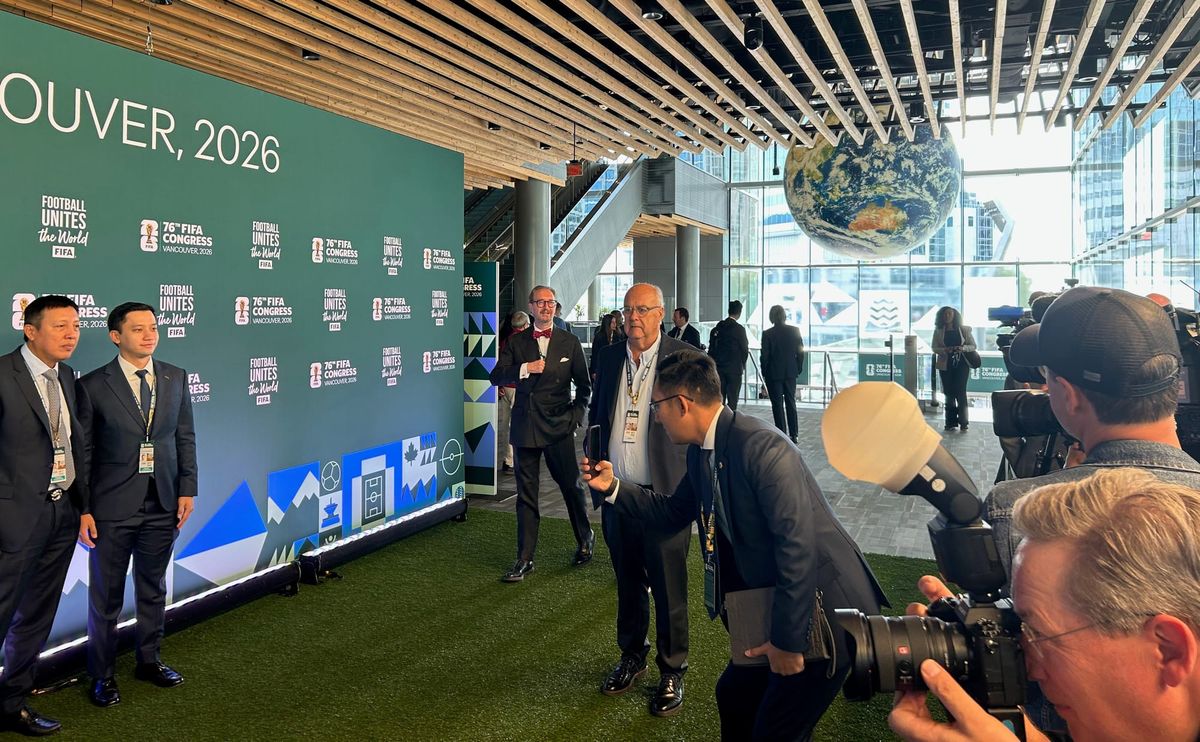
Attending major international events is always exciting, and the 76th FIFA Congress held in Vancouver this April carried a particular thrill. As someone who has spent time photographing for the Vancouver Whitecaps, this was my first major soccer event at this scale, and I arrived with genuine enthusiasm. Having also recently covered Web Summit Vancouver 2025, the contrast in how each event treats its media corps became impossible to ignore. These are my personal observations — others may have had entirely different experiences — but the difference in media culture between these two global organizations is striking.
Digital Connectivity: Effective vs. Obsolete
The digital experience set the tone early. Web Summit’s app streamlines the interview process by sending timely media reminders and clear deadlines, with simple, functional forms that actually facilitate connections with speakers, startups, and tech companies. The FIFA app, by contrast, felt like a relic. It listed communication contacts for Austria, Germany, and Switzerland, yet every email I sent bounced back. For an organization of FIFA’s scale, outdated contact information in the age of instant global communication is a surprising oversight.
A Game Behind the Times: Old Media vs. New
FIFA’s digital blind spots run deeper than a broken contact list. The organization has yet to meaningfully recognize newer media formats — podcasts, photojournalism, and blogging — as legitimate press. In an era where an independent podcaster can reach millions of engaged soccer fans, or a photo essay can tell a story that a press release never could, FIFA’s credentialing and communications infrastructure still appears to be built around the newspaper correspondent of twenty years ago. You have to chose between being a photographer or being a journalist. Web Summit, existing at the heart of the tech world, understands instinctively that media has evolved and builds its access systems around that reality. FIFA would do well to take notes.
Movement and Accessibility
At Web Summit, media members move freely through the venue or recharge in a dedicated “Media Village,” and spontaneous conversations are part of the culture. FIFA took the opposite approach. While delegates wandered at will, press were confined and prevented from casual conversations or random meetups. Delegates could retreat behind a wall entirely, whereas Web Summit fostered open dialogue between journalists and the people they were there to cover. For a journalist, access is the job — and restricting it restricts the story.
Even the three German Television station reps I spoke to, said they were told that no one was available for them to interview in Vancouver. When I said it feels like I could have just stayed home and watched it on Youtube, they all agreed that coming here was not giving them any more access to the story than they could have received 8000 km away in Germany.
Logistics and Hospitality: A Whitecaps Comparison
Covering the Vancouver Whitecaps had quietly set a high bar I hadn’t fully appreciated until now. At Whitecaps matches, security staff are genuinely warm — friendly and welcoming even as they check your bags. You receive a meal, a lineup sheet for the day, and seasonal background information sheets. You are given a bib, and while rules exist, they are straightforward and easy to follow.
The communications team regularly sends reminders of their contact details, responds readily to questions, and supplies photos to support your articles. They even surprised me with two complimentary tickets on my birthday so I could enjoy the match with my daughter. It is the kind of gesture that costs very little but says everything about how an organization values the people who tell its story. Many of the journalists at the FIFA Congress were, interestingly, familiar faces from Whitecaps media coverage — which made the contrast feel all the sharper.
Web Summit sat closer to the Whitecaps experience. Media had reserved seating near the front of the room when speakers spoke, and entry included breakfast, lunch and relatively smooth security. FIFA relegated media to the back of the room and required early arrival for thorough bag and personal searches. The security team were clearly there to do a job, and they did it seriously and efficiently — smiling simply wasn’t part of the brief, and that is understandable. What matters is the overall atmosphere, and the message it sends: journalists at the FIFA Congress felt like an obligation to be managed rather than professionals to be welcomed.
My FIFA Congress Wishlist
- Functional email addresses. Revolutionary concept, we know. But if your communications contacts are listed in your official app, it would be a delightful surprise if someone actually received the emails sent to them. Carrier pigeon also accepted.
- A seat at the front — or at least the middle. The journalists covering your event are not naughty schoolchildren. Relegating us to the back row suggests either we are being punished for something, or FIFA genuinely believes the story writes itself. It does not.
- An Information package. The Vancouver Whitecaps — a club with a fraction of FIFA's budget — managed a meal, a lineup sheet, seasonal background notes, and birthday tickets. FIFA oversees the most watched sport on the planet. Surely a delegate information list and a fact sheet are not beyond reach.
- Recognize that journalism has evolved. Podcasters, bloggers, and photojournalists are not lesser press. They are often the ones actually reaching your fans. A media credential policy last updated in the era of the fax machine is not a policy — it is a time capsule.
- Let us talk to people. Spontaneous conversations are how stories get told. Hiding your delegates behind a wall doesn't protect them — it just ensures the only stories that get written are the ones you scripted. And readers can always tell.
A Call for Consistency
Ultimately, the 76th FIFA Congress was a well-organized and significant event, and it was a genuine privilege and honour to attend. FIFA’s strong stance against racism and their commitment to global unity ahead of the 2026 World Cup are messages worth amplifying. But if that spirit of unity is sincere, it should extend to the media corps tasked with telling that story. The journalists in that room were not just observers — many of them were the same people who show up faithfully to cover the beautiful game week after week, through every format from print to podcast to photo essay. Treating them with the same professionalism and hospitality shown to delegates is not a luxury. It is just good sense, and it is long overdue.
Elke Porter at:
Westcoast German Media
LinkedIn: Elke Porter or
WhatsApp: +1 604 828 8788.
Public Relations. Communications. Education
Let’s bring your story to life — contact me for books, articles, blogs, and bold public relations ideas that make an impact.
TAGS: #FIFA76Congress #WebSummitVancouver #MediaAccess #SportsJournalism #PressCredentials #Vancouver2025