By Les Mottosky

What do we do when we don't know what's real?

This hyper-digital era has redefined the information landscape. And our awareness is the first casualty. Humans are being manipulated. With few exceptions.

Digital technology creates a terrain in our minds that confuses our ability to discern reality.

We've long known politicians have a propensity to lie (in a "legal" way).

Most corporate media brands are increasingly compromised. Operating more like megaphones for corporate and political power structures than objective, respectable information sources.

And the deception doesn't stop there.

Digital imagery – both static and dynamic – can be created with a few taps of a keyboard. Full half hour, cinematic mini-movies – nearly indiscernible from tangible subject matter – are now generated in minutes, not months.

A recent study by Elsevier determined smartphones trigger brain responses akin to addictive cues. Short breaks can alter our neural pathways, suggesting habitual use promotes dependency via dopamine/serotonin systems. In other words: our phones make our brain patterns look like those of a drug addict. The cost? Real life becomes less captivating than the rectangle of hell in our hand.

Also this month, warnings began surfacing that people should not use AI models for life guidance or therapeutic reasons because it's biased to dole-out "advice" that isn't meant to help, but to make us feel good. Whether that's what's best for us or not.

These large language AI models are designed to be "sticky" not benevolent. This was predictable given 77% of AI users choose to engage with this tech as the new search engine. And as we've learned, when eye-balls gather, advertisers follow. If a tech can keep the attention of those eye-balls longer, they have a colossally profitable business model.

All of the above hubbub creates a silent (and ignored) quandary: we're increasingly struggling to understand what's real. But – and this is a huuuuge 'but' – it feels like we have our finger on the pulse.

Hubris is fuelling our false realities.

Will missiles or pixels be the more widely impactful weapons of WWIII?

At a time where mis-information and dis-information are becoming increasingly criminalized, we can expect them as reliably as the sunrise. (Even from those criminalizing it.)

Confusion, delusion, illusion, or deception – pick your poisonous noun – as the norm, is here. And it's not going anywhere soon.


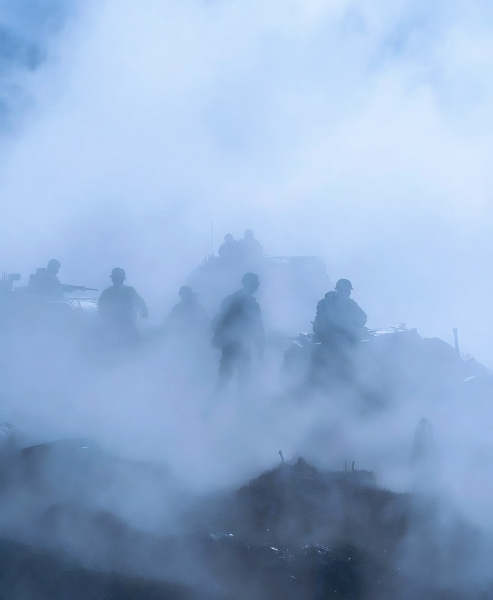
Now that – yet another war– has popped-off, what are we to believe? And what are the people orchestrating the war to believe? Is their decision-making information less counterfeit than the stuff that lands before the public's eyes? And how are they to know if they're being fed legit information? It seems that the ability to manipulate the intel of the enemy would be a top priority. Adding layers of mist and haze to the foe's fog of war would provide an invaluable edge.

While the ground-level view of March 2026 is terrifying, the 30 thousand foot view is inarguably fascinating.

When (or if) we depersonalize these events, it's a historical time. Future Anthropologists will be able to pull a career's worth of work from the past decade alone.

But that's for future generations; what about modern humans?

Returning to the query that opened this article: what do we do when we don't know what's real?...when we can't know what's real?

The solution is simple. And obvious.

We return to what got us here: nature, each other and this precious moment. Make it a priority. Schedule it. Commit to it. With all we have. Because all we have might depend on it.

More than a reliable expression of reality, nature is medicine, therapy and a practice. It's who we are at our molecular core. Every cell in our body is derived from the raw materials of the Earth. (Sans the micro-plastics. And even then, these are nature based...though manipulated by several degrees of science and industry.)

So invite a friend. A colleague. A brother, cousin or neighbour. Abandon the tech.

Put on your shoes, get outside and go to a green space.

Walk in the mist.

Connect in the haze.

Breathe in the fog.

This is reality. Not only will you know it, you'll feel it.

It won't stop any conflicts, but it will bring some peace.

TAGS: #Observing Reality #Adaptation As Innovation #Wisdom In Leadership #Courage Is Our Nature

Les Mottosky

Adaptation Strategist // I help organizations turn creativity into their competitive advantage by aligning leadership, culture and strategy to unlock adaptive innovations.

Ask about the Clarity Engine Process.

lesmottosky@mac.com

https://www.linkedin.com/in/les-mottosky-9b94527/

Share this article
The link has been copied!