By Elke Porter | WBN News Canada| July 29, 2026
Subscription to WBN and being a Writer is FREE!

Where/what/when: As of late July 2026, the Canadian dollar is trading near its weakest level in over a year, hovering around 70–71 cents US — down from roughly 74 cents just months earlier. Why it matters: Canadians blame Washington for the slide, but a closer look shows Ottawa and provincial governments have made choices of their own that widened the gap.

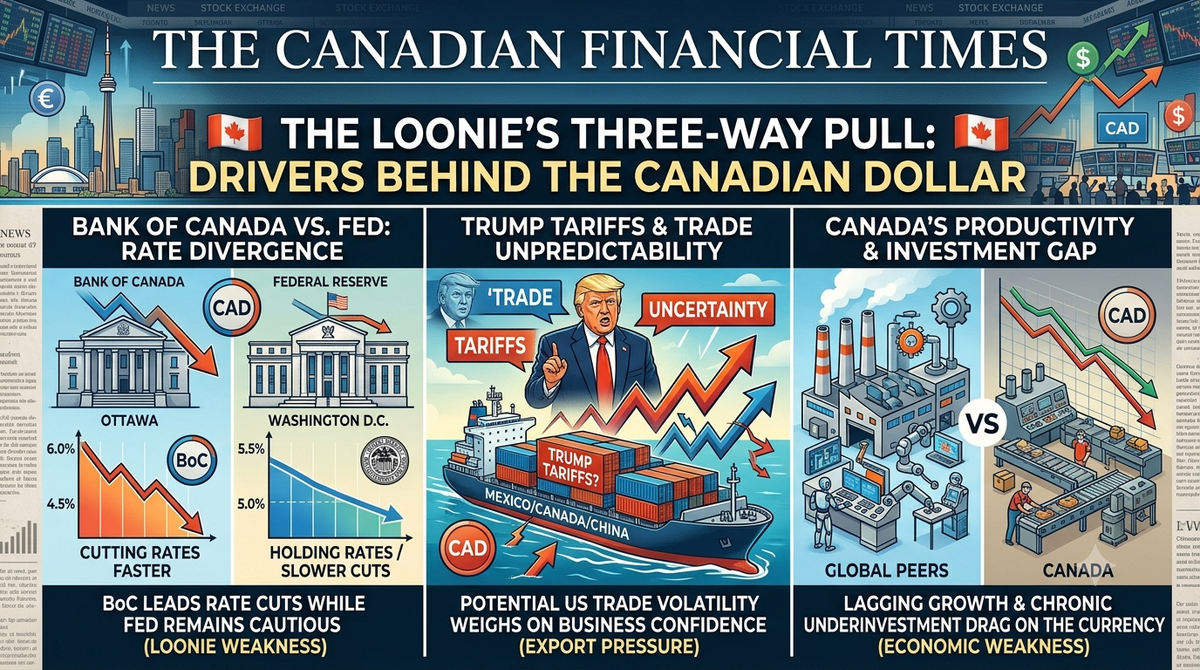
1. The Bank of Canada has cut rates faster than the Federal Reserve. Interest rate differentials are the single most-cited driver of the loonie's weakness right now. Three facts: (1) The Bank of Canada held its policy rate at 2.25% through June 2026, after cutting more aggressively than the Fed during the recent easing cycle. (2) The gap between Canadian and US policy rates has widened to roughly 1.25–1.5 percentage points, according to Globe and Mail market reporting. (3) Because higher US rates make American bonds more attractive, capital has flowed toward USD assets — a dynamic several bank economists describe as the dominant force behind the loonie's drop, independent of tariffs.

2. Trump's tariffs and trade unpredictability. This is real and measurable. (1) Tariff threats and on-again, off-again trade actions from the Trump administration have repeatedly rattled CAD in 2026. (2) Broad US dollar strength — driven partly by geopolitical events the US has been central to — has pulled capital away from commodity currencies like the loonie. (3) Analysts note oil prices, historically tied to CAD strength, have "unraveled" from the loonie's value even during periods of oil price strength, showing trade and dollar dynamics now dominate over Canada's traditional petro-currency status.

3. Canada's own productivity and investment gap. This is where domestic policy — federal under Carney, provincial under premiers like Eby — comes in. (1) Rosenberg Research found Canadian productivity contracted 0.6% year-over-year in Q1 2026, while US productivity grew 2.8%. (2) Real business investment in machinery, R&D, and software rose just 3.0% in Canada from 2022–2026, versus 22.5% in the US — a more than sevenfold gap. (3) Economists point to Canada's comparatively higher tax and regulatory burden as a "dead-weight drag" on investment and competitiveness relative to the US.

Conclusion: Trump's tariffs are a genuine pressure on the loonie, but they're only one piece. The bigger, steadier forces — the BoC's rate-cutting pace and Canada's widening productivity gap — trace back to decisions made in Ottawa and the provinces, not the White House. Blaming Washington alone lets domestic policymakers off the hook for choices well within their control.

Elke Porter at:
Westcoast German Media
LinkedIn: Elke Porter or
WhatsApp:  +1 604 828 8788.
Public Relations. Communications. Education

Let’s bring your story to life — contact me for books, articles, blogs, and bold public relations ideas that make an impact.

TAGS: #CanadianDollar #Loonie #CADUSD #CanadianEconomy #ExchangeRate #Trudeau2Carney

Share this article
The link has been copied!