
John Cage


By Elke Porter | Westcoast German News | January 29, 2026
Subscription to WBN and being a Writer is FREE!
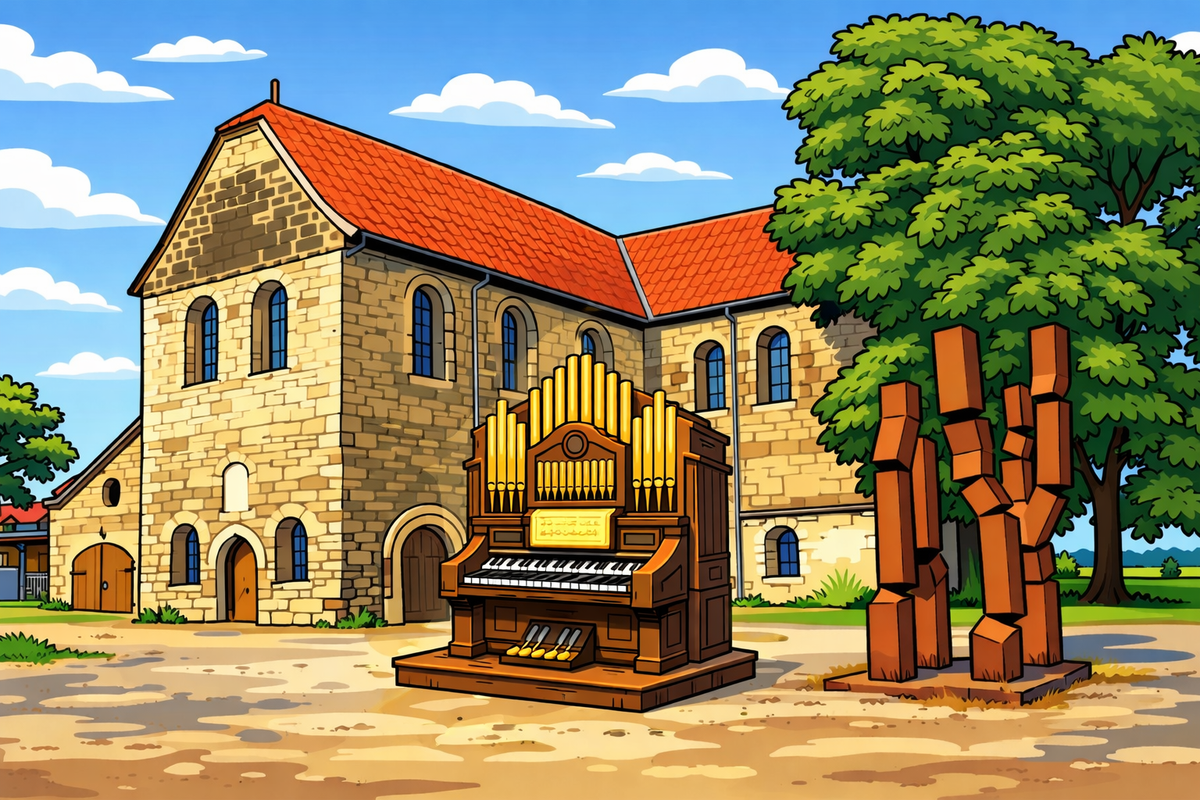
HALBERSTADT, Germany — In an 11th-century church in this small German town, a musical performance that began in 2001 won't conclude until 2640. The droning sound emanating from St. Burchardi Church is part of what may be the most audacious interpretation of a musical instruction ever attempted.
American avant-garde composer John Cage left only one instruction for performers of his piece Organ²/ASLSP: to play it "as slow as possible." A group of organists, artists, scholars and theologians in Halberstadt took that directive to its extreme conclusion.
The performance duration was carefully chosen. The piece will be played for 639 years to mark the time between the construction of the world's first 12-tone Gothic organ in Halberstadt in 1361 and the year 2000. The historic significance runs deep—that medieval organ featured the first modern keyboard arrangement that became the standard for all keyboard instruments today.
Engineering the Impossible
The wooden-framed organ is a work in progress, being built as the piece progresses, with metal pipes added or taken away with each chord change. Since no human organist could maintain the performance for centuries, the foundation devised an ingenious solution: small sandbags hold down the keys, while electrically powered bellows continuously pump air through underground pipes to sustain the sound.
The performance began on September 5, 2001—what would have been Cage's 89th birthday—with a silence lasting 17 months. Foundation member Rainer Neugebauer later admitted this was actually a miscalculation; the proportional pause should have been 28 months. "I'm 99 percent sure that John Cage, if he's sitting on a cloud somewhere, would say, 'Oh, it's good,'" Neugebauer told NPR. "He would laugh about the mistakes we've made."
Rare Moments of Change
In February 2024, hundreds of people traveled to Halberstadt—some from as far as Chile—to witness a chord change, the first in two years. A pipe was added to slightly alter the organ's song, transforming a six-sound piece into a seven-sound piece. Such events occur only every few years, drawing international attention each time.
The performance fascinates people worldwide, demonstrating Cage's artistic impulse to find new ways of making music. For those who make the pilgrimage, the experience is profound yet paradoxical—travelling hundreds of miles to hear a single note added to a chord that will drone on for years.
The next scheduled chord change will continue this unique musical experiment, which asks fundamental questions about time, patience, and the nature of performance itself. By the time the final note sounds in 2640, more than 20 generations will have passed since the performance began.
Elke Porter at:
Westcoast German Media
LinkedIn: Elke Porter or
WhatsApp: +1 604 828 8788.
Public Relations. Communications. Education
Let’s bring your story to life — contact me for books, articles, blogs, and bold public relations ideas that make an impact.
TAGS: #John Cage #Halberstadt #Longest Concert #ASLSP #Experimental Music #Contemporary Art #Westcoast German News #WBN News Europe #Elke Porter
Members Discussion