By Troy Tyrell, Owner of Tsquared Personal Training & WBN Correspondent | May 10, 2026
📢 Subscription to WBN and being a Contributor is FREE.
👉 Click here to begin reading or writing with us!

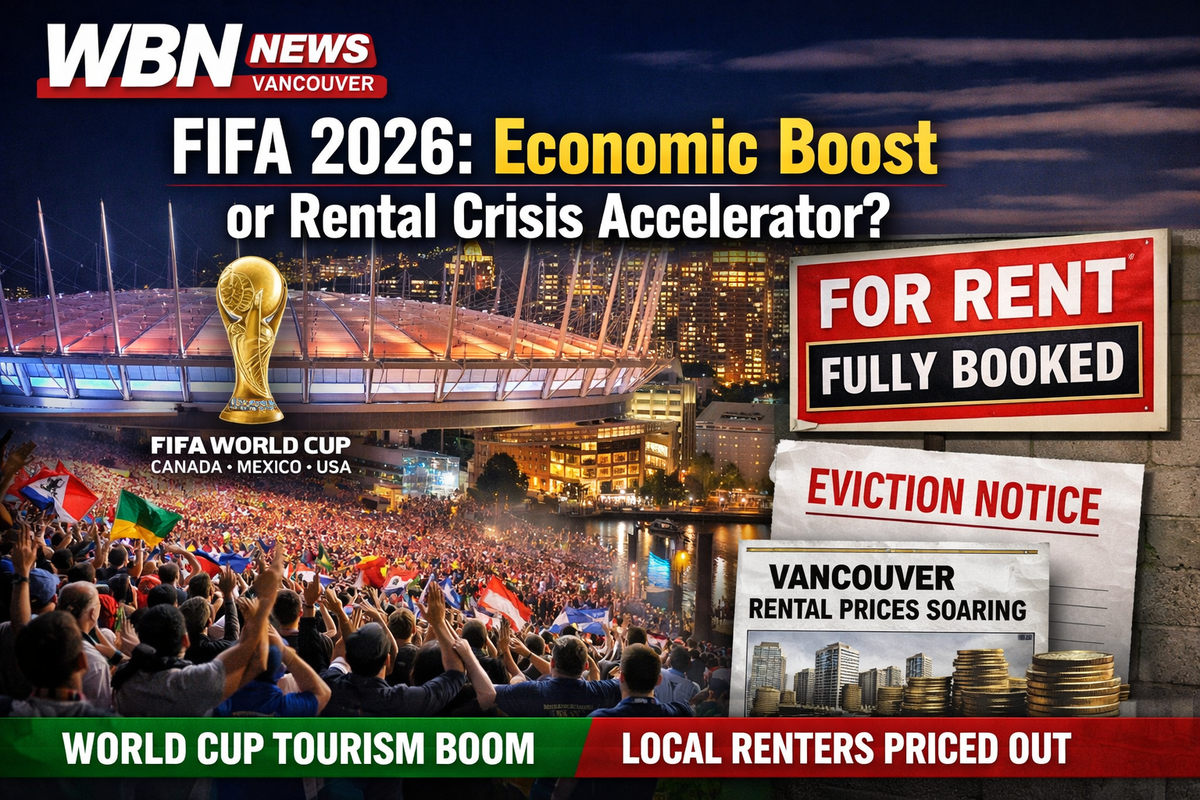
VANCOUVER, BC – Vancouver is gearing up to welcome the world for the FIFA World Cup, with expectations of packed stadiums, sold-out hotels, and a surge of global attention. On paper, it looks like a major economic win. But beneath the excitement, a quieter issue is gaining traction, one that directly impacts locals already stretched thin by the cost of living.

At the center of the concern is housing.

Vancouver’s rental market is already among the tightest and most expensive in Canada. Vacancy rates remain low, and rental prices continue to climb year after year. Now, with FIFA approaching, the video highlights a growing shift: landlords and investors repositioning properties toward short-term gains tied to tourism.

The logic is simple. Why lock into a long-term tenant when short-term rentals during peak tourism windows can generate significantly higher returns?

That thinking, however, comes at a cost.

As more units are converted into short-term rentals or held off the market in anticipation of higher-paying visitors, long-term rental supply shrinks. For residents, that means fewer options and higher prices. For many, especially working professionals and service workers, it pushes housing even further out of reach.

This is not a new pattern.

Cities that have hosted major global events often experience a similar cycle. Demand spikes. Investors move quickly. Short-term rental platforms expand. Prices climb. Then the event ends, but the pricing rarely resets. What remains is a permanently tighter and more expensive housing market.

Supporters of FIFA point to the economic upside. Increased tourism brings revenue to hotels, restaurants, transportation, and local businesses. The exposure can elevate Vancouver’s global profile and create new opportunities for growth.

But critics argue that the benefits are uneven.

Property owners and investors tend to capture the largest gains, while renters absorb the pressure. The very people who keep the city running, hospitality workers, trainers, tradespeople, and small business employees, are often the ones most affected by rising housing costs.

There is also the broader question of policy.

Municipal and provincial governments have introduced regulations on short-term rentals in recent years, aiming to protect long-term housing supply. The challenge will be enforcement and consistency, especially during a high-demand global event where financial incentives to bypass rules increase.

The video’s underlying message is clear. This is not just about soccer. It is about how quickly market behavior can shift when opportunity appears, and who ultimately benefits from that shift.

Vancouver stands at a crossroads.

FIFA 2026 has the potential to deliver a meaningful economic boost and showcase the city on a global stage. At the same time, it risks accelerating an already fragile rental situation if safeguards are not maintained.

For many residents, the concern is simple and grounded in reality.

When the final whistle blows and the crowds go home, will Vancouver be more accessible or even harder to live in?


By Troy Tyrell, Founder of Tsquared Personal Training
WBN Contributor | Community Builder | Mountain Biker | Advocate for Local Business & Fitness
📍 Google Business Profile –  Tsquared Personal Training,
🔗 Connect on LinkedIn
📘 Follow on Facebook

TAGS
#Vancouver #Housing Crisis #FIFA 2026 #Troy Tyrell #WBN News Vancouver #Real Estate

Share this article
The link has been copied!