By Elke Porter | WBN Ai | December 1, 2025
Subscription to WBN and being a Writer is FREE!
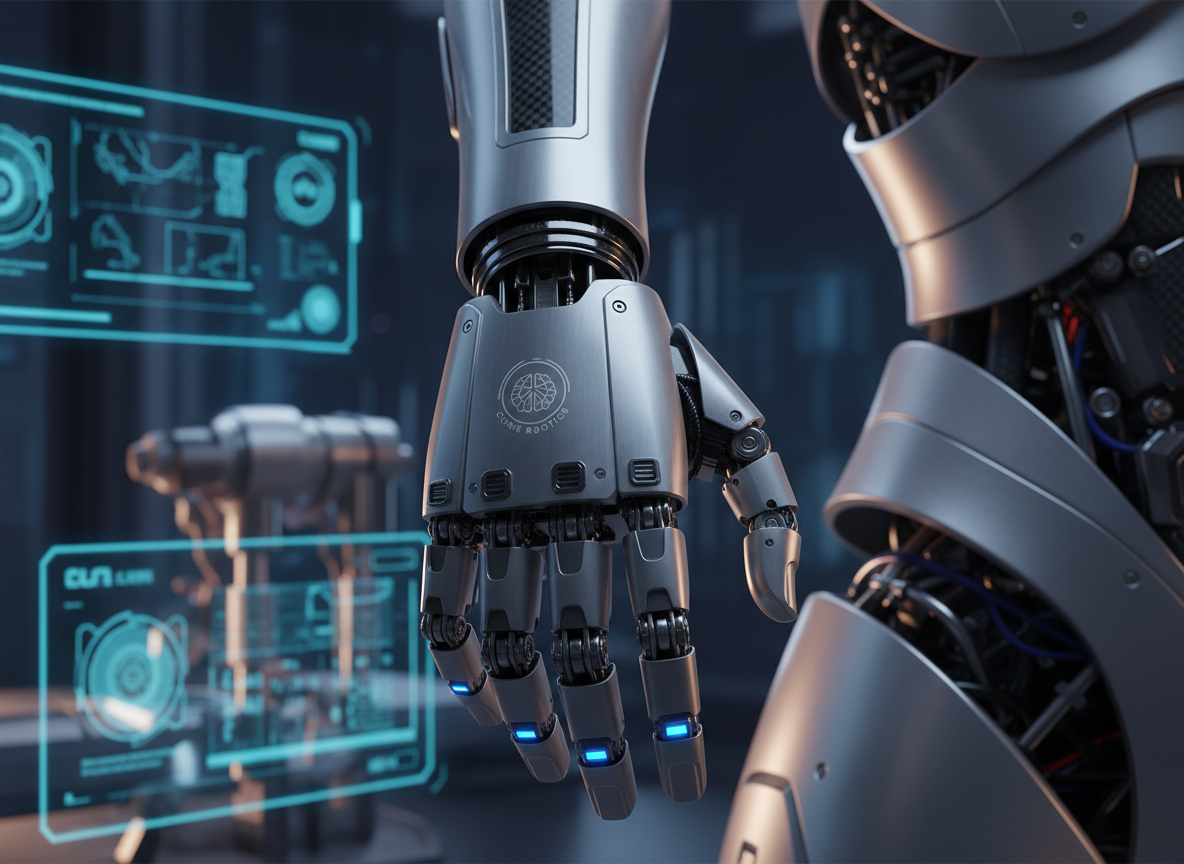
Clone Robotics has unveiled something remarkable: a robotic hand with 27 degrees of freedom and human-level grip strength. Watching it move is mesmerizing—especially with its transparent skin revealing intricate artificial muscles contracting and expanding beneath the surface. This isn't science fiction anymore; it's technology ready to transform how businesses operate.
For companies, the hand could have applications in industries such as medicine, education and manufacturing. Imagine assembly lines where delicate electronics are handled with human-like precision, or medical facilities where robotic assistants perform complex procedures alongside surgeons. The hand weighs under 2 pounds and can generate up to 1 kilogram of grip force per artificial muscle fiber, making it both lightweight and remarkably powerful.
What makes this technology truly revolutionary is its biomimetic design. Using hydraulic artificial muscles and carbon-fiber bones, Clone has created a hand that mirrors human anatomy so closely it can perform tasks previously impossible for machines—from catching balls to operating power tools.
When Will They Arrive in North America?
The timeline is more immediate than you might think. Clone operates out of the US and Poland and says it's releasing only 279 of its new Clone Alpha androids in 2025. Pre-orders are available through the official Clone Robotics website, with early adopters gaining priority access to this groundbreaking technology.
However, these first units will come at a premium price—the co-founder likened it to a limited-edition supercar. But there's hope for broader accessibility: Clone Robotics plans to reduce costs to around $20,000, aiming for a 2026 mass-market launch.
The Road to Ubiquity
Experts predict that within the next 5 years, humanoid robots at home could start becoming normal. While specialized applications like therapy assistance, security monitoring, and kitchen help might emerge sooner, complete household integration will take time. The initial Clone Alpha models will handle tasks like vacuuming, doing laundry, and making sandwiches—but the vision extends far beyond basic chores.
The journey from limited release to mainstream adoption typically spans 10-15 years for transformative technologies. As production scales and costs decrease, these remarkably lifelike robots could become as common as smartphones—revolutionizing industries and households across North America.
Elke Porter at:
Westcoast German Media
LinkedIn: Elke Porter or
WhatsApp: +1 604 828 8788.
Public Relations. Communications. Education
Let’s bring your story to life — contact me for books, articles, blogs, and bold public relations ideas that make an impact.
TAGS: #Clone Robotics #Humanoid Robots #Robotic Innovation #AI and Robotics #Future Of Work #Bionic Technology #WBN News Vancouver #Elke Porter