By Elke Porter | WBN News Vancouver | July 12, 2026
Subscription to WBN and being a Writer is FREE!
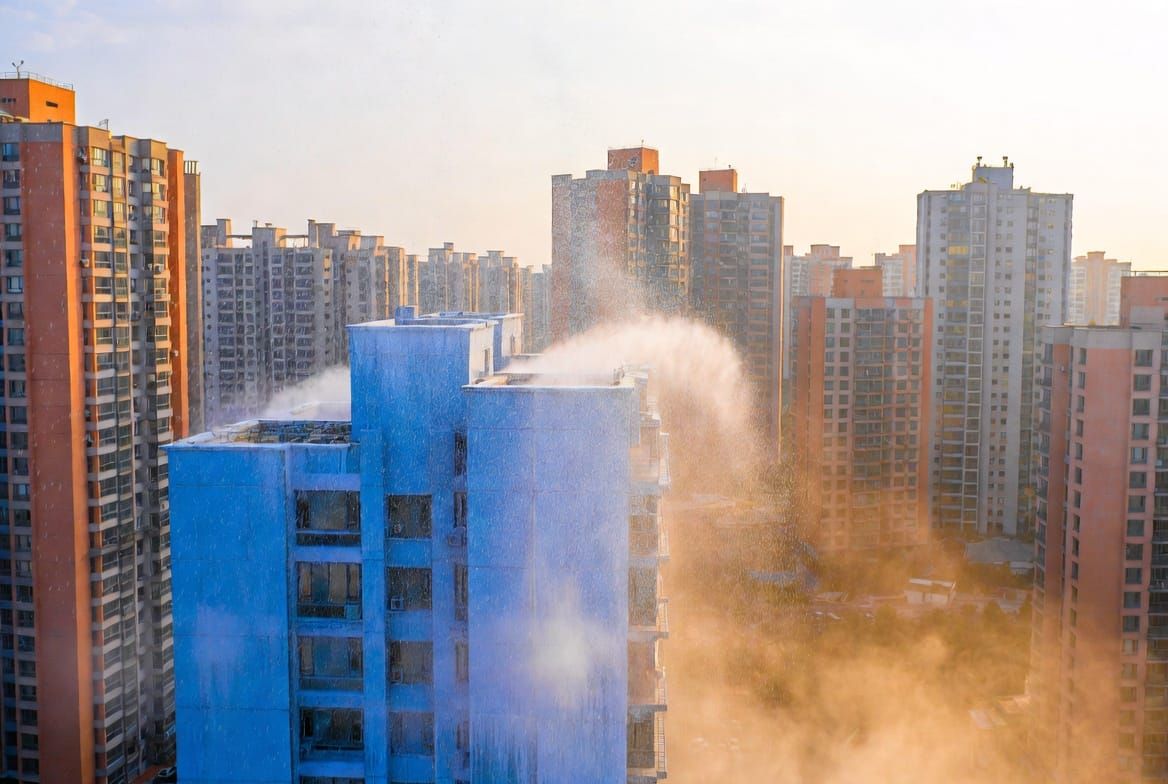
When temperatures in Shanxi Province reached 38°C in early July 2026, residents of a high-rise complex in Yuncheng watched a fine mist fall from rooftop nozzles instead of relying solely on air conditioning. High-pressure systems release ultra-fine water droplets that evaporate before reaching the ground, cooling surrounding air and surfaces through evaporation.
Chinese media reports and viral videos indicate the system lowered surface temperatures by 5–8°C within minutes. Sensors automatically activate the nozzles when temperatures exceed set thresholds.
Similar misting systems have been deployed in parks, plazas, pedestrian streets, and bus stops in various Chinese cities. These use water, pumps, and nozzles rather than energy-intensive compressors and refrigerants, providing targeted outdoor cooling during peak summer heat.
China has experienced more frequent and prolonged heatwaves in recent years, a trend scientists attribute in part to climate change and the urban heat island effect, in which concrete and asphalt in dense urban areas absorb and retain
In contrast, Vancouver’s summer 2026 has remained relatively mild. The hottest day recorded in the area so far was June 24, when the official weather station at Vancouver International Airport reached a daytime high of 27.7°C, breaking a 120-year-old daily record for that date. Nights have often dipped into the low teens, and rainfall has been typical for the region. This highlights that effective heat adaptation strategies vary significantly by location and are not universally needed.
Bringing large-scale misting infrastructure to North American cities would face several practical challenges. Water availability is a primary concern: experts advise against deployment in areas with strained supplies, which effectively rules out much of the drought-prone western United States.
Regulatory frameworks for onsite non-potable water reuse — which could improve sustainability — vary widely by municipality, with no unified national standards in place across North America. Retrofitting existing buildings with rooftop plumbing, pumps, and sensors involves significant costs. Additionally, the technology performs best in drier climates; in more humid conditions common in parts of North America, evaporation occurs more slowly, resulting in reduced cooling effectiveness and potential increases in local humidity.
The underlying physics of evaporative cooling is straightforward, and the required equipment is relatively inexpensive and already in use in dry regions such as the southwestern U.S. What is often lacking is aligned policy support and a clear economic case, which tend to emerge only after communities experience repeated extreme heat events. Misting systems can serve as one tool among many for urban heat management, but their suitability depends on local climate, water resources, and infrastructure readiness.
Elke Porter at:
Westcoast German Media
LinkedIn: Elke Porter or
WhatsApp: +1 604 828 8788.
Public Relations. Communications. Education
Let’s bring your story to life — contact me for books, articles, blogs, and bold public relations ideas that make an impact.
TAGS: #UrbanCooling #ChinaInnovation #MistingSystems #HeatAdaptation #EvaporativeCooling #ClimateResilience