By WBN Global News Desk | WBN News
Subscribe To WBN News |βApril 30, 2026
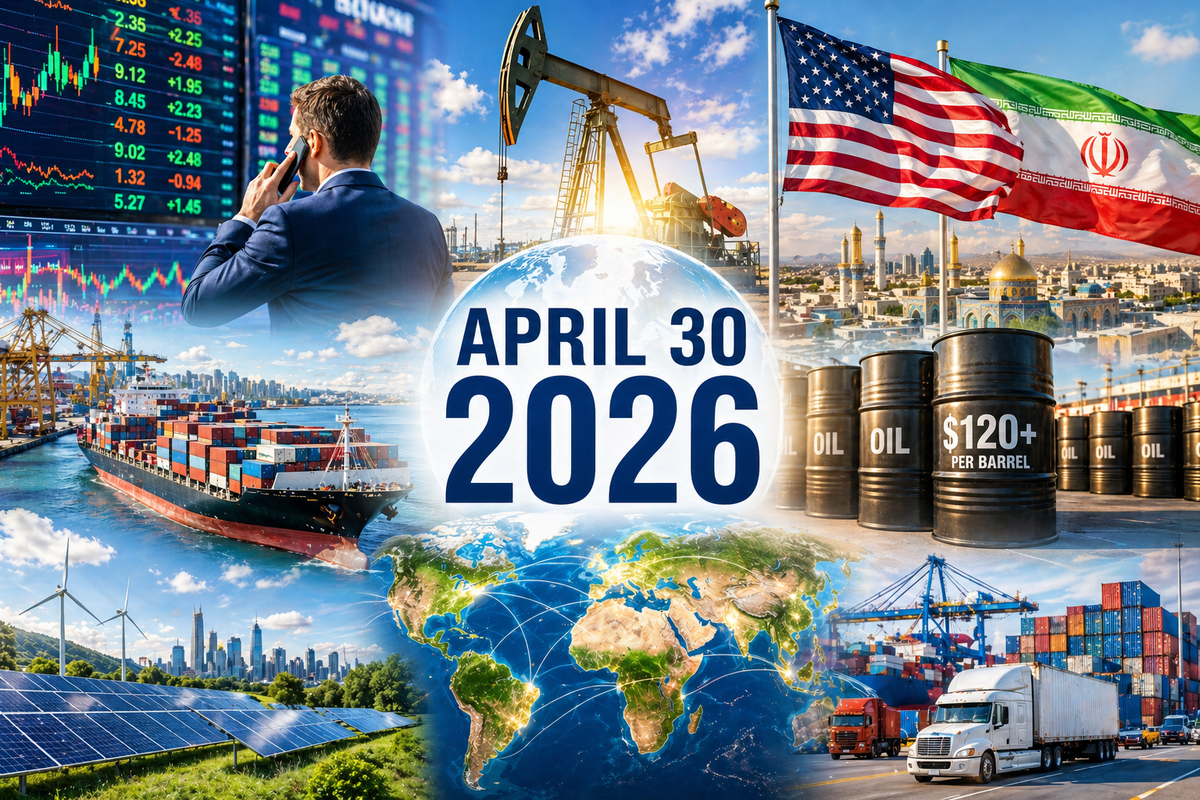
Global markets are reacting sharply as oil prices surge past $120, driven by escalating geopolitical tensions and supply disruptions. The ripple effects are now hitting inflation, trade flows, and economic stability across every major region.

π At A Glance
- Oil surges past $120
- Inflation pressures intensify globally
- Trade routes face disruption risks
- Central banks hold steady rates
- Energy shock reshapes global growth
π Canada
Headline: Bank of Canada holds key interest rate at 2.25% amid global uncertainty
Date: April 29, 2026
Source: Reuters
Summary: The central bank maintained rates as inflation pressures and geopolitical risks tied to energy markets persist.
Why It Matters: Canada is balancing growth stability against rising energy-driven inflation risks.
Headline: Canadian economy shows early recovery signals despite weak exports and housing
Date: April 29, 2026
Source: Reuters
Summary: Modest GDP growth outlook is supported by consumer spending while trade uncertainty and affordability weigh on investment.
Why It Matters: Domestic resilience may offset external trade shocks, but vulnerabilities remain.
Headline: Rising oil prices boost Canadian national income outlook
Date: April 29, 2026
Source: Reuters
Summary: Higher crude prices linked to Middle East tensions are expected to increase export revenues despite domestic cost pressures.
Why It Matters: Canada stands to benefit as an energy exporter during global supply disruptions.
Headline: Labour market softness persists as unemployment holds near 7%
Date: April 29, 2026
Source: Reuters
Summary: Weak hiring and sector-specific job losses continue to dampen Canadaβs employment outlook.
Why It Matters: Economic recovery remains uneven, limiting consumer confidence and growth.
Headline: Inflation expected to peak near 3% before easing toward target
Date: April 29, 2026
Source: Reuters
Summary: Elevated gasoline prices are pushing short-term inflation higher before a projected return to 2% by 2027.
Why It Matters: Energy costs are driving near-term inflation spikes, impacting households and businesses.
π¦ United States
Headline: Oil prices surge toward $120 as US maintains Iran blockade
Date: April 30, 2026
Source: The Guardian
Summary: Energy markets rallied sharply as US policy actions disrupted global supply routes and heightened inflation risks.
Why It Matters: US geopolitical strategy is directly influencing global energy pricing and inflation.
Headline: US pushes coalition to secure Strait of Hormuz amid supply fears
Date: April 30, 2026
Source: The Guardian
Summary: Efforts to protect key shipping lanes signal escalating geopolitical intervention with major implications for global trade flows.
Why It Matters: Control of critical trade routes is becoming a central economic battleground.
Headline: Energy-driven inflation pressures intensify across global markets
Date: April 30, 2026
Source: The Guardian
Summary: Rising oil prices linked to US geopolitical actions are feeding inflation expectations and market volatility worldwide.
Why It Matters: Inflation is shifting from domestic policy to global energy dynamics.
Headline: Corporate sectors face disruption from Middle East conflict spillover
Date: April 29, 2026
Source: The Guardian
Summary: US-linked geopolitical tensions are impacting aviation, retail, and logistics sectors through higher fuel costs and trade instability.
Why It Matters: Rising operational costs are compressing margins across multiple industries.
Headline: US policy stance contributes to global trade pattern shifts
Date: April 29, 2026
Source: Reuters
Summary: Ongoing tariff and geopolitical strategies are reshaping international trade dynamics and business investment decisions.
Why It Matters: Businesses must adapt to rapidly changing global trade alignments.
π Africa
Headline: Fuel supply disruptions threaten African import-dependent economies
Date: April 29, 2026
Source: Regional trade reporting
Summary: Middle East supply shocks are constraining fuel access and increasing costs across multiple African markets.
Why It Matters: Energy dependency is amplifying economic vulnerability across the region.
Headline: East African trade flows disrupted as shipping routes tighten
Date: April 29, 2026
Source: Regional trade reporting
Summary: Port congestion and logistics bottlenecks are slowing exports and raising operational costs for businesses.
Why It Matters: Supply chain disruptions are directly impacting trade competitiveness.
Headline: Agricultural sector faces diesel rationing pressures
Date: April 29, 2026
Source: Regional trade reporting
Summary: Fuel availability is constraining farm operations and threatening output in key agricultural regions.
Why It Matters: Food production risks are rising alongside energy shortages.
Headline: Energy import dependence exposes economies to price shocks
Date: April 29, 2026
Source: Regional trade reporting
Summary: Heavy reliance on imported refined fuel is amplifying inflation and fiscal strain across African economies.
Why It Matters: Economic stability is increasingly tied to external energy markets.
Headline: Regional supply chains strained by global energy volatility
Date: April 29, 2026
Source: Regional trade reporting
Summary: Operations face rising costs and delays as global disruptions ripple through African logistics networks.
Why It Matters: Businesses face growing uncertainty in planning and execution.
π International
Headline: Bank of England holds interest rates amid inflation concerns
Date: April 30, 2026
Source: The Guardian
Summary: Policymakers kept rates steady while monitoring inflation risks driven by energy market volatility.
Why It Matters: Central banks are pausing as they assess the persistence of inflation shocks.
Headline: Global oil prices spike above $120 on supply disruption fears
Date: April 30, 2026
Source: The Guardian
Summary: Energy markets reacted sharply to geopolitical tensions, raising concerns over prolonged inflation.
Why It Matters: Sustained high oil prices could slow global economic growth.
Headline: Strait of Hormuz tensions threaten global trade stability
Date: April 30, 2026
Source: The Guardian
Summary: Critical shipping route risks are increasing costs and uncertainty for international supply chains.
Why It Matters: Trade bottlenecks could lead to higher prices and delays worldwide.
Headline: European corporate sector faces job cuts and restructuring
Date: April 30, 2026
Source: The Guardian
Summary: Companies are reducing workforce levels in response to rising costs and economic uncertainty.
Why It Matters: Economic slowdown signals are emerging in major developed markets.
Headline: Energy shock drives divergence in global economic growth outlooks
Date: April 29, 2026
Source: Reuters
Summary: Higher oil prices are boosting exporters while slowing growth in energy-importing economies.
Why It Matters: The global economy is becoming increasingly fragmented along energy lines.
π Watch List β Developing Stories
Potential escalation in Iran conflict β International β The Guardian
Global inflation trajectory under energy surge β Global β Reuters
Shipping route stability concerns β International β The Guardian
Corporate earnings under cost pressure β Global β The Guardian
Central bank response to inflation β Global β Reuters
Oil supply disruptions deepen β Middle East β The Guardian
Energy demand shifts globally β Global β Reuters
Logistics insurance costs rising β International β The Guardian
Emerging market currency volatility β Africa β Reuters
Trade realignment accelerates β Global β Reuters
π Why It All Matters
What we are seeing is not a single storyβitβs a system-level shift.
Energy is once again the dominant driver of global markets
Governments are repositioning around supply security
Inflation is being imported through commodities
Global trade is entering a new alignment phase
WBN Global News Desk
World Business News (WBN) β Real-Time Intelligence For Business
Subscribe
Contact: newsdesk@wbnn.news
Tags: #Breaking News #Global Markets #Oil Prices #Geopolitics #Canada Economy #US Politics #Africa Economy #World News