By Elke Porter | WBN News Global | August 6, 2026
Subscription to WBN and being a Writer is FREE!

It is officially too hot to pretend we haven't noticed. Cities are breaking temperature records with the casualness of a barista announcing "next," air conditioners are working overtime like exhausted interns, and somewhere a meteorologist is running out of new ways to say "unprecedented." As summers stretch longer and thermometers climb higher, a growing number of architects, urban planners, and everyday tinkerers are asking a different question than "how do we stop the heat?" They're asking: "how do we live well inside it?" The answers, it turns out, are less about giant technological fixes and more about borrowing tricks humans have used for centuries — with a few weird modern twists thrown in.

Go Underground (Literally)

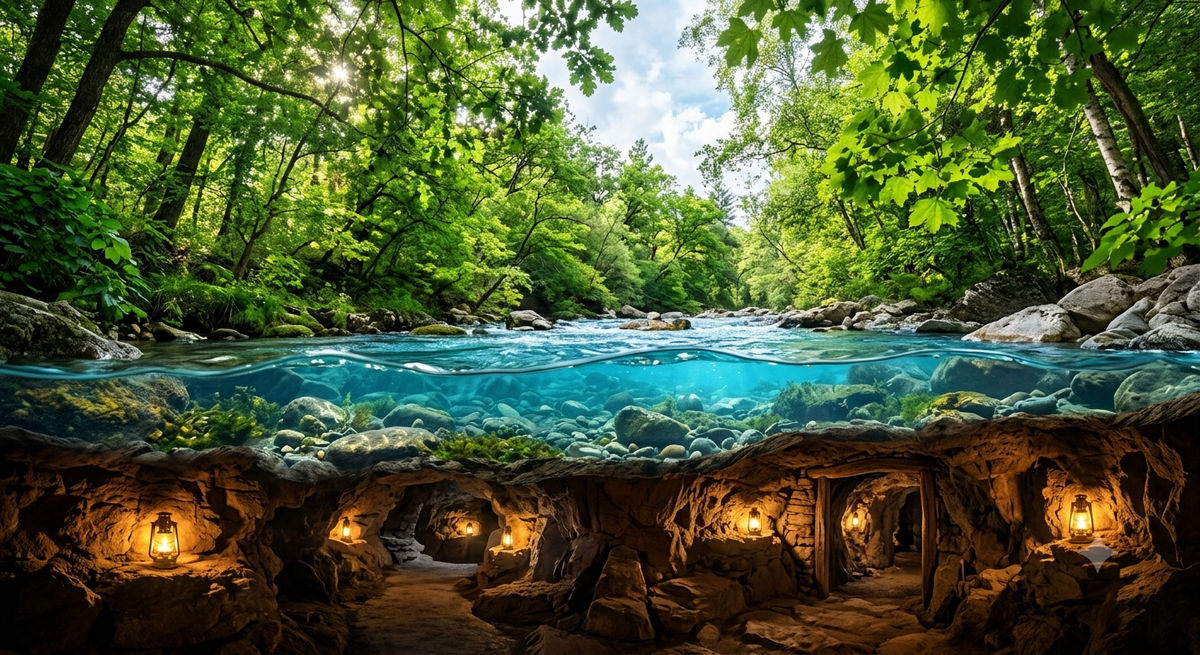
Long before anyone had a thermostat, people simply dug their houses into the earth. The underground city of Derinkuyu in Cappadocia, Turkey, sheltered thousands of residents at a stable, cave-like temperature. Modern earth-sheltered homes do the same trick with dirt berms and buried walls, staying dramatically cooler without touching the electric bill. Don't be surprised if "basement chic" becomes a real estate selling point instead of an afterthought.

Let the Wind Do the Work

Persian badgirs — wind towers that catch passing breezes and funnel them down into buildings — have been cooling homes in the Middle East for over a thousand years, no batteries required. Pair that with a thick-walled adobe or rammed-earth structure, which soaks up daytime heat and slowly releases it after dark, and you've got air conditioning that never needs a filter change.

Make Friends With Water

Turns out fountains aren't just pretty — they're functional. Courtyards in Andalusian and Mughal architecture use trickling water to cool the air around them through evaporation, a trick city planners are now scaling up with public misting stations, reflective ponds, and urban wetlands. Paris and several Middle Eastern cities are already investing in "blue infrastructure" for exactly this reason. So maybe your next work meeting really could happen poolside — stranger ideas have become city policy.

Build Smarter, Not Harder

The "passive house" standard — thick insulation, airtight design, and clever ventilation — sounds futuristic but is really just common sense formalized. Combine that with reflective "cool roofs," light-colored pavement (Los Angeles has been testing streets that run 10 degrees cooler), and green walls like Milan's tree-covered Bosco Verticale, and buildings start fighting heat instead of trapping it.

💡
AMP video: Looking to Reduce Your Credit Card Fees? Click here

Rethink the Clock, Not Just the Thermostat

Sometimes the smartest heat hack isn't architectural at all — it's scheduling. The Mediterranean siesta exists for a reason, and several heat-prone cities are now formally shifting work hours to dodge peak afternoon temperatures. No new construction required, just a willingness to admit that 2 p.m. is not, in fact, a good time to be doing anything strenuous outside.

Plant Like You Mean It

Trees remain one of the cheapest, lowest-tech cooling tools humans have ever had, and cities from Melbourne to Medellín are treating urban canopy expansion as serious infrastructure, not landscaping. A well-placed tree can drop the temperature under it by several degrees — no permits, batteries, or Wi-Fi password required.

As heat becomes less of an occasional inconvenience and more of a defining feature of modern life, the most promising ideas aren't necessarily the flashiest ones. They're often borrowed from grandparents, deserts, and centuries-old cities that figured this out long before air conditioning existed — combined with a healthy dose of modern engineering and a willingness to get a little weird. Underground homes, wind-catching towers, reflective streets, water-cooled courtyards, and shifted schedules may sound like a mixed bag, but together they sketch out a version of daily life that's stranger, cooler, and maybe even more pleasant than the one we're used to. So: would you hold your next meeting in a swimming pool? Move your bedroom underground? Trade your commute for a midday nap? The comment section is open — and honestly, we want to hear your wildest heat hacks too.

Elke Porter at:
Westcoast German Media
LinkedIn: Elke Porter or
WhatsApp:  +1 604 828 8788.
Public Relations. Communications. Education

Let’s bring your story to life — contact me for books, articles, blogs, and bold public relations ideas that make an impact.

TAGS: #ClimateAdaptation #PassiveHouse #UrbanCooling #HeatWave #SustainableLiving #GreenArchitecture #ClimateResilience #FutureCities

Share this article
The link has been copied!