By Troy Tyrell, WBN News Vancouver

📢 Subscription to WBN and being a Contributor is FREE! Click here to begin reading or writing with us!!!
WBN Digital

The trophy has been lifted and the 2026 FIFA World Cup is over, but the legal battles surrounding the tournament’s ticketing system may only be beginning.

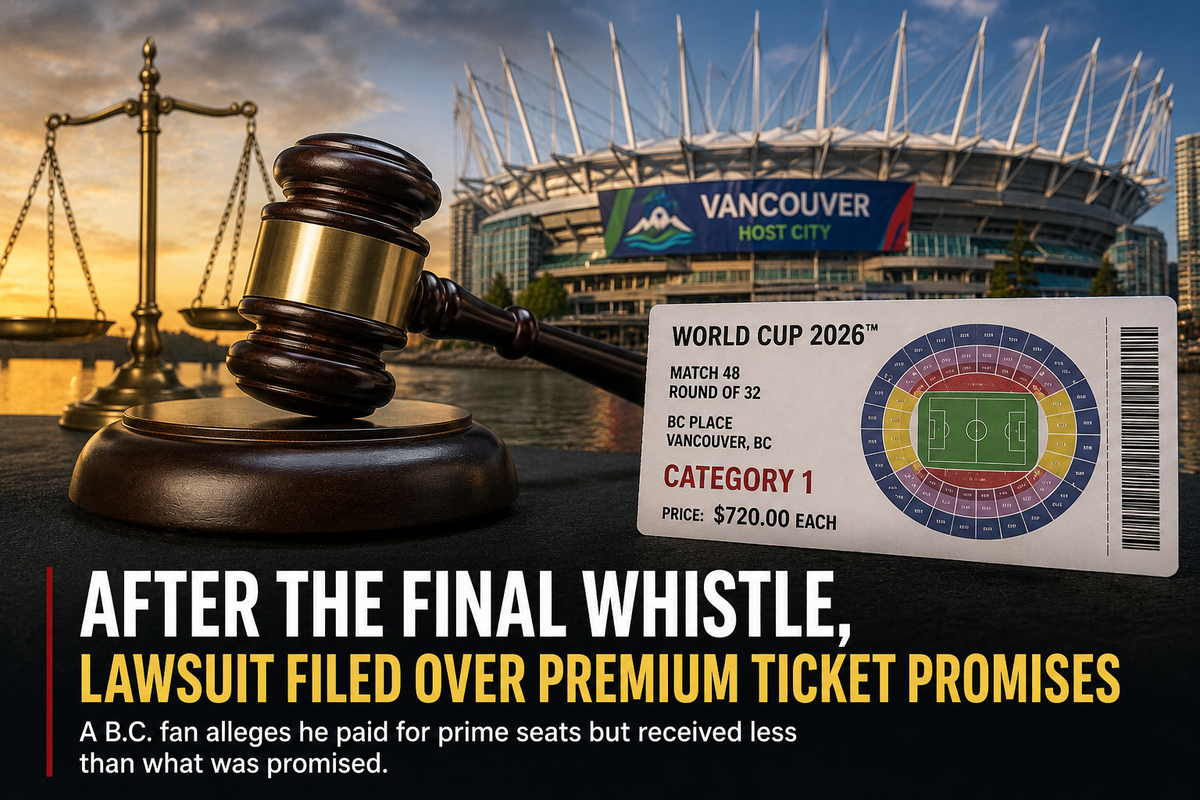
A Delta, British Columbia, soccer fan has filed a proposed class-action lawsuit against FIFA and its Canadian subsidiary, alleging that fans paid premium prices based on ticket-category descriptions that did not accurately reflect the seats they could receive.

Rajvinder Rai filed the notice of civil claim in B.C. Supreme Court on July 22, 2026. He is seeking to represent other ticket buyers who allegedly received seats in locations inferior to what FIFA’s ticket descriptions and colour-coded stadium maps led them to expect.

The allegations have not been proven in court. FIFA and its Canadian subsidiary had not filed a response when the lawsuit was reported, and Business in Vancouver said neither defendant responded to its requests for comment.

A $1,440 Ticket Purchase and a $632.50 Alleged Loss

According to the lawsuit, Rai paid $1,440 in February for two tickets to the July 2 Round of 32 match at BC Place in Vancouver. The match ultimately featured Switzerland and Algeria.

When Rai purchased the tickets, he was not given specific seats, rows or sections. Instead, the claim says he was shown a colour-coded stadium map indicating the approximate area associated with his ticket category.

Rai alleges that the presentation led him to believe he had a reasonable or equal opportunity to receive any seat within the advertised category, including some of its better locations.

When the tickets were eventually assigned, however, Rai claims the seats were in an inferior location that was inconsistent with the category he believed he had purchased.

He decided to resell the tickets but recovered only $950. After accounting for FIFA’s resale fees, Rai alleges that his net loss was $632.50.

The dispute is therefore not simply about whether Rai liked his seats. It centres on what FIFA communicated when it sold the tickets, what inventory was actually available within each category, and whether important limitations were withheld from buyers.

Allegations That Prime Seats Were Quietly Removed

Rai’s lawsuit makes broader allegations about how FIFA organized premium seating.

The claim alleges that FIFA withheld desirable front-row and lower-bowl inventory from ordinary category-ticket purchasers and created more expensive products, including Front Category 1 tickets and VIP hospitality packages.

According to the lawsuit, the result was that purchasers who had already bought tickets based on the original category descriptions were allegedly excluded from some of the best areas within those categories.

The claim states that FIFA knew, or should have known, that failing to disclose the reservation of premium inventory could mislead customers about the quality and possible location of their seats.

That allegation will be central to the case. FIFA traditionally sells World Cup tickets by category and assigns exact seats later. The legal question is not necessarily whether buyers were guaranteed a particular row. It is whether the information presented at the time of purchase created a misleading impression about the range and quality of seats they could realistically receive.

FIFA’s Changing Category System Drew Wider Scrutiny

Concerns over seat categories were not limited to Vancouver.

FIFA had initially indicated that 2026 ticket categories would largely correspond with distance from the playing field. Under that approach, much of a stadium’s lower bowl could fall within Category 1.

However, FIFA later introduced additional premium distinctions, including front-row or front-section products carrying substantially higher prices. Critics argued that people who purchased Category 1 tickets before those new zones appeared were effectively pushed into less desirable areas.

Reports described some Category 1 buyers receiving seats near corners or behind goals, while other purchasers were assigned seats far from the field despite paying for upper-tier categories.

FIFA’s official ticket information described several ticket products and categories, but disputes emerged over whether the broad category maps gave consumers enough information to understand what they were actually buying.

U.S. Attorneys General Subpoenaed FIFA

The concerns became serious enough to attract government investigations before the tournament began.

In May, New York Attorney General Letitia James and New Jersey Attorney General Jennifer Davenport issued subpoenas to FIFA seeking information about its World Cup ticketing practices, particularly for matches at MetLife Stadium.

Their investigation focused on reports that fans did not receive seats matching the way their ticket categories had been advertised, as well as allegations that FIFA’s ticket releases and pricing practices contributed to soaring prices.

James said fans deserved a fair opportunity to buy affordable tickets and should be able to trust that the tickets they purchased would match what they were promised.

Davenport was even more direct, describing FIFA’s ticket-buying process as a confusing system involving alleged artificial scarcity and exceptionally high prices.

The investigation also examined FIFA’s use of variable or dynamic pricing, under which prices could change according to demand.

Reports indicated that FIFA raised prices for numerous matches during the sales period, while newly created seating categories complicated comparisons between what early purchasers saw and what was later offered.

Texas authorities also opened an investigation into allegations that premium seating maps and category descriptions may have misled consumers.

A Similar Lawsuit Was Filed in Washington, D.C.

The B.C. case is not the only proposed class action accusing FIFA of deceptive ticket marketing.

A lawsuit filed in Washington, D.C., alleged that FIFA led fans to believe Category 1 tickets could provide access to prime midfield seating, even though many of the most desirable seats had allegedly been reserved for corporate clients, VIPs and hospitality packages.

Lead plaintiff Vera Feinhaus reportedly paid approximately US$1,680 for seats she expected would provide a premium view but was assigned locations closer to the stadium corners.

That lawsuit seeks damages for affected purchasers under consumer-protection legislation in Washington, D.C.

Although the B.C. and Washington cases involve different plaintiffs and laws, the underlying complaint is similar: consumers allegedly paid premium prices without being clearly told that large portions of prime inventory were unavailable to them.

B.C.’s Consumer Regulator Had Already Acted

The lawsuit also follows regulatory scrutiny in British Columbia.

Consumer Protection BC lists an enforcement action involving FIFA’s Canadian subsidiary, FWC26 Canada Football Ltd., connected with the province’s Ticket Sales Act. The regulator also recorded an action involving Ticketmaster Canada.

Consumer Protection BC advises that consumers may have remedies when a ticket does not match the description under which it was advertised or represented.

The regulator separately investigated complaints involving StubHub after World Cup customers alleged that tickets they had purchased were not delivered.

B.C. Attorney General Niki Sharma called those reports deeply concerning and said fans attending major events should not have to worry about whether purchased tickets would be honoured.

The StubHub controversy is legally separate from Rai’s case. Rai alleges that he purchased from FIFA as the primary seller, not from an unauthorized secondary marketplace.

However, both disputes contributed to broader concerns about transparency, accountability and consumer protection throughout the World Cup ticketing industry.

Fans Also Sued Over Undelivered Resale Tickets

Other Canadian fans experienced different but equally expensive problems.

A proposed national class action was filed in B.C. against StubHub after customers alleged that World Cup tickets purchased through the resale platform were cancelled or never delivered.

In the United States, another lawsuit alleged that StubHub sold tickets that did not exist, were revoked or could not be transferred through FIFA’s digital ticketing system.

StubHub said its FanProtect Guarantee entitled affected customers to replacement tickets or refunds and attributed some of the disruption to FIFA’s ticketing infrastructure. FIFA maintained that it did not control transactions made through unauthorized third-party platforms.

Taken together, the disputes show how risk was distributed throughout the ticketing chain. Some fans allegedly received seats they considered inferior. Others received no tickets at all. Still others were refunded for admission but lost money on flights, hotels and other travel expenses.

The Difference Between Disappointment and Deception

Not every disappointing seat assignment amounts to deceptive marketing.

A buyer who purchases a ticket within a broad category may receive a seat at the weaker end of that category without having a valid legal claim. Stadium sightlines, temporary structures, camera platforms and venue configurations can also affect the final placement of seats.

Rai’s case will therefore depend on more than showing that some fans received undesirable locations.

The proposed class will need to demonstrate that FIFA made a representation, or omitted important information, that was capable of misleading a reasonable consumer.

Questions likely to matter include:

  • How FIFA defined Category 1 when tickets were originally sold.
  • Whether buyers were clearly warned that sections could later be removed or reclassified.
  • When FIFA decided to create Front Category 1 and other premium zones.
  • How many prime seats were reserved for hospitality, sponsors or corporate allocations.
  • Whether the original maps accurately represented the inventory available to ordinary purchasers.
  • Whether affected buyers suffered measurable financial losses.

FIFA may argue that its terms permitted category changes and did not guarantee particular sections, rows or sightlines. The plaintiffs may respond that fine print cannot correct a misleading overall impression created by the ticket maps, category descriptions and premium prices.

Proposed Class Action Still Faces Major Hurdles

Rai has asked the court for permission to proceed as a class action, but certification is not automatic.

The court must first determine whether the case is suitable for class treatment and whether there are common issues that can be resolved collectively.

Potential class members could have purchased different ticket categories, at different times, for different matches and stadiums. Some attended their games, some resold their tickets, and others may have been satisfied with the seats they received.

Those differences could complicate the calculation of damages.

However, the plaintiffs may argue that the central questions are common to everyone, particularly whether FIFA withheld premium inventory, changed seating classifications and failed to clearly disclose those decisions.

No court has yet ruled on the merits of Rai’s allegations.

A Warning for Businesses Selling Premium Experiences

The case has implications extending beyond professional soccer.

Concert promoters, conference organizers, tourism operators and hospitality companies frequently sell premium experiences before every detail is finalized. Customers are often asked to pay based on maps, illustrations, category descriptions and promises of superior access.

When a business charges more for a premium tier, customers reasonably expect a meaningful difference between that product and lower-priced alternatives.

Businesses can reduce legal and reputational risk by clearly disclosing:

  • What a premium category includes.
  • What it does not guarantee.
  • Whether inventory may later be removed or reclassified.
  • Which areas are reserved for sponsors, hospitality or corporate clients.
  • How seats will be assigned.
  • What refund or resale options exist if the product changes materially.

Clear disclosure may not create the excitement of a glossy seating chart, but it can prevent an expensive legal hangover after the crowd goes home.

The Tournament Is Over, but the Accounting Has Begun

The 2026 World Cup generated extraordinary attention, revenue and demand across Canada, Mexico and the United States.

It also exposed the tension between FIFA’s commercial strategy and the expectations of ordinary supporters.

For fans, a World Cup ticket is not an everyday purchase. It can involve years of anticipation, thousands of dollars in travel costs and a rare opportunity to attend one of the world’s largest sporting events.

Rai’s alleged loss may be measured in hundreds of dollars, but the case asks a much larger question: when an organization sells a premium experience, how much must it reveal about what customers genuinely have a chance to receive?

The final whistle has blown. Now the courts and regulators will examine whether FIFA’s premium promises matched the product delivered.

The allegations contained in the lawsuits have not been proven in court. The defendants are entitled to respond and contest the claims.

By Troy Tyrell, Founder of Tsquared Personal Training
WBN Contributor | Community Builder | Mountain Biker | Advocate for Local Business & Fitness

📍 Google Business Profile –  Tsquared Personal Training,
🔗 Connect on LinkedIn
📘 Follow on Facebook

📢 Subscription to WBN and being a Contributor is FREE! Click here to begin reading or writing with us!!!
WBN Digital

Tags: FIFA World Cup, FIFA Lawsuit, Consumer Rights, Ticket Sales, British Columbia, Vancouver Business News, Troy Tyrell

Share this article
The link has been copied!