By Elke Porter | WBN News Canada| November 15, 2026
Subscription to WBN and being a Writer is FREE!
For more than 24 hours this week, a large share of the working world went quiet. Beginning Thursday, a failure inside Microsoft's cloud knocked out Outlook, Teams and the Copilot assistant for users in more than 70 countries. Court proceedings stalled; in Manchester, England, a trial was halted. Hospitals in Montreal and Toronto reported disruptions, and the Government of Canada said it, too, was affected. Even some banks were unable see emails and be reminded of appointments.
By Saturday morning, Microsoft said service was fully restored. The company traced the failure to a recent network change and an earlier capacity upgrade, and said it was not caused by a cyberattack.
No missiles fell. No power grid went dark. Bank machines kept working. Yet the episode left an uneasy question hanging over offices and kitchen tables: If a software glitch at one company can do this, what would a real attack, or a long winter blackout, do?
Governments have been saying as much. Last month, Britain launched "Be Ready," a three-year campaign urging every household to keep three days of water, food that needs no cooking, cash, a torch and a wind-up radio, following similar advice in France, Ireland and the Netherlands. Within days, British shoppers had stripped shelves of tinned beans, bottled water and batteries. In Canada, federal guidance has long asked households to be able to fend for themselves for at least 72 hours.
Seventy-two hours is a modest test. History offers harder ones.
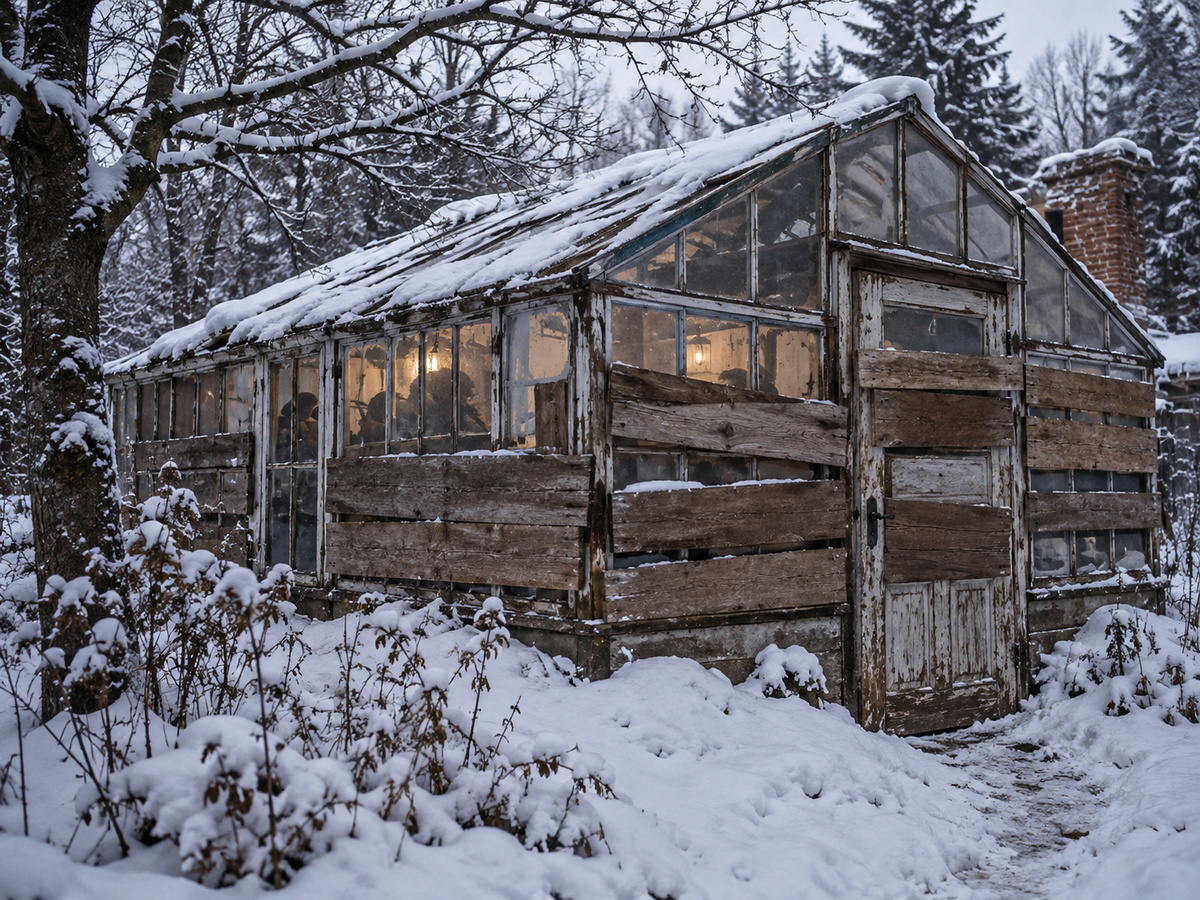
In Die Stunde der Frauen ("The Hour of the Women"), published in 1988, the German political scientist Christian Graf von Krockow retold the story of his sister, Libussa Fritz-Krockow, in Pomerania, then a Prussian province, between 1944 and 1947. The war in Europe ended in May 1945, but for the women of the family it did not end in any way that mattered. Four generations — a great-grandmother, a grandmother, Libussa and a baby born in the war's final days — sheltered for eight months in a greenhouse.
They had no electricity, no radio, no car, not even a horse. Darkness fell around 4 p.m. They did not know that the victorious powers had redrawn the map and handed their homeland to Poland. Decisions about their lives were being made in rooms they would never see.
So they improvised. They passed the long dark evenings reciting poems and songs memorized in school. When they found an egg, they crushed the shell into the baby's food for nourishment. A single diaper was washed again and again and dried by the fire. They slipped past Soviet and Polish soldiers to gather fruit and vegetables from gardens that had once been their own. Libussa mother, raised in abundant wealth, had suffered from stomach trouble all her life. After months of barely enough to eat, the book recounts, the ailment disappeared and never returned.
For generations, Germans like Libussa had lived in Prussia had lived on the same land—farming its fields, raising their children in its villages, burying their dead in its churchyards, and carrying its place names, dialects, and family histories as naturally as their own names. Then, almost overnight, they were told to leave.
The borders of Europe had been redrawn by the victorious powers in distant conference rooms, with lines drawn across maps that bore no resemblance to the lived reality of the people whose homes, farms, and communities lay beneath them. Pomerania, East Prussia, Silesia, and other eastern territories were transferred to Poland; millions of German civilians were ordered to abandon homes their families had occupied for centuries.
There was no referendum, no consultation, and no meaningful chance to protest. Decisions that would determine whether they could remain in the houses built by their grandparents were being made by diplomats and officials they would never meet, in rooms they would never see, using maps whose new boundaries they might not even have been able to read.
Their displacement was made harsher by the conditions in which it occurred. Many had no electricity, no radio, no car, and not even a horse to carry their belongings or their children. In the deepening winter, darkness fell around four in the afternoon, turning familiar roads and villages into uncertain, shadowy places. They packed what they could carry, left behind furniture, photographs, tools, graves, and entire lifetimes, and joined the vast streams of refugees moving westward through a shattered country. The world they had trusted had been rearranged without their consent—and that survival now depended on what they could carry, survival skills they had developed, and whether they could find shelter before nightfall.
That kind of resourcefulness was once ordinary. Grandmothers canned, dried and smoked food for winter and mixed their own remedies. Mennonite cookbooks preserve recipes from leaner times, including a "war cake" of toasted brown and white bread layered with porridge, served as a birthday surprise. Vegetables that could survive underground or in cold cellars formed the backbone of winter meals: potatoes, carrots, turnips, parsnips, beets, onions, and winter squash with the Spring devoted to planting, Summer to weeding and watering and the Autumn to harvesting.
Most Canadians and Americans have quietly lost the everyday skills that once made them self-reliant: reading a paper map instead of asking a phone for directions, using a compass to find north, making change without a card reader, remembering a phone number, planting a garden, milking a cow or reaching for the cash tucked in the kitchen drawer.
We have traded those old-fashioned tools for sleek digital conveniences—GPS, mobile banking, cloud contacts, and cashless checkout—without always noticing how fragile the system beneath them can be. This week’s outage was a glitch, and it was fixed; the lights came back on, the apps refreshed, and life resumed its usual pace. But the next disruption may not be so polite. It could be a cyberattack, a severe storm, a prolonged power failure, or a cascade of failures that leaves people unable to pay, navigate, communicate, or even find their way home.
The lesson is not to abandon technology, but to keep a few analog backups alongside it: a folded paper map, a compass, a charged power bank, a written list of emergency contacts, and some small bills in a drawer. Emergency-preparedness guidance from Canada specifically recommends keeping cash in smaller denominations because ATMs and card networks may fail during an emergency, along with a household communication plan and printed copies of key information.
Earthquake preparedness has long understood this: families are urged to choose a meeting place in advance because phones, roads, and routines may fail precisely when people are scattered at work, school, or home. The best plans include one safe spot just outside the home and a second location outside the neighbourhood, in case the area itself becomes inaccessible.
The lesson from that Pomeranian greenhouse is not despair, but a sober and enduring kind of hope: Plan B is not a slogan printed on a preparedness poster, nor a comfortable fantasy reserved for survivalists and doomsday preachers. It is a practical skill—built from a paper map, a compass, a little cash, a written contact list, a meeting place, and the quiet confidence that comes from having thought through what to do when the familiar systems fail.
For the survivors who endured eight months in a greenhouse with the bare minimum, resilience was not an abstraction; it was food stretched further, warmth conserved, decisions made without certainty, and the daily refusal to surrender to circumstances beyond their control. We may hope never to face such hardship, but the wisest response is not to assume that tomorrow will always be as convenient as today. It is to learn the skills of Plan B before the moment arrives when they are no longer optional.
Elke Porter at:
Westcoast German Media
LinkedIn: Elke Porter or
WhatsApp: +1 604 828 8788.
Public Relations. Communications. Education
Let’s bring your story to life — contact me for books, articles, blogs, and bold public relations ideas that make an impact.
Tags: #EmergencyPreparedness #MicrosoftOutage #PlanB #DieStundeDerFrauen #Resilience #GermanCanadian