By Elke Porter | WBN News Canada| August 7, 2026
Subscription to WBN and being a Writer is FREE!
Puerto Rico switched on a rotating water rationing program this week, and it's expected to run at least through the end of August. According to the U.S. territory's Aqueduct and Sewer Authority (AAA), the plan will force tens of thousands of residents to go without water for 48 hours at a stretch, as one of the island's worst droughts in more than a decade tightens its grip.
The cuts began Friday and cover seven municipalities, including San Juan, Carolina, Trujillo Alto, Gurabo, Juncos, Canovanas and Loiza — all communities that draw from the Carraizo reservoir, which officials say has fallen to critically low levels. Affected neighborhoods have been split into two zones that will trade off water service and cuts on 48-hour cycles, and more than 180,000 customers are expected to be without running water at any given time as the alternating schedule rolls out.
The numbers behind the crisis are stark. July was San Juan's driest month on record in over 120 years, and nearly a quarter of Puerto Rico is now in severe drought, with more than a third of the island under moderate drought conditions. Governor Jenniffer González has said the situation is largely out of the government's hands, pointing to the weather, and admitted she cannot say how long rationing will need to continue. Forecasters expect a milder hurricane season this year, meaning the heavy rains that usually arrive by late August may not materialize on schedule. The AAA says it will send water trucks to affected communities, prioritizing hospitals and long-term care facilities, and is asking residents to boil water once service resumes and to cut back on non-essential use like washing cars or watering lawns.
This is not Puerto Rico's first brush with rationing — the island went through similar restrictions after Hurricane Maria damaged reservoir infrastructure in 2017, and again during a severe drought in 2015 that pushed nearly 400,000 customers onto every-third-day water service. What's different now is how routine this is becoming, and it points to a deeper, structural problem: aging infrastructure and a reservoir system never built for today's climate swings.
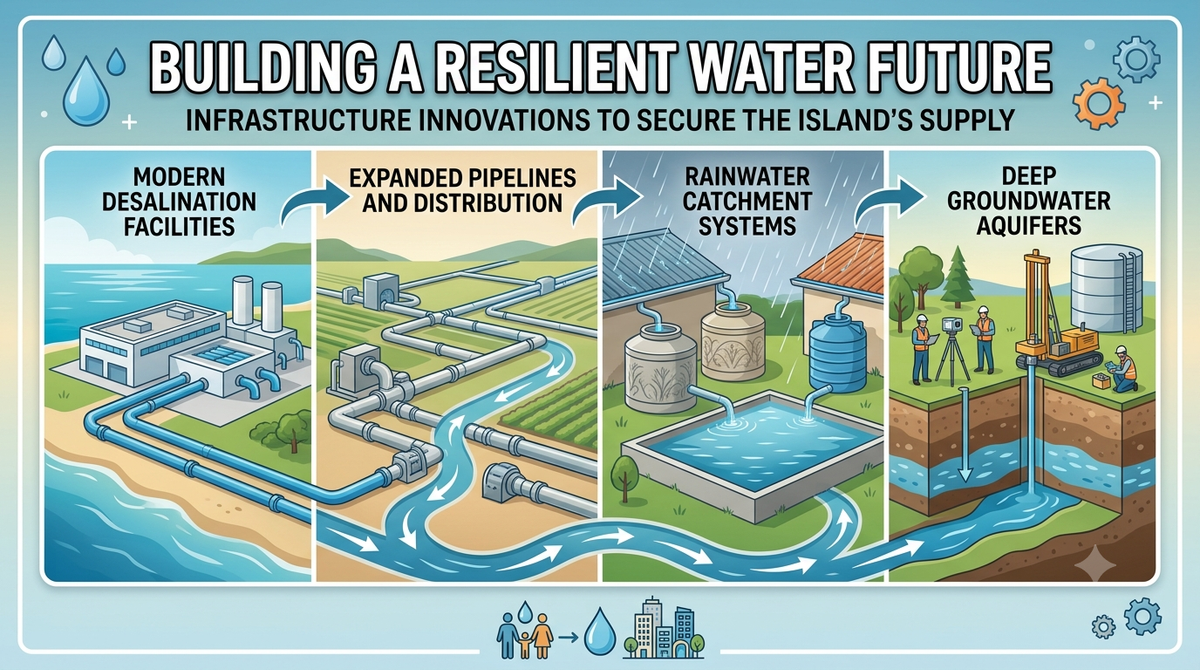
That's why the conversation now needs to move beyond "when does it rain again" and toward real investment in water independence. Israel and Singapore offer proven blueprints — Israel now gets over half its drinking water from desalination plants along the Mediterranean, turning a desert nation into a water exporter, while Singapore's NEWater program recycles treated wastewater into a significant share of its supply. California has leaned into similar technology at its Carlsbad desalination plant near San Diego, producing tens of millions of gallons of drinking water a day from the Pacific.
What Should Canada Learn From This?
It's tempting to watch scenes of 48-hour water shutoffs in San Juan and assume this is a problem for hot, dry places far from home. But right here in British Columbia, we've already had a preview this summer. Metro Vancouver moved to Stage 3 water restrictions in June, and several B.C. regions — including the Cowichan Valley, Kamloops and West Kelowna — pushed into Stage 3 and even Stage 4 territory in July, driven by a mountain snowpack that sat far below its historical average. The Okanagan touched Level 5, the highest rating on the province's drought scale. None of that means our taps ran dry the way San Juan's have — but it means the gap between "restrictions" and "rationing" is smaller than we'd like to believe.
Canada holds roughly a fifth of the world's fresh water, and it's easy to assume that abundance protects us. It doesn't, not automatically. Much of that water sits far from where our biggest cities actually need it, and our supply systems — reservoirs, snowpack-fed rivers, single-pipe corridors like Metro Vancouver's First Narrows Crossing — were built for a climate that's no longer holding steady. A single infrastructure failure or an unusually dry, hot summer can tip a region from "watering restrictions" into something much closer to what Puerto Rico is living through now.
The fix starts with the same tools Puerto Rico is being forced to consider under pressure, except we have the luxury of building them before a crisis rather than during one: expanding rainwater catchment and stormwater capture so summer runoff doesn't just disappear into the ocean; investing in wastewater recycling, the way Singapore has; and treating desalination — however unlikely it sounds for a country known for its lakes and rivers — as a genuine option for coastal cities during peak drought years. Diversifying where our water comes from, and building the pipelines and distribution networks to move it, is what turns a dry summer into an inconvenience instead of an emergency.
Forty-eight hours with no water at all is unthinkable for most Canadians. That's exactly why we shouldn't wait until it isn't.
Elke Porter at:
Westcoast German Media
LinkedIn: Elke Porter or
WhatsApp: +1 604 828 8788.
Public Relations. Communications. Education
Let’s bring your story to life — contact me for books, articles, blogs, and bold public relations ideas that make an impact.
TAGS: #CanadaWaterCrisis #DroughtReady #BCDrought #WaterSecurity #ClimateResilience #PuertoRicoLessons