By Elke Porter | WBN News Canada| August 26, 2026
Subscription to WBN and being a Writer is FREE!

Let's all take one step back.

Canadians watch as the trade fight with the United States dominates the headlines. Rhetoric hardens. Many feel angry, even betrayed. But a bigger prize sits farther north.

The Arctic is opening fast. New shipping routes, critical minerals, and military positions are drawing serious interest. Canada holds vast northern territory — yet our ability to monitor and defend it stays limited. So ask a simple question: what if the loud Canada-U.S. trade dispute isn't the whole story? What if the current divisions leave Canada easier to sideline exactly where it matters most?

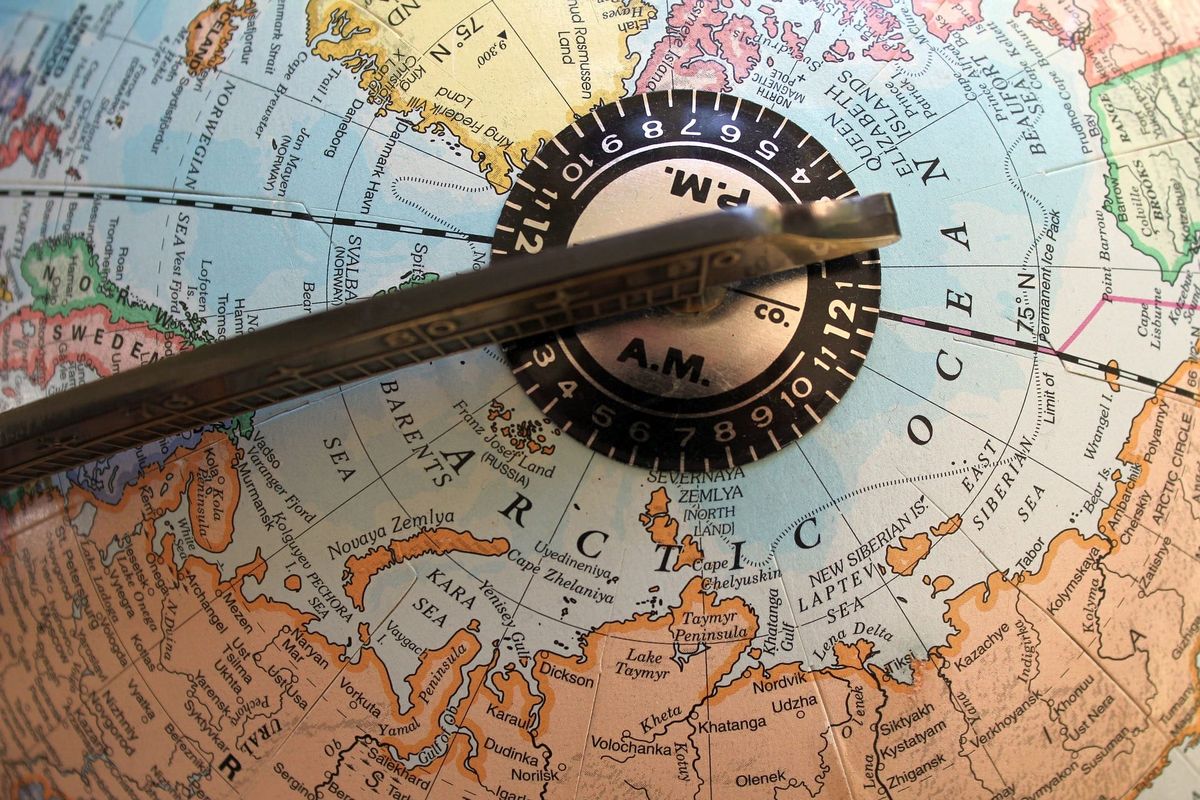
The sovereignty question is not new, and it is not simple. As teacher and Arctic writer Mr. Lowe has laid out, five countries — Canada, the United States, Denmark, Norway, and Russia — all claim territory or seabed rights in the Arctic region, not to mention the Indigenous peoples who have called the Arctic home for thousands of years, long before any of those national borders existed. Russia made the boldest move in August 2007, when it staked a claim to part of the 1,800-kilometre Lomonosov Ridge, arguing the underwater formation is an extension of its own continental shelf. Russian scientists went as far as planting a flag on the ocean floor at the North Pole — a symbolic gesture aimed at the resources believed to lie beneath it.

Canada disputes the claim. Under the UN Convention on the Law of the Sea, a country controls the waters roughly 22 kilometres beyond its coastline and the resources beneath the sea out to about 370 kilometres — so proving a seabed is part of your continental shelf can extend your reach considerably. Two forces are driving the urgency: melting ice may open the Northwest Passage to year-round shipping, cutting the distance between Asia and Europe — a route Canada considers its own and the United States insists is international waters — and the seabed itself may hold a fortune, with the U.S. Geological Survey estimating that a quarter of the world's undiscovered oil and gas could sit under the Arctic.

Russia invests heavily in Arctic bases and treats the region as vital. A Canada working closely with the United States and NATO presents a solid barrier. A Canada distracted by arguments to the south looks softer. No invasion plan is needed. Opportunity is enough.

China takes a different route — seeking resources, shipping lanes, and influence without needing to plant a flag. Canadian officials have repeatedly flagged interference and espionage risks linked to Beijing. Arctic access fits that longer game.

The United States remains Canada's closest partner through NORAD, intelligence sharing, and continental defence. That relationship is straining now, under tariffs and sharp words. Canadians are right to defend sovereignty and demand fair trade. But if public attention locks onto the southern border alone, the North risks becoming an afterthought.

So what does Canada actually have up North right now? NORAD's North Warning System is aging, and its replacement — the Arctic and Polar Over-the-Horizon Radar — isn't expected to be fully operational until the early 2030s. Ottawa has moved on new Arctic and Offshore Patrol Ships and polar icebreakers, and joined the U.S. and Finland in the ICE Pact to build more icebreakers and share information across the region.

This year, the federal government committed roughly $25 billion toward Arctic defence and northern infrastructure, with new Northern Operational Support Hubs meant to give the Canadian Armed Forces more presence and mobility across the North. But the basics are still missing in places: too few paved airstrips, not enough fuel and port facilities, and a shortage of heavy icebreakers. Money announced is not the same as capability delivered. Until the radar, the ships, and the airstrips are actually in place, Canada's presence in the Arctic is a plan more than a fact.

A conversation overheard recently makes the point well: one person refused any trip to the United States, calling its leadership extreme — yet showed no comparable caution about visiting China or Russia or other countries that have actual dictators in their leadership. The contrast is telling. Disliking American politics is fair. Selective focus is less useful when Canadian agencies are warning about pressure from other directions too.

We say we put Canada first. The real test is whether our reactions strengthen the country — or quietly open doors for others. We can reject talk of becoming a 51st state. We can push back on unfair trade measures. And we can build Arctic capability, protect northern sovereignty, diversify markets, and keep the practical partnerships that serve our interests — all at the same time.

Things aren't always what the daily headlines suggest. The Arctic doesn't care about political theatre. It will belong to whoever shows up prepared.

Who benefits if Canada stays under-ready in the North while we argue about the South? Are we, without meaning to, helping create that result?

Take one step back. Look at the whole map. Then act for Canada.

Arctic sovereignty background drawn in part from an article by Mr. Lowe. (https://mrlowegpcsd.weebly.com/)

Elke Porter at:
Westcoast German Media
LinkedIn: Elke Porter or
WhatsApp:  +1 604 828 8788.
Public Relations. Communications. Education

Let’s bring your story to life — contact me for books, articles, blogs, and bold public relations ideas that make an impact.

TAGS: #CanadaArctic #ArcticSovereignty #NORAD #CanadaUS #ArcticSecurity #NorthernSovereignty #NorthwestPassage #GeopoliticsCanada #WBNNews

Share this article
The link has been copied!